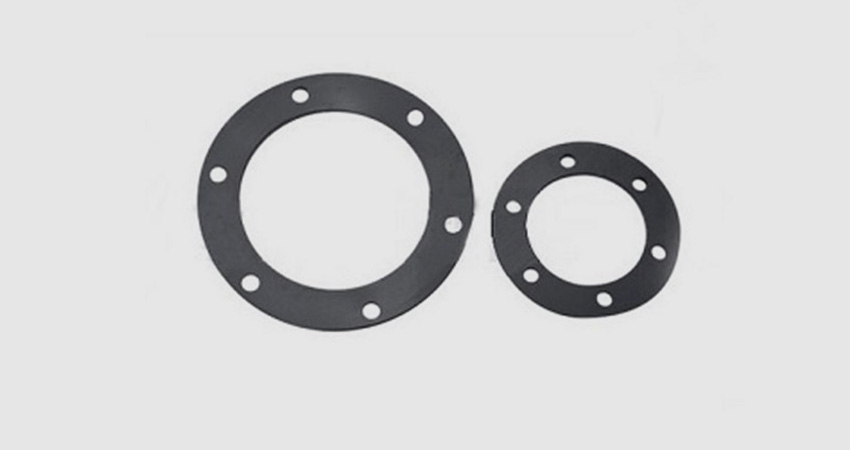
How are polyimide articles manufactured?
Picture this: a pump seal fails at 280°C, the line stops for six hours, and the replacement batch arrives with thickness variations that make assembly impossible. For procurement professionals sourcing high-temperature sealing components, this is more than a nuisance—it is a supply chain risk. That is why many buyers start with a basic but decisive question: How are Polyimide Articles manufactured? Polyimide parts, including valve seats, gaskets, bushings, and insulators, are not ordinary molded polymer products. Their production involves precise resin formulation, high-pressure shaping, controlled thermal imidization or sintering, and precision machining. Each step has a direct impact on density, flatness, outgassing, thermal stability, and service life. Ningbo Kaxite Sealing Materials Co., Ltd. understands these variables and supplies polyimide articles with repeatable quality for demanding industrial environments. This guide walks through the manufacturing process, common procurement pain points, and key parameters you should check before placing your next order.
Table of Contents
- Why Polyimide Articles Deserve a Second Look
- How Are Polyimide Articles Manufactured: The Core Steps
- Raw Material Choices and Their Impact
- Forming, Sintering, and Machining: Where Precision Is Won
- Quality Control Checks That Reduce Procurement Risk
- Procurement Pain Points and How to Solve Them
- Performance Parameters for Common Applications
- FAQ: How Are Polyimide Articles Manufactured?
- Sourcing Tips for Polyimide Sealing Components
- Final Thoughts and Next Steps
Why Polyimide Articles Deserve a Second Look
When standard PTFE or PEEK parts soften under load, maintenance teams call procurement for a quick fix. The real problem is not the seal design alone—it is the material’s thermal ceiling. Polyimide articles solve this by retaining mechanical strength and dimensional stability at temperatures where many engineering plastics begin to creep or deform. For sealing applications, this means fewer unplanned shutdowns and longer replacement intervals. Ningbo Kaxite Sealing Materials Co., Ltd. helps buyers compare these options against actual operating conditions instead of relying on supplier datasheets alone.
| Material | Continuous service temperature (°C) | Compressive strength (MPa) | Typical failure mode at high load |
|---|---|---|---|
| PTFE | 260 | 10–20 | Creep and extrusion |
| PEEK | 250 | 100–140 | Softening above glass transition |
| Polyimide (thermoset) | 300–400 | 150–300 | Best-in-class strength retention |
Although polyimide costs more upfront, the extended service life often lowers total ownership cost in high-temperature or high-load environments.
How Are Polyimide Articles Manufactured: The Core Steps
Procurement teams often ask how the manufacturing route affects final quality. The short answer: every step matters. Polyimide articles typically follow a sequence that begins with resin powder preparation and ends with precision machining. First, the raw polyimide resin or compounded powder is weighed and loaded into a mold. Next, high-pressure compaction—either uniaxial pressing or isostatic pressing—creates a green shape. The compact is then heated in a controlled cycle to complete imidization or sintering at temperatures up to 400°C. After cooling, CNC machining brings the blank to final dimensions. Finally, parts are cleaned, inspected, and packaged with batch traceability. Ningbo Kaxite Sealing Materials Co., Ltd. follows these stages with documented process parameters so buyers receive consistent polyimide articles from order to order.
This manufacturing sequence is not interchangeable with standard injection molding. It is the reason polyimide articles deliver stable sealing performance in high-temperature pumps, valves, and semiconductor equipment.
Raw Material Choices and Their Impact
A common procurement pain point is overspecifying “polyimide” without knowing which grade fits the application. Thermoset polyimide offers higher heat resistance but cannot be remelted. Thermoplastic polyimide can be processed differently but may have a lower continuous service temperature. Fillers such as graphite, carbon fiber, and molybdenum disulfide change friction, wear, and load-bearing behavior. Choosing the wrong grade can lead to premature wear or excessive cost. Ningbo Kaxite Sealing Materials Co., Ltd. reviews media, temperature, and pressure before recommending a grade.
| Polyimide grade | Continuous temp (°C) | Typical friction coefficient | Best for |
|---|---|---|---|
| Unfilled polyimide | 350 | 0.30–0.45 | Electrical insulation and high-purity zones |
| 15% graphite filled | 320 | 0.15–0.25 | Dry running bushings and wear parts |
| Carbon fiber filled | 300 | 0.20–0.30 | High-load valve seats and thrust washers |
| MoS2 filled | 300 | 0.10–0.20 | Vacuum and low-outgassing sealing |
Forming, Sintering, and Machining: Where Precision Is Won
Even with a perfect resin, poor forming or machining can ruin a polyimide article. Sourcing teams often see this as dimensional scatter: one batch fits, the next binds or leaks. That happens when compaction pressure, sintering time, or machining offsets drift. In production, compaction pressures may range from 200 to 1000 MPa, while sintering or imidization temperatures often reach 350–400°C. After densification, CNC machining controls final dimensions to ±0.02–0.05 mm depending on part size. Ningbo Kaxite Sealing Materials Co., Ltd. reduces variation by combining in-house machining with full dimensional inspection.

| Process parameter | Typical range | Effect on final part |
|---|---|---|
| Compaction pressure | 200–1000 MPa | Higher pressure increases density and strength |
| Sintering temperature | 350–400°C | Completes imidization and reduces residual stress |
| CNC machining tolerance | ±0.02–0.05 mm | Determines sealing face fit and assembly |
Quality Control Checks That Reduce Procurement Risk
Incoming inspection fails when suppliers do not control density, hardness, or thermal properties. A polyimide gasket may look correct but fail after two weeks if the cure cycle was cut short. To avoid this, buyers should request batch-level QC data. Ningbo Kaxite Sealing Materials Co., Ltd. provides inspection reports for key parameters and supports custom test requirements for critical applications.
| QC check | Common method | Acceptance example |
|---|---|---|
| Density | Archimedes method | 1.35–1.45 g/cm³ |
| Hardness | Shore D / Rockwell M | Shore D 80–90 |
| Glass transition temperature | DSC or DMA | ≥ 300°C |
| Flatness | CMM or dial indicator | ≤ 0.03 mm |
Such data turns supplier selection from a guess into a controlled decision.
Procurement Pain Points and How to Solve Them
Buyers in this space often face three recurring issues: long lead times for custom sizes, inconsistent dimensions between batches, and limited application data from suppliers. Each issue increases downtime risk and makes budgeting unpredictable. Ningbo Kaxite Sealing Materials Co., Ltd. addresses these pain points through stocked semi-finished polyimide rods and sheets, in-house precision machining, and direct engineering support for temperature, pressure, and chemical compatibility.
| Pain point | Business impact | How Ningbo Kaxite solves it |
|---|---|---|
| Long lead times | Production delays | Stocked blanks and fast CNC turnaround |
| Inconsistent dimensions | Leakage and rework | In-house machining and full inspection |
| Lack of application data | Wrong grade selection | Engineering review with actual operating conditions |
| Low-outgassing requirement | Contamination in clean processes | Clean processing and certified polyimide grades |
Performance Parameters for Common Applications
Polyimide articles are not one-size-fits-all. A semiconductor chamber part may require low outgassing, while an oil and gas valve seat needs compressive strength. Using generic datasheets can lead to overpaying or under-specifying. Ningbo Kaxite Sealing Materials Co., Ltd. helps match the correct polyimide grade and geometry to the sealing environment, reducing trial orders.
| Application | Typical condition | Recommended polyimide article | Key parameter |
|---|---|---|---|
| Semiconductor chamber | 300°C, plasma exposure | Unfilled or graphite-filled PI | Low outgassing, dimensional stability |
| Oil and gas valve seat | 250°C, high pressure | Carbon fiber filled PI | Compressive strength |
| Aerospace bushing | -50 to 300°C cycling | Thermoset PI | Thermal cycling resistance |
| Pump wear ring | Chemical media, low lubrication | Graphite or MoS2 filled PI | Low friction, chemical resistance |
FAQ: How Are Polyimide Articles Manufactured?
Q: How are polyimide articles manufactured for high-temperature sealing applications?
A: The process starts with polyimide resin powder, which may be blended with graphite, carbon fiber, or MoS2 to improve friction and load resistance. The powder is compacted under high pressure, then heated in a multi-stage cycle up to 350–400°C to complete imidization or sintering. The densified blank is then CNC machined to tight tolerances. This route creates a dense, dimensionally stable part that retains strength at temperatures where many plastics fail.
Q: How are polyimide articles manufactured to achieve tight tolerances and low outgassing?
A: Low-outgassing polyimide articles require high-purity resin, controlled compaction density, and a complete thermal cure. After sintering, parts are machined in a controlled environment and cleaned to remove surface contaminants. Final inspection includes dimensional checks and cleanliness verification. Ningbo Kaxite Sealing Materials Co., Ltd. uses this approach to support semiconductor and vacuum applications where contamination is not acceptable.
Sourcing Tips for Polyimide Sealing Components
Before sending an RFQ, define the operating temperature, pressure, chemical media, and required tolerance. Ask for batch-specific density and hardness data, not just a material datasheet. Request a first article sample for critical dimensions and assembly fit. Clarify whether the supplier stocks semi-finished blanks or only produces made-to-order parts. Ningbo Kaxite Sealing Materials Co., Ltd. supports this process with fast quotes, sample orders, and application-focused guidance at https://www.seal-china.com.
One more tip: if your application involves high load or dry running, specify a filled polyimide grade instead of unfilled resin. This single change can double wear life in many bushing and seat applications.
Final Thoughts and Next Steps
Understanding how polyimide articles are manufactured gives you an advantage in supplier negotiation and quality control. Instead of comparing only price, you can evaluate raw material selection, process control, machining capability, and QC documentation. If you are unsure which grade fits your sealing environment, share your operating temperature, pressure, and chemical exposure with the Ningbo Kaxite team for a practical comparison. Have you experienced batch variation or early wear with polyimide parts? Let us know your challenge—your feedback helps other procurement readers benchmark their own sourcing decisions.
Ningbo Kaxite Sealing Materials Co., Ltd. is a specialized supplier of polyimide articles, high-performance seals, gaskets, and machined components for demanding industrial applications. Through its engineering support and manufacturing network at https://www.seal-china.com, the company helps procurement teams solve high-temperature sealing and wear challenges with custom dimensions, tight tolerances, and consistent batch quality. For technical inquiries or quotations, please contact kaxite@seal-china.com.
Sroog, C. E. (1991). Polyimides. Progress in Polymer Science, 16(4), 561-694.
Liaw, D. J., Wang, K. L., Huang, Y. C., Lee, K. R., Lai, J. Y., & Ha, C. S. (2012). Advanced polyimide materials: Syntheses, physical properties and applications. Progress in Polymer Science, 37(7), 907-974.
Wilson, D. (1988). Polyimides as resins for advanced composites. High Performance Polymers, 1(1), 3-15.
Hergenrother, P. M. (2003). The use, design, synthesis, and properties of high performance/high temperature polymers: an overview. High Performance Polymers, 15(1), 3-45.
Kreuz, J. A., Edman, J. R., & Goff, D. L. (1966). Polyimide formation and properties. Journal of Polymer Science Part A: General Papers, 4(10), 2607-2625.
Ding, M. (2007). Isomeric polyimides. Progress in Polymer Science, 32(6), 623-668.
Vanherck, K., Koeckelberghs, G., & Vankelecom, I. F. J. (2013). Crosslinking polyimides for membrane applications: A review. Progress in Polymer Science, 38(6), 874-896.
de Abajo, J., & de la Campa, J. G. (1999). Processable aromatic polyimides. Advances in Polymer Science, 140, 23-59.
Miyauchi, M., Ishida, Y., Ogasawara, T., & Yokota, R. (2012). Mechanical properties of thermoplastic polyimide composites. High Performance Polymers, 24(7), 636-645.
Ogasawara, T., Ishida, Y., & Yokota, R. (2010). Polyimide composites for high-temperature applications. Journal of Composite Materials, 44(11), 1367-1381.
Next :
-
Related News
- What chemicals can PTFE steel-plastic composite pipe resist?
- How does a PTFE lined bend work?
- What temperature can a PTFE lined vessel withstand?
- How heat resistant is synthetic stone compared to natural stone?
- Does HDPE rod float or sink in water?
- What certifications does KNY150 asbestos rubber sheet hold?
Leave me a message