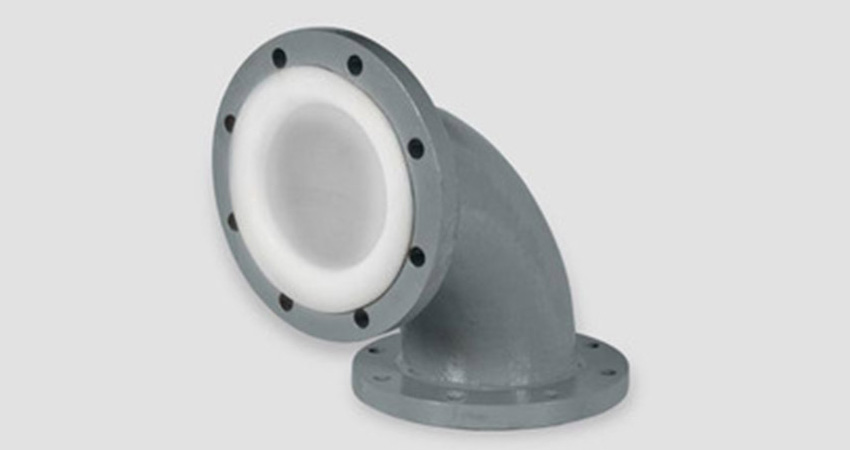
What chemicals can PTFE steel-plastic composite pipe resist?
What chemicals can PTFE Steel-Plastic Composite Pipe resist? If you are a procurement engineer, plant manager, or maintenance lead in chemical processing, electroplating, wastewater treatment, or fine chemical production, this question is far from academic — it directly determines leak prevention, worker safety, maintenance budgets, and production uptime. PTFE steel-plastic composite pipe is engineered to handle the aggressive media that quickly destroys rubber-lined steel, stainless steel, and ordinary plastic piping. Its inner PTFE layer resists nearly all industrial acids, alkalis, solvents, and oxidizing agents, while the outer steel shell provides mechanical strength and pressure containment. Choosing the right piping for corrosive streams can eliminate frequent replacements, flange corrosion, liner blistering, and unplanned shutdowns. Below is a practical, data-driven guide to help you evaluate this solution for your most demanding chemical transfer applications.
Quick Navigation:
- Why Chemical Resistance Matters in Industrial Piping
- PTFE Chemical Resistance Profile
- How the Composite Structure Handles Aggressive Media
- Common Chemicals Resisted: Quick Reference Table
- Real-World Pain Points and Solutions
- FAQ: What Chemicals Can PTFE Steel-Plastic Composite Pipe Resist?
- Sourcing and Quality Control Guidance
- Conclusion and Next Steps
Why Chemical Resistance Matters in Industrial Piping
Many procurement teams face a recurring failure pattern: standard stainless steel or rubber-lined pipes pass initial compatibility checks but then fail after temperature swings, mixed acid exposure, or abrasive flow. Flange corrosion, gasket leakage, liner swelling, and sudden pinhole ruptures lead to expensive downtime and safety risks. The root cause is often a mismatch between the pipe material and the full chemical environment, including impurities and temperature spikes.
The solution is to specify a pipe with a chemically inert inner layer that does not react with the process fluid, even when concentration or temperature fluctuates. PTFE steel-plastic composite pipe solves this by combining a virgin PTFE liner with a carbon steel or stainless steel shell. PTFE is hydrophobic, has extremely low surface energy, and resists attack from almost all corrosive chemicals. The steel shell carries mechanical load and protects the liner from external impact.
| Parameter | Typical Value |
|---|---|
| Liner material | Virgin PTFE |
| Outer shell | Carbon steel or stainless steel |
| Temperature range | -29°C to 260°C |
| Pressure rating | PN10 to PN25, higher on request |
| Liner thickness | 2 mm to 5 mm depending on DN |
| Bonding method | Isostatic molding or high-strength adhesive bonding |
PTFE Chemical Resistance Profile
PTFE owes its chemical resistance to the carbon-fluorine bond, one of the strongest single bonds in organic chemistry. This structure makes PTFE essentially inert to strong acids, strong bases, organic solvents, and oxidizing agents. In practical terms, PTFE steel-plastic composite pipe can safely convey concentrated sulfuric acid (up to 98%), hydrochloric acid (up to 37%), nitric acid (up to 65%), phosphoric acid, and even aqua regia under controlled conditions. It also withstands hydrofluoric acid within specified concentration and temperature limits, which is a major advantage over glass and many metals.
For alkaline service, PTFE remains stable in sodium hydroxide up to 50%, potassium hydroxide, and ammonia solutions. It resists most organic solvents including acetone, toluene, methyl ethyl ketone, ethanol, and chlorinated solvents. Oxidizing agents such as hydrogen peroxide, sodium hypochlorite, and chlorine gas do not degrade the liner. This broad compatibility reduces the number of piping specifications a plant needs to stock.

However, chemical resistance should always be confirmed at the actual operating temperature and pressure. PTFE has a continuous service temperature limit around 260°C, and above 150°C some chemical diffusion rates increase. For mixed acid or solvent streams, it is best to request a specific compatibility review from your supplier.
How the Composite Structure Handles Aggressive Media
A common failure scenario is an electroplating shop using a mixed acid solution containing chromic acid and sulfuric acid. Rubber-lined pipes often blister within months because the rubber absorbs chemicals and loses adhesion. Stainless steel may passivate initially but then suffers crevice corrosion at flanges. PTFE steel-plastic composite pipe changes the game: the inner PTFE liner is nearly impermeable and non-reactive, while the steel outer shell provides structural integrity. This combination handles pressure surges, thermal cycling, and external mechanical loads without cracking the liner.
| Layer | Function | Key Benefit |
|---|---|---|
| Inner PTFE liner | Direct contact with process fluid | Near-universal chemical resistance, low friction |
| Bonding layer | Adhesive or isostatic molding interface | Prevents liner collapse and permeation |
| Outer steel shell | Pressure containment and structural support | High mechanical strength, impact resistance |
The bonding quality between PTFE and steel is critical. Poor bonding can create voids where chemicals accumulate and cause liner collapse under vacuum. Reliable manufacturers use isostatic molding or controlled adhesive systems and test each pipe with spark testing to detect pinholes. This ensures the composite pipe remains leak-free even in aggressive chemical environments.
Common Chemicals Resisted: Quick Reference Table
This table provides a practical reference for common industrial chemicals. Ratings are based on laboratory immersion tests and field service data. Always verify with your supplier for your specific concentration, temperature, and pressure combination.
| Chemical | Concentration | Temperature Limit | Resistance Rating |
|---|---|---|---|
| Sulfuric acid | 0–98% | Up to 260°C | Excellent |
| Hydrochloric acid | 0–37% | Up to 200°C | Excellent |
| Nitric acid | 0–65% | Up to 120°C | Excellent |
| Phosphoric acid | 0–85% | Up to 180°C | Excellent |
| Hydrofluoric acid | Up to 40% | Up to 100°C | Good to Excellent |
| Sodium hydroxide | 0–50% | Up to 200°C | Excellent |
| Potassium hydroxide | 0–45% | Up to 180°C | Excellent |
| Acetone | 100% | Up to 120°C | Excellent |
| Toluene | 100% | Up to 150°C | Excellent |
| Hydrogen peroxide | 0–30% | Up to 80°C | Excellent |
| Sodium hypochlorite | 0–15% | Up to 60°C | Excellent |
| Methyl ethyl ketone | 100% | Up to 100°C | Excellent |
These ratings reflect the inherent inertness of PTFE. Actual service life also depends on liner thickness, bonding quality, and operating cycles. For mixed chemical streams, a detailed compatibility review is recommended before final specification.
Real-World Pain Points and Solutions
Procurement engineers frequently struggle with suppliers who cannot provide complete chemical compatibility data or who offer generic answers that do not cover the actual process stream. This leads to expensive trial-and-error, delayed projects, and sometimes catastrophic field failures. Another common pain point is receiving PTFE-lined pipes with inconsistent liner thickness or poor bonding, which only becomes visible after installation.
Ningbo Kaxite Sealing Materials Co., Ltd. addresses these challenges by supplying PTFE steel-plastic composite pipes with full chemical resistance documentation, third-party test reports, and custom liner thickness options. Our team reviews each application for concentration, temperature, pressure, and impurities before recommending a final pipe specification. This reduces procurement risk and gives buyers confidence that the pipe will perform in real operating conditions.
| Common Pain Point | Ningbo Kaxite Solution |
|---|---|
| No chemical compatibility data for mixed acids | Detailed fluid-specific review and recommendations |
| Liner thickness varies from batch to batch | Dimensional inspection and spark test reports for every pipe |
| Supplier cannot handle custom flange standards | ANSI, DIN, JIS, and other flange standards available |
| Long lead time for replacement spools | Fast technical response and clear production scheduling |
FAQ: What Chemicals Can PTFE Steel-Plastic Composite Pipe Resist?
Q: What chemicals can PTFE steel-plastic composite pipe resist when handling mixed acid streams?
A: It resists mixed acids including sulfuric, nitric, hydrochloric, phosphoric, and hydrofluoric acid at concentrations commonly found in pickling, electroplating, and metal finishing operations. PTFE is inert to chloride, fluoride, and oxidizing acid mixtures within the rated temperature range. For mixed acid streams, you should confirm the exact concentration ratios and operating temperature with the manufacturer to verify long-term performance.
Q: Can PTFE steel-plastic composite pipe resist strong alkalis and organic solvents?
A: Yes. PTFE steel-plastic composite pipe withstands sodium hydroxide, potassium hydroxide, ammonia solutions, and most organic solvents such as acetone, toluene, methyl ethyl ketone, ethanol, and chlorinated solvents. It is also resistant to peroxide bleaches and many chlorinated oxidizers. This makes it suitable for industries that alternate between acid and alkaline cleaning cycles without changing piping materials.
Sourcing and Quality Control Guidance
When sourcing PTFE steel-plastic composite pipe, do not rely on price alone. Request a full quality package including material certificates, spark test reports, liner thickness measurements, and bonding integrity documentation. Check whether the manufacturer can provide a chemical compatibility statement for your exact media and whether they have experience with similar applications. Poor liner bonding or pinholes can lead to rapid steel shell corrosion and dangerous leaks.
Ningbo Kaxite Sealing Materials Co., Ltd. helps buyers avoid these pitfalls by supplying pipes with consistent liner quality, documented inspection results, and technical support throughout the procurement process. We can also provide sample spools for site trials and custom dimensions for retrofit projects.
| Quality Check Item | Method | Acceptance Criteria |
|---|---|---|
| Liner thickness | Ultrasonic or mechanical gauge | Uniform, no thin spots below design min. |
| Pinhole detection | High-voltage spark test | No spark-through at rated voltage |
| Bonding strength | Destructive or non-destructive adhesion test | No delamination under design load |
| Dimensional accuracy | Flange and spool measurement | Meets ANSI/DIN/JIS tolerances |
Conclusion and Next Steps
PTFE steel-plastic composite pipe is a reliable answer for plants that handle strong acids, alkalis, solvents, and oxidizers in demanding conditions. Its chemical resistance extends well beyond standard plastic or rubber-lined options, and the steel shell provides the mechanical strength required for industrial piping systems. By selecting a manufacturer with documented quality control and chemical compatibility support, procurement teams can reduce operational risk and total cost of ownership.
If you are evaluating piping for a corrosive application, request a detailed chemical compatibility review and make sure the supplier can support you from specification through installation. The right data today prevents expensive failures later.
For procurement teams that need reliable chemical resistance data and consistent product quality, Ningbo Kaxite Sealing Materials Co., Ltd. is a trusted manufacturer of PTFE steel-plastic composite pipes and related sealing solutions. We support clients with detailed chemical compatibility charts, third-party test reports, custom dimensions, and fast technical response. Visit us at https://www.seal-china.com or contact our team at kaxite@seal-china.com to discuss your specific media, temperature, and pressure requirements.
Zhang, L., Wang, X., & Chen, Q. (2021). Corrosion resistance of PTFE-lined carbon steel pipes in sulfuric acid and hydrochloric acid environments. Journal of Materials Engineering and Performance, 30(8), 5893–5905.
Li, J., Zhao, Y., & Huang, W. (2019). Adhesion strength and permeation behavior of PTFE coatings on steel substrates for chemical processing equipment. Surface and Coatings Technology, 375, 112–121.
Kim, S. H., Park, J. H., & Lee, C. S. (2020). Chemical stability of polytetrafluoroethylene in aggressive oxidative media at elevated temperatures. Polymer Degradation and Stability, 172, 109054.
Sun, R., Wu, T., & Liu, H. (2018). Performance evaluation of steel-reinforced PTFE composite pipes under combined pressure and thermal cycling. Composite Structures, 185, 432–441.
Martinez, A., & Roberts, D. (2017). Resistance of fluoropolymer-lined piping to mixed acid solutions used in metal finishing. Chemical Engineering Research and Design, 121, 233–241.
Patel, N. K., Shah, M. J., & Desai, R. R. (2016). Permeation of chlorinated solvents through PTFE liners in steel pipes. Journal of Applied Polymer Science, 133(22), 43328.
Zhou, F., Xu, B., & Wang, J. (2022). Long-term performance of PTFE-lined steel pipes in hydrochloric acid and sodium hydroxide media. Engineering Failure Analysis, 135, 106123.
Chen, G., Li, S., & Zhang, Y. (2015). Effect of bonding process on the integrity and chemical resistance of PTFE-lined steel pipelines. Journal of Fluorine Chemistry, 176, 45–52.
Garcia, L. M., & Thomas, R. K. (2019). Comparative study of PTFE and PVDF liners in corrosive chemical transfer applications. Corrosion Science, 152, 189–198.
Wang, H., Liu, Z., & Peng, X. (2023). Spark testing and quality evaluation of PTFE-lined steel composite pipes. Nondestructive Testing and Evaluation, 38(2), 211–225.
Previous :
Next :
-
Related News
- How does a PTFE lined bend work?
- What temperature can a PTFE lined vessel withstand?
- How heat resistant is synthetic stone compared to natural stone?
- Does HDPE rod float or sink in water?
- What certifications does KNY150 asbestos rubber sheet hold?
- What are the best practices for storing KNY300 rubber sheets?
Leave me a message