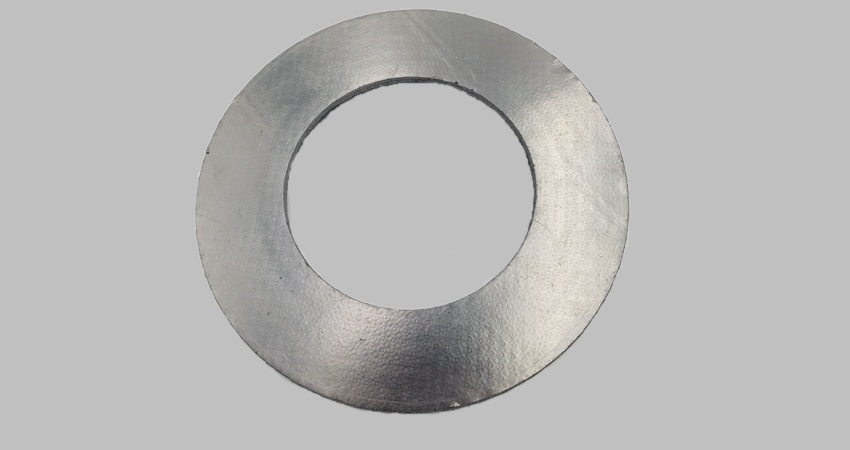
What is a PTFE microporous membrane?
Picture this: You are a procurement lead for a chemical processing line, and your current filter media is failing after three weeks of exposure to solvent vapors. Production has already lost 11 hours this month, and the replacement order from your previous supplier arrived with inconsistent pore sizes. Your inbox is full of quotes, but none of them explain the root cause clearly. What is a PTFE microporous membrane? In simple terms, it is a thin polytetrafluoroethylene film engineered with a microporous structure that allows air and gases to pass while blocking liquid water and solid particulates. The material is naturally hydrophobic, chemically inert, and thermally stable from -200°C to 260°C. For buyers who need venting, filtration, or sealing components that survive aggressive environments, this membrane is often the only option that meets all three requirements at once. This guide walks you through practical selection criteria, common procurement pitfalls, and how Ningbo Kaxite Sealing Materials Co., Ltd. delivers consistent PTFE membrane rolls, discs, and custom die-cut parts to help you avoid the failures mentioned above. Read on to see how the right microporous PTFE specification can cut your total cost of ownership and prevent unplanned downtime.
In this article:
- Why Procurement Teams Struggle with Standard Filter Media
- How PTFE Microporous Membranes Solve Filtration and Venting Failures
- Key Technical Parameters Buyers Must Evaluate
- Frequently Asked Questions About PTFE Microporous Membranes
- How Ningbo Kaxite Sealing Materials Co., Ltd. Supports Your Supply Chain

Why Procurement Teams Struggle with Standard Filter Media
Your current supplier says the membrane has a 0.45 µm pore size, but the quality control report shows a bubble point range that varies by 40%. In production, that inconsistency shows up as random leakage and pressure spikes. Procurement teams often inherit a specification from an engineer without understanding which parameters actually predict field performance. The result is a cycle of emergency reorders, production downtime, and rising inspection costs. Standard polypropylene or nylon membranes may look cheaper on the purchase order, but in aggressive chemical environments they swell, clog, or delaminate within weeks. A PTFE Microporous Membrane removes this guesswork because its node-and-fibril structure is controlled during stretching, giving buyers a reproducible pore size distribution and consistent air flow from lot to lot.
Ningbo Kaxite Sealing Materials Co., Ltd. addresses this pain point by supplying PTFE microporous membranes with documented bubble point, water entry pressure, and air permeability values for each batch. Instead of accepting vague datasheets, buyers can order against measurable specifications and reject non-conforming material before it reaches the production floor.
| Parameter | Standard PP/Nylon Membrane | PTFE Microporous Membrane |
|---|---|---|
| Maximum continuous temperature | 80–120 °C | 260 °C |
| Chemical compatibility | Poor to moderate in solvents and acids | Near-universal inertness |
| Hydrophobicity | Moderate or hydrophilic | High, water entry pressure up to 200 kPa+ |
| Typical failure mode | Swelling, clogging, delamination | Rare, usually incorrect pore size selection |
| Batch consistency | Often variable | Controlled by node-fibril stretching and QC |
How PTFE Microporous Membranes Solve Filtration and Venting Failures
Consider an outdoor telecom enclosure that must equalize pressure while keeping rain, dust, and humidity out. A conventional vent may use a woven fabric or a basic membrane that works in dry weather but fails once the enclosure is exposed to salt spray or temperature swings. The same challenge appears in sensor housings for agricultural machinery and in sterile vent ports on pharmaceutical tanks. In all these cases, a PTFE microporous membrane provides a reliable pressure-equalization path while blocking liquid water and airborne particulates. Because PTFE is inherently hydrophobic and chemically inert, the vent does not wet out under rain, does not react with cleaning agents, and does not lose air flow after exposure to solvents.
For filtration applications, a PTFE microporous membrane can handle aggressive acids, bases, and organics that would destroy a standard polypropylene filter. Buyers who face repeated filter replacement in harsh chemical lines can switch to PTFE and extend service intervals significantly. The key is to match pore size to the particle load and to specify the correct support layer, which Ningbo Kaxite Sealing Materials Co., Ltd. can guide you through during sample evaluation.
Key Technical Parameters Buyers Must Evaluate
Before issuing a purchase order, procurement teams should compare these measurable values across suppliers. A PTFE microporous membrane is not a commodity item; small differences in pore size, thickness, and water entry pressure can lead to field failures or excessive pressure drop. Use the table below as a quick reference when reviewing datasheets.
| Parameter | Typical Range | Why It Matters |
|---|---|---|
| Pore size | 0.1 – 10 µm | Determines particle retention and air flow |
| Air permeability (Gurley number) | 5 – 60 s/100 mL | Lower value means higher flow |
| Water entry pressure (WEP) | 20 – 250 kPa | Higher value means better waterproofness |
| Thickness | 20 – 200 µm | Affects die-cutting and installation fit |
| Bubble point (IPA) | 10 – 300 kPa | Verifies pore size integrity |
| Tensile strength | 5 – 30 MPa | Ensures membrane survives handling and assembly |
You may not need every parameter on every order, but you should always request at least pore size, air permeability, and WEP. These three values define how the membrane will behave in most venting and filtration applications. When a supplier cannot provide batch-specific test data, treat that as a red flag. Ningbo Kaxite Sealing Materials Co., Ltd. includes QC documentation with each shipment, so your incoming inspection team can verify the material before it enters your warehouse.
Frequently Asked Questions About PTFE Microporous Membranes
What is a PTFE microporous membrane, and how does it differ from expanded PTFE (ePTFE)?
A PTFE microporous membrane is a thin polytetrafluoroethylene film that contains a controlled network of microscopic pores. Expanded PTFE, or ePTFE, is one common manufacturing route in which the PTFE is stretched to create a node-and-fibril structure. In practice, many industrial buyers use the two terms interchangeably, but the important point is that both offer high chemical resistance, wide temperature tolerance, and strong hydrophobicity. The difference is mainly in the production method and the resulting pore geometry, which affects air permeability, mechanical strength, and bubble point. When you specify a PTFE microporous membrane from Ningbo Kaxite Sealing Materials Co., Ltd., you receive a material that has been processed and tested to meet consistent pore size and air flow targets, regardless of whether it is described as expanded or microporous.
What is a PTFE microporous membrane's recommended pore size for sterile venting versus liquid filtration?
For sterile gas or air venting, a pore size between 0.1 µm and 0.45 µm is common because it blocks bacteria and water droplets while allowing gas exchange. For liquid filtration of aggressive chemicals, the ideal range often falls between 1 µm and 5 µm, depending on the particle load and the required flow rate. A smaller pore size is not always better: it may trap more particles but also increase pressure drop and slow down the process. The best approach is to test two or three pore sizes with your actual process fluid and measure differential pressure over time. Ningbo Kaxite Sealing Materials Co., Ltd. can provide sample discs or small rolls so you can validate performance before committing to a bulk order.
How Ningbo Kaxite Sealing Materials Co., Ltd. Supports Your Supply Chain
When you source a PTFE microporous membrane, you are not just buying a roll of film; you are buying consistency, technical support, and on-time delivery. The most common procurement challenge is receiving a sample that passes inspection, only to find that the production batch behaves differently. Ningbo Kaxite Sealing Materials Co., Ltd. solves this by maintaining strict in-house testing and by offering custom die-cutting, slitting, and adhesive backing services that reduce secondary processing costs.
| Custom Requirement | Kaxite Standard Option |
|---|---|
| Thickness tolerance | ±5 µm on request |
| Roll width | 10 mm – 1600 mm |
| Die-cut formats | Discs, washers, gaskets, vent plugs |
| Adhesive backing | Acrylic or silicone, high-temperature grades |
| QC documentation | Bubble point, WEP, air permeability per lot |
| Lead time | Fast sample approval; bulk in 10–15 days |
Still reviewing technical data or ready to request a quote? Compare your current membrane performance against the parameters above, and let us know which specification you are sourcing. A short conversation can often reveal whether a higher WEP, a tighter pore size tolerance, or a custom die-cut format will solve the failure you are seeing in the field.
Ningbo Kaxite Sealing Materials Co., Ltd. is a specialized manufacturer and exporter of PTFE microporous membranes, ePTFE sealing tapes, and gasket materials. With in-house slitting, die-cutting, and testing capabilities, the company helps procurement teams secure repeatable quality for venting, filtration, and sealing applications. For technical data sheets, samples, or a quote, contact kaxite@seal-china.com or visit https://www.seal-china.com.
References
1. Huang, Q. L., Xiao, C. F., Hu, X. Y., & An, S. L. (2011). Preparation and properties of polytetrafluoroethylene microporous membrane. Journal of Membrane Science, 377(1-2), 182-189.
2. Zhang, Y., Wang, R., & Fane, A. G. (2010). Effect of membrane pore size on the performance of a membrane distillation process. Journal of Membrane Science, 362(1-2), 12-19.
3. Lalia, B. S., Kochkodan, V., Hashaikeh, R., & Hilal, N. (2013). A review on membrane fabrication: Structure, properties and performance relationship. Desalination, 326, 77-95.
4. Feng, C., Khulbe, K. C., Matsuura, T., & Ismail, A. F. (2013). Recent progresses in polymeric hollow fiber membrane preparation, characterization and applications. Separation and Purification Technology, 111, 43-71.
5. Saffarini, R. B., Mansoor, B., Thomas, R., & Arafat, H. A. (2013). Effect of temperature-dependent microstructure evolution on pore wetting in PTFE membranes. Journal of Membrane Science, 431, 105-112.
6. Teoh, M. M., & Chung, T. S. (2009). Membrane distillation with hydrophobic macrovoid-free PVDF-PTFE hollow fiber membranes. Journal of Membrane Science, 326(2), 343-348.
7. Zhao, K., Zhang, X., Wei, J., Li, M., & Wang, Z. (2017). A review of polymer-based membranes for membrane distillation. Desalination, 402, 157-174.
8. Wang, Z., & Lin, S. (2017). The role of membrane pore structure in membrane fouling. Journal of Membrane Science, 542, 388-397.
9. Khayet, M., & Matsuura, T. (2011). Membrane Distillation: Principles and Applications. Journal of Membrane Science, 373(1-2), 1-6.
10. Goessi, M., Tervoort, T., & Smith, P. (1999). Melt-spun poly(tetrafluoroethylene) fibers. Journal of Materials Science, 34(15), 3735-3740.
Next :
-
Related News
Leave me a message