
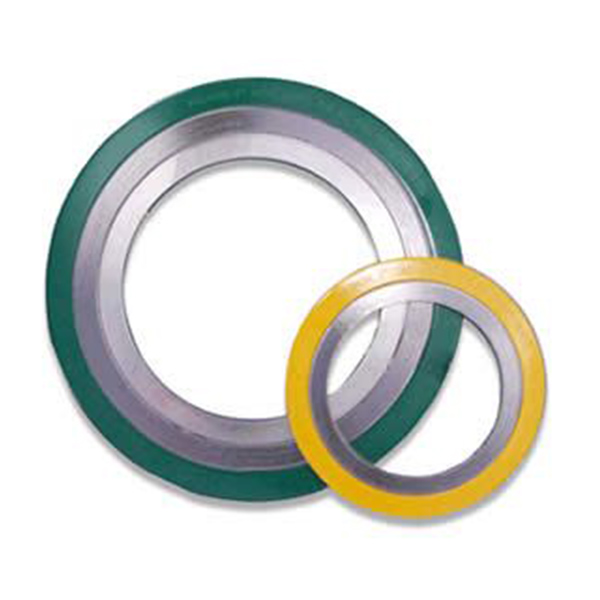

Standard Spiral Wound Gasket
Model:KXT-600
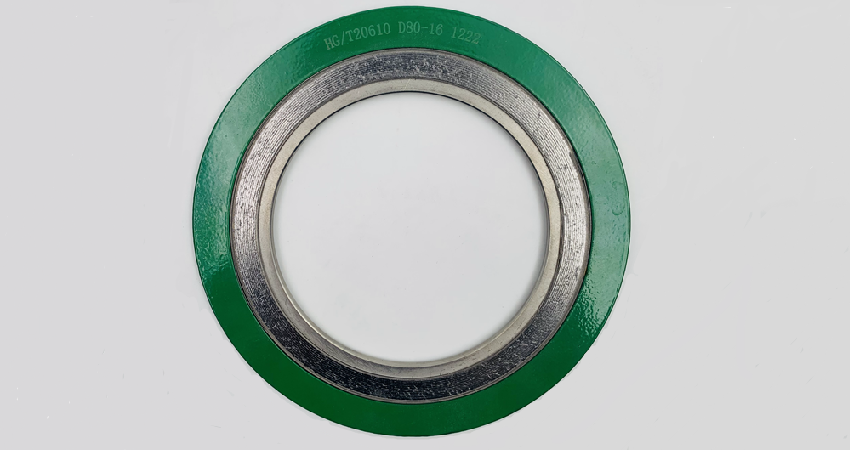
Standard spiral wound gasket (KXT-600) in four constructions — Basic R, Inner Ring IR, Outer Ring CG and Inner & Outer Ring CGI. Sizes DN15–DN3000, pressure Class 150–2500, made to ASME B16.20 / EN 1514-2 / JIS B2404. Standard supply SS316 winding + graphite filler. EN 10204 3.1 certificates on request. Reply within 2 business hours.
Model KXT-600
Standard Spiral Wound Gasket for Raised Face & Flat Face Flanges — R / IR / CG / CGI
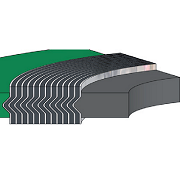
Buying a standard spiral wound gasket for RF or FF flanged joints? The KXT-600 is our general-purpose range — a pre-formed V-shaped metal strip is wound alternately with a soft filler so the metal works as a spring, giving the gasket real resilience under fluctuating pressure and temperature, which a flat cut gasket simply cannot match.
Available in four constructions — Basic R, Inner Ring IR, Outer Ring CG, and Inner & Outer Ring CGI — in sizes DN15 to DN3000 and pressure classes 150 to 2500. Made to ASME B16.20, EN 1514-2, JIS B2404 and other major standards.
Send your flange size, media, pressure and temperature — our technical team replies with a recommendation and price within 2 business hours.
What Buyers Get From Kaxite
Direct factory pricing
We wind, weld, size and inspect every gasket in our own workshop. No trading company mark-up between you and the production line. See our workshop.
Certificates with the goods
EN 10204 3.1 material certificates on request. Heat number stamped on the outer ring and traceable back to the incoming strip. See our certificates.
Honest lead times
Standard 304/316 windings normally ship in 7–15 working days. Exotic metals quoted against real mill availability. See packaging & shipping.
Low MOQ, fast response
No rigid minimum for standard sizes. Small shutdown quantities accepted. Technical reply and quotation within 2 business hours.
Drawing & sample production
Non-standard OD, ID, bolt circle, thickness and pass partitions produced to your PDF, DWG or DXF drawing.
Quality you can audit
PMI / spectrometer check on incoming strip, 100% dimensional inspection before packing. See our quality process.
Four Constructions — R / IR / CG / CGI
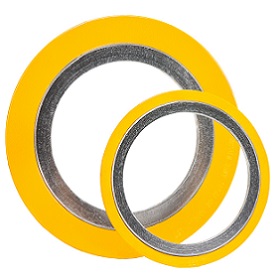
All four styles use the same winding and filler technology. They differ only in the rings, and the ring choice is what decides which flange type the gasket fits. This is usually the first decision a buyer has to make.
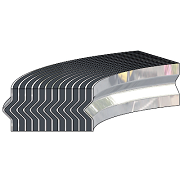
Basic Type — R
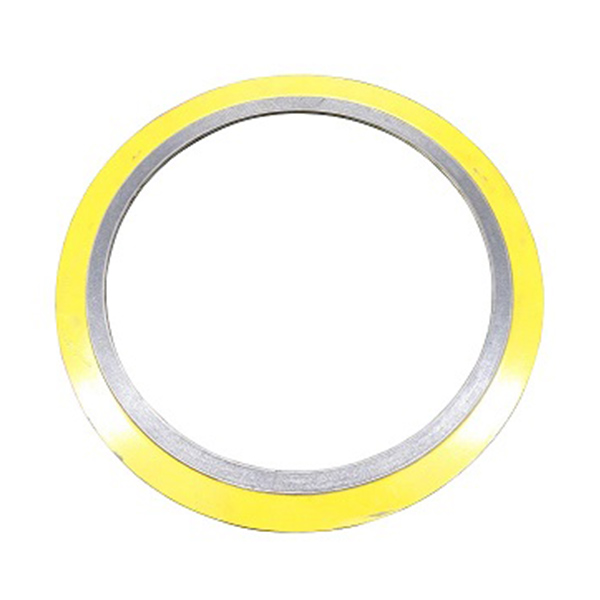
Winding onlyInner and outer diameters are reinforced with several plies of metal without filler, giving greater stability and better compression characteristics than a plain winding. There is no centring ring and no compression stop — the flange itself must confine and centre the gasket.
Best for: tongue-and-groove, male-and-female, or grooved-to-flat-face flange assemblies.
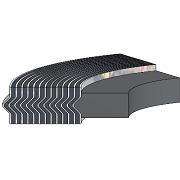
Inner Ring Type — IR
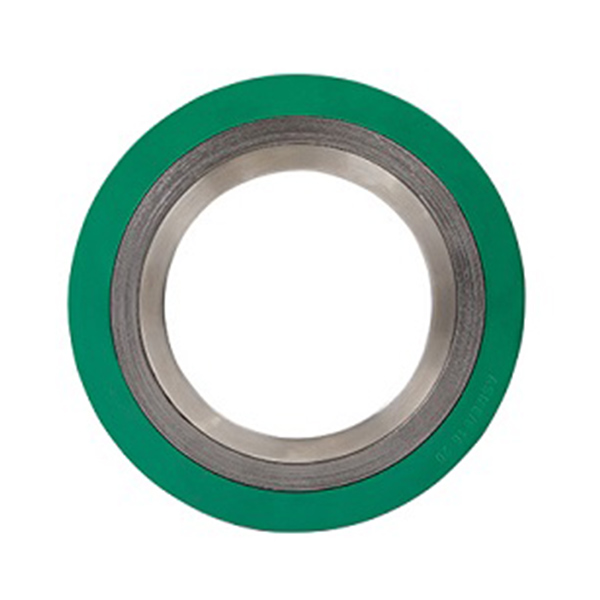
Winding + inner ringA solid inner metal ring acts as a compression stopper and fills the annular space between the flange bore and the gasket inside diameter. It prevents accumulation of solids in that gap, reduces turbulent flow of the process fluid, and minimises erosion damage to the winding.
Best for: male-and-female pipe flanges, and any line where solids build-up or flow erosion is a concern.
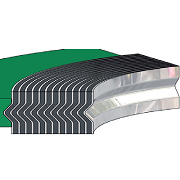
Outer Ring Type — CG
Winding + outer ringThe solid outer (centring) ring positions the gasket accurately on the bolt circle and acts as a compression stop, limiting how far the winding can be crushed. The winding is welded to the outer ring, so the gasket cannot unwind during handling.
Best for: raised-face and flat-face flanges — the general purpose ringed version, and the most economical. Full details on the CG product page.
Inner & Outer Ring Type — CGI
Winding + inner ring + outer ringBoth compression limiting stops, inner and outer. The outer ring centres the gasket and stops over-bolting; the inner ring prevents inward buckling, reduces turbulence and shields the flange faces at the annular space from corrosion.
Best for: Class 900 and above, high vacuum, cyclic service and other critical joints. See the CGI product page.
Not sure which one to specify? Send us the flange standard, media, pressure and temperature. We will tell you which construction fits — and we will say so honestly if the cheaper option will do the job. Compare our full spiral wound gaskets range.
Winding Metal and Filler Options
The sealing performance of any spiral wound gasket comes from the combination of winding metal and filler. We stock and wind a wide range of both, so the gasket you receive matches your media and operating conditions — not just the cheapest combination available.
Winding metal
- SS 304 / 304L
- SS 316 / 316L
- SS 321
- SS 347
- SS 309
- SS 310
- SS 317L
- SS 904L
- SS 410
- Monel 400
- Inconel 600
- Inconel 625
- Inconel 800 / 800H
- Inconel 825
- Hastelloy B3
- Hastelloy C276
- Titanium Gr.2
Filler material
- Flexible Graphite
- PTFE
- Non-Asbestos
- Mica
Standard supply is SS316 winding with graphite filler — the most cost-effective combination for steam, water, oil and general chemical service. For aggressive or high-temperature duty where 304/316 windings are not enough, see our dedicated special materials spiral wound gaskets range.
Technical Specifications
How a Standard Spiral Wound Gasket Is Made
A pre-formed metal strip and a filler strip are wound alternately on a mandrel. The mandrel's outside diameter sets the gasket's inner diameter, and winding continues until the required outer diameter is reached. At the end of the winding the metal strip is spot-welded — to the inner ring, the outer ring, or both — so the gasket cannot unwind during handling or installation. The finished gasket is compressed to thickness, dimensionally checked, and marked.
STEP 01
V-shaped metal strip and filler strip prepared to specification
STEP 02
Spiral winding on mandrel to required ID and OD
STEP 03
Spot-weld metal strip to inner / outer ring for stability
STEP 04
Compress to thickness, dimensional check, ring marking
Typical Applications
Standard spiral wound gaskets are specified wherever flanged joints must hold under pressure and temperature cycling. Typical installations include:
- Pipe flanges, valve bonnets and pump casings
- Heat exchangers, condensers and thermal exchange equipment — see our heat exchanger spiral wound gaskets
- Condensing towers, column flanges, plain holes and manholes
- Petrochemical and chemical processing plants
- Power stations, metallurgy and shipbuilding
- Medical, pharmaceutical and nuclear auxiliary systems — see our nuclear spiral wound gaskets
Related sealing products in the same family include ring joint gaskets, expanded graphite gaskets, PTFE gaskets and double jacketed gaskets.
Advantages of a Standard Spiral Wound Gasket
- Material matched to the media. Winding metal and filler are selected for the specific fluid and operating conditions, not a fixed stock combination.
- Handles high pipeline pressure. Suitable for flat or raised flange faces across a wide pressure range.
- Wide range of sizes and shapes. Standard DN15–DN3000 plus fully custom dimensions to drawing.
- Resilient under temperature cycling. The metal spring action compensates for bolt relaxation and thermal movement — service range from cryogenic up to 1000 °C depending on the material combination.
- Quick to install and remove. Single-piece construction, no loose parts, no special tools.
- Documented and traceable. Heat-number marking on every ring and EN 10204 3.1 certificates on request.
Packing, Shipping and Identification
Packing
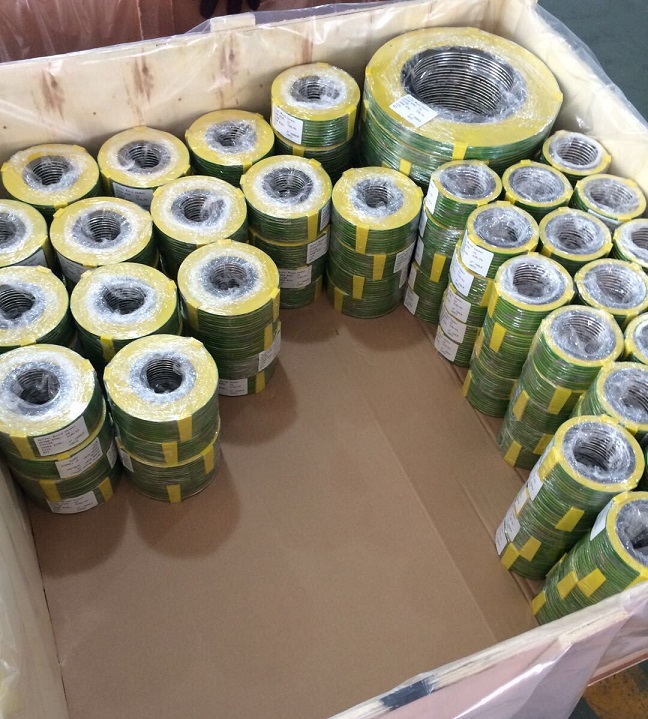
Spiral wound gaskets are protected with plastic film, then packed in wooden pallets or wooden cases suitable for sea and air freight. Customer labels and packing lists are available on request — see packaging & shipping.
Shipping
By sea, by rail or by air, depending on your schedule and destination. Standard materials normally ship within 7–15 working days of order confirmation.
Gasket identification
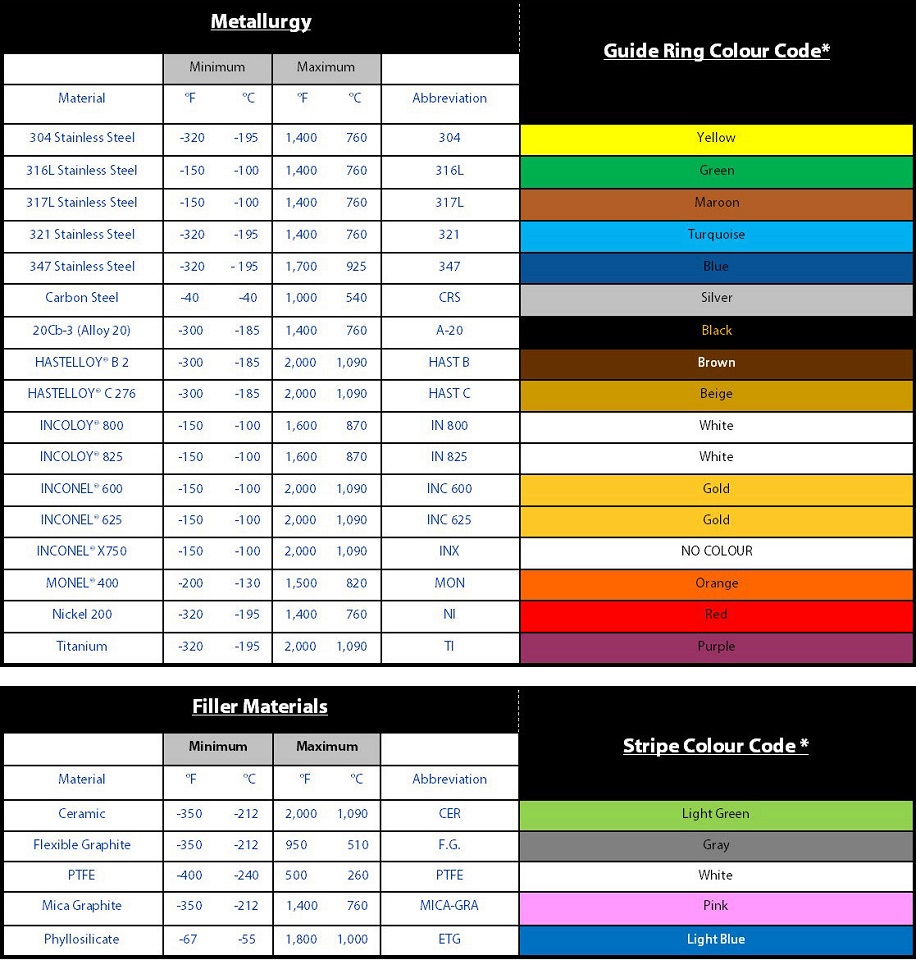
Every standard spiral wound gasket is stamped on the outer ring with size, pressure class, material code and heat number — the same information that appears on the material certificate, so your maintenance team can verify the gasket on site without opening the line.
Ordering Information You Should Prepare
To give you a firm quotation and a realistic delivery date the first time, please include the following in your inquiry:
- Gasket standard and size — ASME B16.20 / EN 1514-2 / JIS B2404, DN or NPS, Class or PN
- Construction — Basic R, IR, CG or CGI
- Winding metal and filler — e.g. SS316 + graphite
- Ring material and finish — carbon steel zinc plated, painted, or stainless
- Operating conditions — pressure, temperature, media name and concentration
- Quantity and required delivery date
- Documentation — EN 10204 3.1 certificate, third-party inspection or test reports
Buyer FAQ
What is the difference between the R, IR, CG and CGI constructions?
All four use the same winding and filler. R is winding only, for confined joints such as tongue-and-groove flanges. IR adds an inner ring for anti-erosion and a compression stop. CG adds an outer centring ring for standard raised-face and flat-face flanges. CGI adds both rings and is specified for Class 900 and above or other critical service.
Can you supply non-standard sizes or match a drawing?
Yes. Non-standard spiral wound gaskets are routine for us — send a PDF, DWG or DXF drawing, or a sample, and we will confirm feasibility, price and lead time.
What information do you need to quote a standard spiral wound gasket?
Please send the gasket standard and size (DN or NPS, Class or PN), construction type (Basic R, IR, CG or CGI), winding metal, filler material, ring material and finish, operating pressure and temperature, media name and concentration, quantity and required delivery date. If you need EN 10204 3.1 certificates or third-party inspection, state this in the inquiry.
How quickly can you quote?
With the details above, our technical sales team can give you a recommendation and price within 2 business hours during working days. Complex custom drawings may take slightly longer, and we will tell you if that is the case.
What is your minimum order quantity?
There is no rigid minimum for standard sizes. We regularly supply small quantities for maintenance and shutdown work. For exotic winding metals a modest MOQ may apply, and we will state it clearly in the quotation.
Do you supply material certificates?
Yes. EN 10204 3.1 certificates are available on request, and third-party inspection (SGS, BV, TUV or client-nominated) can be arranged or hosted at additional cost. See our certificates.
What payment terms do you accept?
Normally T/T with a 30% deposit and balance before shipment. L/C at sight can be discussed for larger orders. Terms are confirmed in the quotation.
What if the gasket leaks after installation?
Contact us with the bolting torque, flange condition and operating data. Most failures trace back to insufficient bolt load, a damaged flange face or the wrong filler for the media — we will help you work out which, and replace the gasket if the gasket itself is at fault.
Request a Quotation for Standard Spiral Wound Gaskets
Send us your flange list or data sheet — or simply a clear photo of the flange opening with a ruler in frame — and we will come back with a technical recommendation, price and realistic delivery date. Include your flange specification, operating pressure, temperature and process media for the fastest response.
- Tel: 0086-574-87527771
- E-mail: kaxite@seal-china.com
Related Category
Send Inquiry
Contact Info
-
Address
No. 432 Zhenhai Middle Road, Luotuo Street, Zhenhai District, Ningbo City, Zhejiang China
-
-
Email
Request a Quote or Technical Consultation
Share your sealing requirement and our technical sales team will respond within 24 business hours. For fastest service, include your flange specification, operating pressure, temperature, and process media in the message below.
Related Products


News Recommendations