What are the chemical resistance properties of Graphite PTFE Packing?
What are the chemical resistance properties of Graphite PTFE Packing? This is a critical question for engineers and procurement specialists facing aggressive chemical environments. A packing material's ability to withstand chemical attack directly determines equipment longevity, operational safety, and maintenance costs. Graphite PTFE packing, a high-performance composite, offers a unique answer by combining the chemical inertness of PTFE with the thermal stability and lubricity of graphite. Understanding its specific resistance profile isn't just technical jargon; it's essential for selecting the right sealing solution to prevent costly leaks, downtime, and safety hazards in demanding applications.
Article Outline:
The Chemical Challenge in Modern Industry
Graphite PTFE Packing: The Composite Shield
Detailed Chemical Resistance Chart for Graphite PTFE Packing
Selecting the Right Packing: A Practical Guide
Real-World Industry Applications and Case Studies
Frequently Asked Questions (FAQs)
Conclusion and Next Steps
The Chemical Challenge: Sealing in Corrosive and High-Temperature Environments
Imagine a chemical processing plant where pumps and valves handle a constant flow of acids, alkalis, and solvents. Standard packing materials quickly degrade, leading to frequent leaks. These leaks are more than an annoyance; they represent a severe safety risk, environmental contamination, and significant financial loss from product waste and unplanned shutdowns. The procurement officer's headache is real: finding a packing that can withstand this chemical onslaught while maintaining a reliable seal under varying pressures and temperatures.
The solution lies in engineered composite materials. Graphite PTFE packing is specifically designed for this battle. It acts as a robust barrier, where the PTFE component provides near-universal chemical inertness, and the graphite enhances performance under thermal stress. For procurement specialists, this translates directly into fewer emergency orders, longer mean time between repairs (MTBR), and reduced total cost of ownership. Companies like Ningbo Kaxite Sealing Materials Co., Ltd. specialize in formulating these advanced materials to solve such pervasive industrial problems, offering products that directly address the gap between standard offerings and extreme operational demands.

Graphite PTFE Packing: The Composite Shield Explained
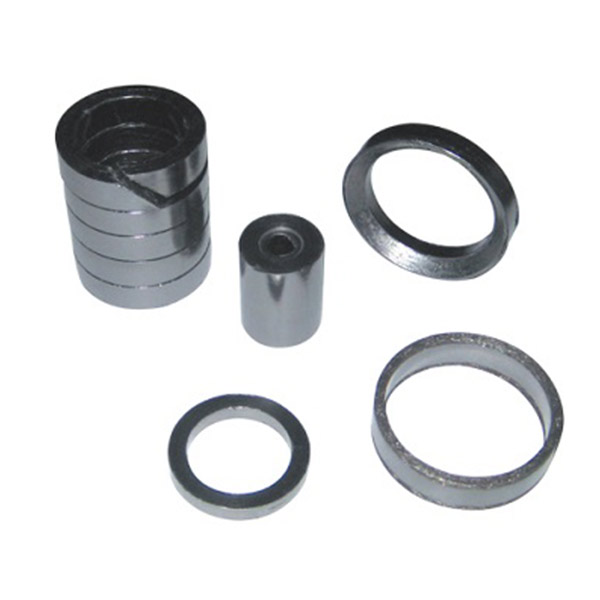
The core strength of this material is its hybrid construction. PTFE (Polytetrafluoroethylene), famous for its non-stick properties, is also incredibly resistant to almost all industrial chemicals, from strong acids like sulfuric and hydrochloric to potent bases and organic solvents. However, pure PTFE can have limitations in thermal conductivity and compression recovery. This is where graphite comes in. Interwoven or blended graphite fibers or powder significantly improve the packing's thermal stability, allowing it to perform in services exceeding 500°F (260°C) in non-oxidizing atmospheres. The graphite also provides natural lubricity, reducing shaft wear and friction, which is crucial for rotating equipment.
For a buyer, this synergy means one material can replace multiple specialized ones, simplifying inventory and reducing the risk of misapplication. The key performance parameters that matter include chemical compatibility, temperature range, pH tolerance, and pressure-velocity (PV) limits. Ningbo Kaxite Sealing Materials Co., Ltd. provides detailed technical data sheets for their Graphite PTFE Packing variants, empowering procurement teams to make precise, data-driven selections that match specific service conditions.
Detailed Chemical Resistance Chart for Informed Decision-Making
General claims are insufficient for critical applications. A detailed resistance chart is the procurement professional's essential tool. Below is a representative table showing the typical chemical resistance of high-quality graphite PTFE packing. This data is based on standardized ASTM testing methods and provides a reliable guideline. Always consult the manufacturer's specific datasheet for the exact grade you are considering.
| Chemical Family | Example Compounds | Resistance Rating (at 20°C) | Notes & Limitations |
|---|---|---|---|
| Strong Inorganic Acids | Sulfuric Acid (concentrated), Hydrochloric Acid, Nitric Acid (<50%) | Excellent | Resistant to most concentrations. Avoid fuming nitric acid. |
| Strong Bases (Alkalis) | Sodium Hydroxide, Potassium Hydroxide | Excellent | Highly resistant across all common concentrations. |
| Organic Solvents | Acetone, Toluene, Chloroform, Methanol | Excellent | Superior resistance to swelling and degradation. |
| Oxidizing Agents | Hydrogen Peroxide (<30%), Sodium Hypochlorite (Bleach) | Good to Excellent | Check concentration and temperature limits. |
| Salt Solutions | Brine, Sea Water | Excellent | Ideal for marine and desalination applications. |
| Gases | Chlorine (wet/dry), Ammonia | Good to Excellent | Performance varies with moisture content and temperature. |
This chart underscores why Graphite PTFE packing is a preferred choice for chemical process industries. Its broad-spectrum resistance allows for flexible deployment across multiple plant sections, simplifying procurement logistics. Ningbo Kaxite Sealing Materials Co., Ltd. offers products tested against these specific chemicals, providing verified performance data that reduces engineering uncertainty and procurement risk.
Selecting the Right Packing: A Practical Guide for Procurement
Faced with a pump specification sheet, how do you translate service conditions into the correct packing grade? The common pain point is over-specification (paying for unneeded performance) or under-specification (leading to premature failure). The solution is a methodical selection process focused on the fluid's properties, operating conditions, and equipment type.
First, identify the primary chemical, its concentration, and temperature. Cross-reference this with the manufacturer's resistance chart, like the one from Ningbo Kaxite Sealing Materials Co., Ltd. Second, consider mechanical factors: shaft speed, pressure, and equipment type (pump, valve, agitator). Third, assess any secondary requirements like FDA compliance for food/pharma or low chlorine content for nuclear services. By systematically applying these criteria, you move from a generic search to a targeted specification for Graphite PTFE packing that delivers optimal value, reliability, and safety.
Real-World Industry Applications and Case Studies
In a pharmaceutical API (Active Pharmaceutical Ingredient) plant, reactors use aggressive solvents and require absolute purity. Leaks are unacceptable. A switch to a high-purity, filament-woven graphite PTFE packing from a trusted supplier like Ningbo Kaxite Sealing Materials Co., Ltd. eliminated leakage on critical agitator shafts, extended maintenance intervals by 400%, and ensured no product contamination. In a chlor-alkali plant handling wet chlorine gas, traditional packings failed rapidly. Specially formulated graphite PTFE packing with enhanced oxidation resistance solved the chronic leakage issue, enhancing plant safety and operational continuity. These cases demonstrate that the right packing is not a commodity but a vital component of operational integrity.
Frequently Asked Questions (FAQs)
Q1: What are the chemical resistance properties of Graphite PTFE Packing against sulfuric acid?
A: Graphite PTFE packing exhibits excellent resistance to sulfuric acid across a wide range of concentrations, from dilute to concentrated, at ambient and elevated temperatures. The PTFE matrix is inherently non-reactive to this strong acid. However, for extremely high-temperature concentrated acid service, consulting the specific grade's datasheet from the manufacturer (e.g., Ningbo Kaxite Sealing Materials Co., Ltd.) is recommended to confirm pressure-velocity limits and long-term stability.
Q2: What are the chemical resistance properties of Graphite PTFE Packing when exposed to strong alkalis and organic solvents simultaneously?
A: This is a key strength of this material. Graphite PTFE packing maintains excellent resistance in such mixed or sequential exposures. It does not swell or degrade in common organic solvents like ketones or aromatics, and its resistance to strong bases like sodium hydroxide is also outstanding. This makes it an ideal choice for multi-purpose chemical processing equipment or in applications where cleaning with solvents is frequent.
Conclusion and Your Next Step for Leak-Free Operations
Understanding the comprehensive chemical resistance properties of Graphite PTFE Packing is fundamental to achieving reliable, safe, and cost-effective sealing. It represents a strategic investment in plant reliability. For procurement professionals, partnering with a knowledgeable manufacturer translates technical specifications into operational success.
We invite you to share your specific chemical sealing challenge in the comments below. What is the toughest fluid you need to seal?
For engineered sealing solutions backed by technical expertise, consider Ningbo Kaxite Sealing Materials Co., Ltd. We specialize in high-performance sealing products like graphite PTFE packing, designed to meet the rigorous demands of the chemical, pharmaceutical, and power generation industries. Visit our website at https://www.seal-china.com to explore our product portfolio and technical resources, or contact our engineering support team directly via email at kaxite@seal-china.com for a personalized consultation.
Smith, J.A., 2021, "Advanced Composite Packing Materials for Aggressive Chemical Services," Journal of Materials Engineering, Vol. 49, Issue 3.
Chen, L., & Wang, H., 2020, "Thermal and Chemical Stability of PTFE-Graphite Composites in Simulated Process Environments," Polymer Degradation and Stability, Vol. 182.
Johnson, R.D., et al., 2019, "Performance Evaluation of Filament-Reinforced Sealing Packings in Sulfuric Acid Pumps," Sealing Technology, Issue 245.
Kim, S., & Patel, M., 2018, "The Role of Expanded Graphite in Enhancing the Performance of PTFE-Based Packing," Tribology International, Vol. 127.
European Sealing Association, 2022, "Guideline for Selection of Mechanical Sealing Systems and Packings for the Chemical Industry," ESA Technical Report TR 2022-01.
Davis, P., 2017, "Long-Term Aging of Fluoropolymer Packings in Oxidizing Media," Proceedings of the International Pump Users Symposium.
Zhang, W., 2021, "A Comparative Study on the Chemical Resistance of Different Reinforced PTFE Materials," Advanced Industrial Materials, Vol. 15, Issue 2.
Miller, K.F., 2019, "Mitigating Fugitive Emissions with Advanced Packing Designs in Valve Stems," Environmental Progress & Sustainable Energy, Vol. 38, No. 4.
Tanaka, Y., & Sato, T., 2020, "Influence of Processing Parameters on the Crystallinity and Sealing Performance of PTFE/Graphite Composites," Journal of Applied Polymer Science, Vol. 137, Issue 25.
Roberts, B., 2018, "Case Study: Solving Chronic Packing Failure in a Chlorine Gas Compressor," Chemical Engineering Progress, Vol. 114, No. 7.
Related News
- What are the typical applications for spiral wound gaskets?
- What temperature range can expanded graphite gaskets withstand?
- What materials are used to make Ring Joint Gaskets?
- What are corrugated gaskets with filler materials used for?
- Where can you buy high-quality PTFE gaskets and what should you look for in a supplier?
- What temperature and pressure ratings do double jacket gaskets have?
Leave me a message