
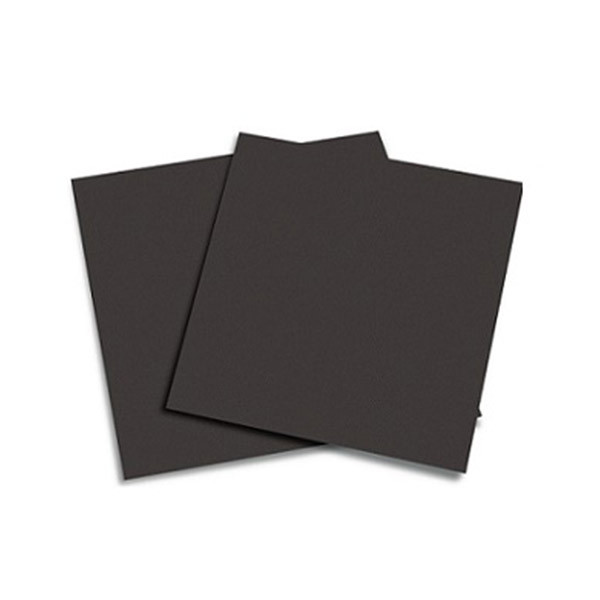
Flexible Graphite Sheet
Model:KXT B201
Kaxite Flexible graphite sheet and rolls is made from high purity graphite, it is used can be expanded graphite particles formed by the high temperature expansion of repression, it retains the high temperature crystalline flake graphite, corrosion resistant, self lubricating, etc.
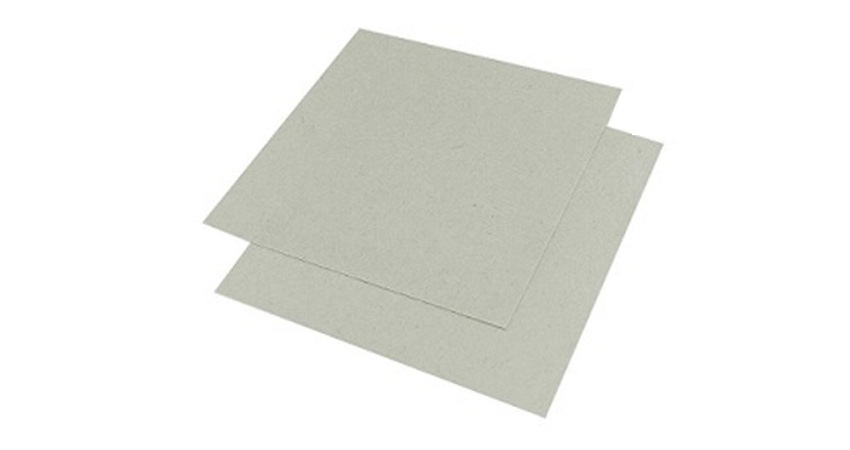
Kaxite KXT B201 Flexible Graphite Sheet (also known as expanded graphite sheet) is a non-asbestos, high-purity sealing material made from natural flake graphite that has been chemically intercalated, thermally expanded and then rolled — without any binder, adhesive or filler. With 98–99% carbon content (up to 99.5% for the nuclear grade KXT B201N) and a standard density of 1.0 g/cm³, it is supplied as sheets 0.5–3.0 mm thick and rolls 0.2–1.1 mm thick, and is widely used to produce cut gaskets, spiral wound gasket filler strips and braided packing rings.
Flexible Graphite Sheet at a Glance
| Product Name | Flexible Graphite Sheet / Expanded Graphite Sheet |
| Kaxite Model | KXT B201 (industrial grade) | KXT B201N (nuclear grade) |
| Material | Expanded natural flake graphite, binder-free |
| Carbon Content | 98–99% (industrial) | ≥99.5% (nuclear) |
| Standard Density | 1.0 g/cm³ (other densities available on request) |
| Working Temperature |
−240 °C to +500 °C in oxidizing media −240 °C to +3500 °C in non-oxidizing media |
| Chemical Resistance | pH 0–14, except strong oxidizing acids |
| Supply Form | Sheets (1000 / 1500 mm) and Rolls (width 1000–1500 mm, length 30–100 m) |
| Typical Use | Cut gaskets, spiral wound gasket filler, packing rings, high-temperature flange sealing |
| Origin | Made in China — manufactured in Kaxite's own factory in Ningbo, Zhejiang |
What Is a Flexible Graphite Sheet?
A flexible graphite sheet is a thin, pliable sheet of exfoliated (expanded) graphite. Natural flake graphite is first treated with an intercalating agent, then exposed to a sudden high temperature. The graphite layers burst apart and expand hundreds of times in volume into a worm-like structure called expanded graphite. These worms are then compressed and rolled into continuous sheet or roll form — the finished product being flexible graphite sheet.
Because the graphite layers are held together by mechanical interlocking rather than by a binder, the sheet keeps the outstanding properties of graphite itself: high temperature resistance, chemical inertness, thermal conductivity, low friction and excellent compressibility. It is also completely free of asbestos, which makes it the mainstream replacement material for asbestos jointing sheets in modern industry.
In everyday purchasing language, this material is also searched as expanded graphite sheet, exfoliated graphite sheet, graphite jointing sheet or graphite foil sheet. All of them refer to the same product family covered by Kaxite model KXT B201.
How Kaxite Manufactures Flexible Graphite Sheet
Understanding the production route matters, because it directly determines sealing performance and batch-to-batch consistency. Kaxite controls every step in-house:
- Raw material selection — high-purity natural flake graphite with a large flake size is selected and inspected for carbon content and ash.
- Chemical intercalation — the flake graphite is treated so that the intercalating agent enters between the graphite layers.
- Thermal expansion — the treated graphite is passed through a high-temperature expansion furnace, forming worm-like expanded graphite.
- Calendering / rolling — the expanded graphite is compressed and rolled, with no binder added, into the required density and thickness.
- Cutting and finishing — sheets are trimmed to 1000 mm or 1500 mm, rolls are wound on cores, then packed and batch-coded.
- Quality inspection — density, thickness, tensile strength, compressibility, recovery, sulphur, chlorine and ignition loss are checked before release.
Technical Data of Flexible Graphite Sheet
The table below shows typical values for Kaxite's two standard grades. Values are measured on finished sheet at 1.0 g/cm³ unless otherwise stated, and apply to both sheet and roll form.
| Property | Industrial Grade — KXT B201 | Nuclear Grade — KXT B201N |
|---|---|---|
| Density tolerance (g/cm³) | ± 0.06 | ± 0.05 |
| Carbon content (%) | 98 / 99 | 99.5 |
| Tensile strength (MPa) | 4 | 5 |
| Compressibility (%) | 30 | 30 |
| Recovery (%) | 15 | 15 |
| Sulphur content (ppm) | ≤ 1200 | ≤ 700 |
| Chlorine content (ppm) | ≤ 50 | ≤ 25 |
| Stress relaxation rate (%) | ≤ 10 | ≤ 10 |
| Ignition loss (%) | ≤ 2.0 | ≤ 0.5 |
| pH range | 0 ~ 14 | 0 ~ 14 |
Temperature Resistance
- −240 °C to +500 °C in an oxidizing atmosphere (air, steam, oxygen-rich process media)
- −240 °C to +3500 °C in a non-oxidizing atmosphere (inert gas, vacuum, reducing media)
Important: The 500 °C limit in air is a material property, not a limitation of our
production. Above this temperature graphite oxidizes. If your process runs hotter than 500 °C in an
oxidizing medium, tell our engineers — we will help you evaluate a metal-reinforced graphite sheet or
an alternative sealing material.
Sulphur and Chlorine Control
Low sulphur and low chlorine content is critical for stainless steel and alloy flanges: residual sulphur and chlorine can trigger stress corrosion cracking and pitting at high temperature. Kaxite's nuclear grade KXT B201N keeps sulphur ≤ 700 ppm and chlorine ≤ 25 ppm, making it suitable for nuclear, petrochemical and other corrosion-sensitive services.
Dimensions and Available Forms
| Item | Sheets | Rolls |
|---|---|---|
| Density (g/cm³) | 1.0 | 1.0 |
| Length | 1000 mm, 1500 mm | 30 ~ 100 m |
| Width (mm) | 1000, 1500 | 1000 ~ 1500 |
| Thickness (mm) | 0.5 ~ 3.0 | 0.2 ~ 1.1 |
Special density, thickness, width, shape or grade is available on request. If you need pre-cut strips for spiral wound gasket filler (Style TP201), die-cut rings, or graphite sheet laminated with metal foil or tanged metal, please state your drawing or specification when sending the inquiry.
Related Graphite Sheet Variants
- Graphite Sheet Reinforced with Metal Foil — flat stainless steel foil inserted for higher blow-out resistance
- Graphite Sheet Reinforced with Tanged Metal — mechanical interlock for high-pressure service
- Graphite Sheet with Metal Mesh — wire mesh core for heavy-duty flange joints
Key Features and Performance Benefits
Outstanding Heat Resistance
Stable up to 500 °C in air and far beyond that in inert or reducing atmospheres — no loss of sealing force in thermal cycling service.
Broad Chemical Resistance
Serviceable across pH 0–14. Resists most acids, alkalis, solvents, steam and hydrocarbon media, with the exception of strong oxidizing acids.
Low Stress Relaxation
≤ 10% stress relaxation means the gasket keeps its bolt load over long service intervals — fewer re-torques, less maintenance.
Excellent Compressibility
30% compressibility with 15% recovery lets the material conform to flange imperfections and seal reliably at moderate bolt loads.
Self-Lubricating
Graphite's natural lubricity prevents sticking and makes the sheet easy to cut, punch and form into rings or complex shapes.
100% Asbestos-Free
A safe, fully compliant replacement for asbestos jointing sheet — no health hazard, no disposal restrictions.
Low S & Cl Content
Protects stainless steel and alloy flanges from pitting and stress corrosion cracking at elevated temperature.
High Purity, No Binder
No resin, rubber or adhesive is added, so there is no low-temperature binder to degrade or outgas during service.
Typical Applications
- Gasket manufacturing — die-cut and water-jet cut flange gaskets for pipework, heat exchangers, vessels and manways.
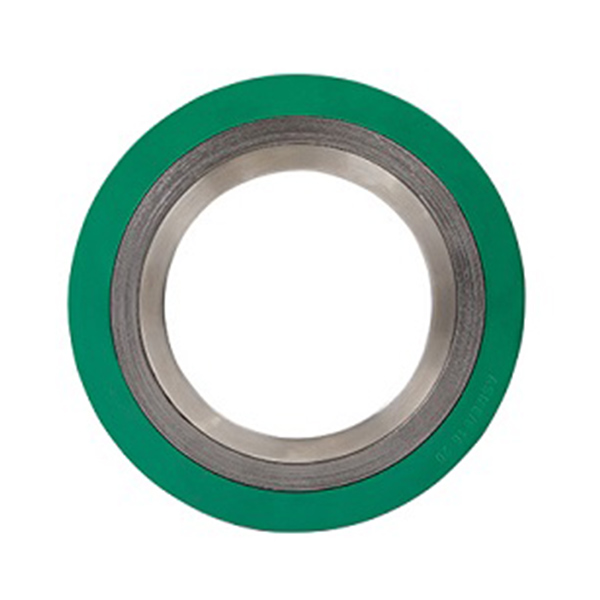
- Spiral wound gasket filler — slit into strip and used as the graphite filler in SWG construction (Style TP201).
- Packing rings — molded or rolled into expanded graphite rings for pumps and valves.
- Chemical and petrochemical plants — flanges carrying steam, hydrocarbons, solvents, acids and alkalis.
- Power generation — steam turbine, boiler and high-temperature pipeline joints.
- Automotive — exhaust manifold and engine gaskets, where high temperature and thermal cycling dominate.
- Pumps and valves — static sealing in high-temperature or aggressive media.
- Metallurgy and glass — furnace, ladle and high-temperature equipment sealing.
- Nuclear industry — using the low-halogen nuclear grade KXT B201N.
Related products from the same material family: Expanded Graphite Gaskets, Graphite Packing, Die-Formed Graphite Rings.
How to Choose the Right Flexible Graphite Sheet
Choosing the correct grade, density and thickness is the difference between a joint that lasts ten years and one that leaks in a month. Use the guidance below, or send us your service conditions and our technical sales engineers will recommend a specification.
1. Choose the Grade
- Industrial grade KXT B201 — general chemical, petrochemical, power and automotive service.
- Nuclear grade KXT B201N — where very low sulphur/chlorine and high purity are required, or when sealing stainless steel at high temperature.
2. Choose the Density
- 1.0 g/cm³ — the standard, best balance of flexibility and strength.
- Higher density — for higher internal pressure and greater blow-out resistance.
- Lower density — where very low bolt load is available.
3. Choose the Thickness
- 0.5 mm — smooth, well-machined flanges.
- 1.0–1.5 mm — the most common choice for general flanges.
- 2.0–3.0 mm — rough, pitted or warped flange faces, and for cutting thicker rings.
4. Decide on Reinforcement
- Plain sheet — standard duties and for making spiral wound filler strip.
- Metal foil / tanged metal / mesh reinforced — high pressure, high temperature, or where blow-out resistance matters.
Rule of thumb: the higher the internal pressure and the larger the flange, the denser
and thinner the sheet should be. The rougher the flange face, the thicker the sheet. When in doubt,
ask us — we will not sell you a heavier specification than your application needs.
Quality Assurance and Testing
Every batch of Kaxite flexible graphite sheet is produced and released under a documented quality control procedure:
- Incoming inspection — carbon content, ash and moisture of the raw flake graphite are verified before production.
- In-process control — expansion temperature, calendering density and thickness are monitored continuously.
- Finished goods testing — density, thickness, tensile strength, compressibility, recovery, sulphur, chlorine, ignition loss and stress relaxation rate.
- Batch traceability — each roll and carton carries a batch number that can be traced back to the raw material lot.
- Third-party testing — SGS, TÜV or other nominated laboratories can be arranged at the buyer's request.
Inspection certificates and material test reports are issued with every shipment. If your project requires a specific standard or an approved-vendor audit, please contact us before ordering so that we can prepare the documentation in advance.
Packing, Delivery and Ordering Information
| Sheet packing | Flat sheets stacked and protected between boards, packed in strong export cartons or on pallets. |
| Roll packing | Wound on a cardboard core, wrapped in plastic film, then packed in wooden cases or on pallets. |
| Marking | Product name, model, density, thickness, dimensions, batch number and quantity on each package. |
| Production lead time | Typically 7–15 working days for standard specifications after order confirmation; shorter for stock items. |
| Shipping terms | FOB Ningbo / Shanghai, CIF, CFR, DDP and express delivery are all available. |
| Customisation | Pre-slit strip, die-cut rings, special densities, widths and thicknesses, private-label packing. |
Please include the following information in your inquiry so that we can quote accurately the first time: density, thickness, sheet size or roll width, quantity, application media and working temperature. If you already have a drawing or datasheet, simply attach it.
Why Buy Flexible Graphite Sheet from Kaxite
- We are the manufacturer, not a trader. Our production, calendering, cutting and packing all take place in our own facility in Ningbo, Zhejiang, China — so you get factory pricing and direct technical support.
- Full product range under one roof. Beyond flexible graphite sheet we manufacture gaskets, braided packing, compression sheets and sealing machines, so you can consolidate your sealing-material sourcing with one qualified supplier.
- Technical sales, not order-taking. Our team answers application questions — temperature limits, media compatibility, bolt-load requirements — and will tell you honestly when a different material would serve you better.
- Fast response. Inquiries are normally answered within 2 business hours during working days.
- Consistent export experience. Products are shipped worldwide with complete export documentation and packing suitable for long sea transport.
- Flexible order sizes. Both trial quantities and repeat container loads are welcome.
Frequently Asked Questions
Is flexible graphite sheet the same as expanded graphite sheet?
Yes. “Flexible graphite sheet”, “expanded graphite sheet”, “exfoliated graphite sheet” and “graphite jointing sheet” all describe the same product: natural flake graphite that has been intercalated, thermally expanded and rolled into sheet without a binder. Kaxite model KXT B201 covers this product family.
What is the maximum working temperature?
In an oxidizing atmosphere (air, oxygen-rich media) the practical limit is 500 °C. In a non-oxidizing atmosphere (inert gas, vacuum or reducing media) it can be used from −240 °C up to +3500 °C. The oxidizing limit applies to the material itself and cannot be raised by changing suppliers.
Can flexible graphite sheet be used with stainless steel flanges?
Yes — but the grade matters. Residual sulphur and chlorine can cause stress corrosion cracking of stainless steel at high temperature. For stainless steel and alloy flanges we recommend the low-halogen nuclear grade KXT B201N (sulphur ≤ 700 ppm, chlorine ≤ 25 ppm).
Can you supply pre-cut strips or die-cut gaskets?
Yes. We supply graphite sheet slit into strips for spiral wound gasket filler, as well as die-cut and water-jet cut rings and gaskets to your drawing. Simply send the dimensions or the drawing with your inquiry.
Do you offer metal-reinforced graphite sheet?
Yes. We produce graphite sheet reinforced with flat stainless steel foil, tanged (pierced) metal and wire mesh. These variants are used where higher pressure, higher temperature or greater blow-out resistance is required.
Can density and thickness be customised?
Yes. 1.0 g/cm³ is our standard density, but other densities are available. Sheets run from 0.5 mm to 3.0 mm thick and rolls from 0.2 mm to 1.1 mm thick. Non-standard widths and lengths can also be produced.
What is the minimum order quantity and lead time?
We accept both trial orders and full container loads. Lead time is typically 7–15 working days for standard specifications after order confirmation. Please send your requirement and we will confirm the exact MOQ and delivery schedule for your specification.
Are you a manufacturer or a trading company?
Kaxite is a manufacturer. Ningbo Kaxite Sealing Materials Co., Ltd. operates its own production facility at No. 432 Zhenhai Middle Road, Luotuo Street, Zhenhai District, Ningbo City, Zhejiang, China, where the graphite sheet is expanded, calendered, cut and packed.
Ready to specify your flexible graphite sheet?
Send us your density, thickness, size, quantity and working conditions — our technical sales team
will reply within 2 business hours with a quotation and a recommended specification.
Hot Tags: Flexible Graphite Sheet, Expanded Graphite Sheet, Graphite Jointing Sheet, China, suppliers, manufacturers, factory, buy, price, made in China.
Send Inquiry
Contact Info
-
Address
No. 432 Zhenhai Middle Road, Luotuo Street, Zhenhai District, Ningbo City, Zhejiang China
-
-
Email
Request a Quote or Technical Consultation
Share your sealing requirement and our technical sales team will respond within 24 business hours. For fastest service, include your flange specification, operating pressure, temperature, and process media in the message below.


News Recommendations