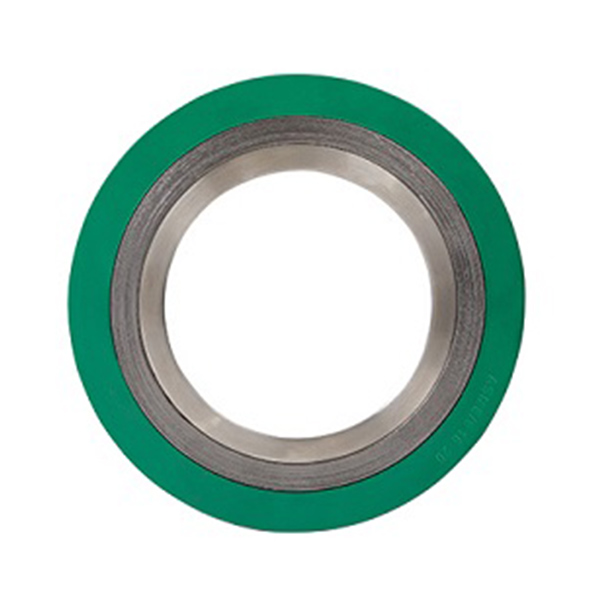
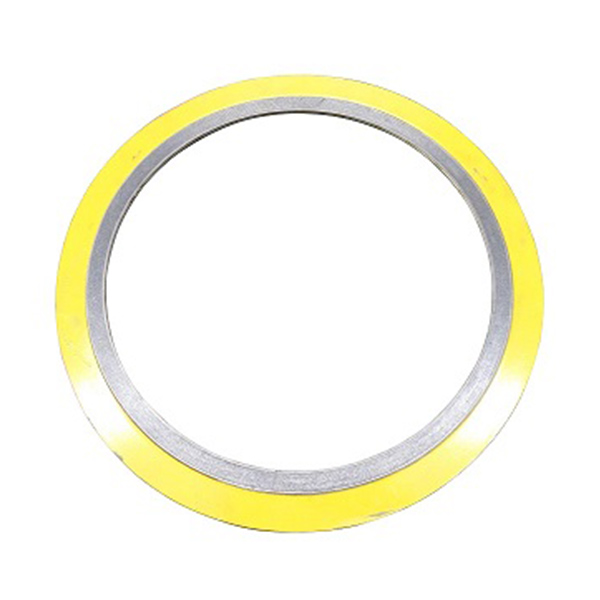

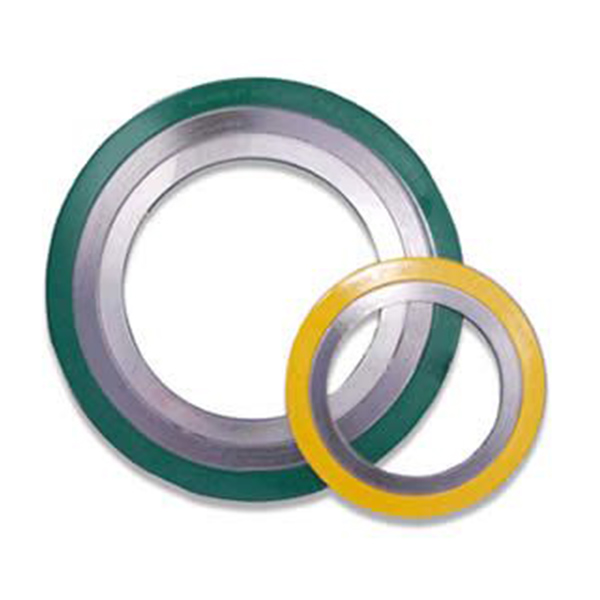

Kammprofile Gasket with Integral Outer Ring
Model:KXT 1130
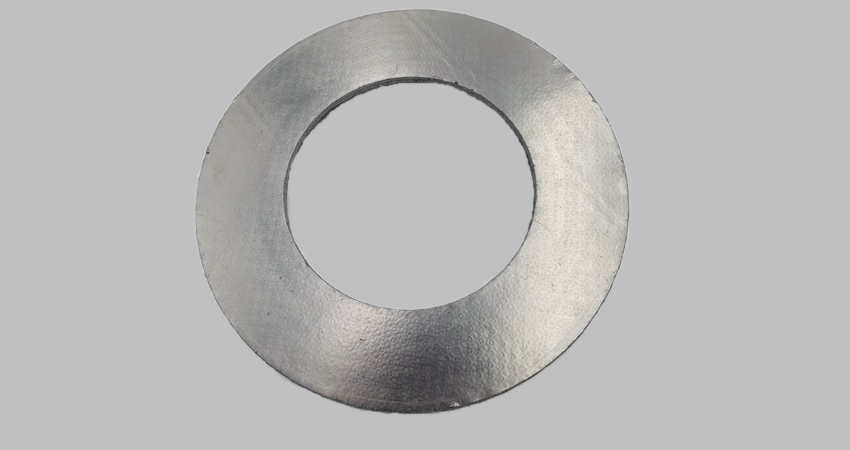
KXT-1130 Kammprofile gasket combines a concentrically serrated SS 316L/304 core with a machined integral outer ring for self-centering on raised-face and flat-face flanges. Graphite or PTFE facing on both sealing surfaces delivers high-integrity sealing at elevated pressure and temperature, and the reusable core reduces lifecycle cost in heat exchanger and high-pressure flange service. Standard OD DN 15–600 per ASME B16.5 Class 150–2500; custom sizes to 2000 mm on drawing. Factory-direct quote within 24 business hours.
What is a Kammprofile gasket with integral outer ring? It is a semi-metallic grooved gasket in which the centering ring is machined as part of the serrated metal core. Kaxite KXT-1130 pairs an SS 316L/304 core with graphite or PTFE facing for ASME B16.5 / EN12560-6 raised-face and flat-face flanges, with a reusable core for heat exchanger and high-pressure service.
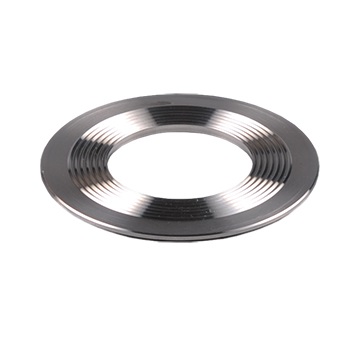
Kaxite KXT-1130 is built on a concentrically serrated solid metal core with the centering ring machined into the core itself. A soft sealing layer — graphite or PTFE — is bonded to both facing surfaces. The serrated geometry concentrates seating stress on the sealing faces, developing a reliable seal at bolt loads lower than those required by solid metal gaskets, while the integral outer ring fixes the gasket position within the flange bolt circle during installation.
KXT-1130 Specifications, Sizes and Supplier Quote
The data below covers the standard KXT-1130 configuration. Non-standard core alloys, facings, thicknesses and diameters are quoted to drawing; include the flange standard and class in the enquiry for an accurate price and lead time.
Model KXT-1130
Gasket Type Kammprofile (camprofile) with integral outer centering ring
Core Material (standard) SS 316L / SS 304
Core Material (options) Monel 400, Nickel 200, Inconel 600, Inconel 625, Incoloy 825, Hastelloy B-2, Hastelloy C-276, Titanium
Facing Material Flexible graphite (standard) / PTFE (option)
Standard Thickness 3.5 mm / 4.0 mm / 4.5 mm / 5.0 mm
Standard Size Range DN 15–600 per ASME B16.5 Class 150–2500; custom to 2000 mm on drawing
Flange Standard ASME B16.5 / ASME B16.20 / EN12560-6
Flange Facing Raised face (RF) and flat face (FF)
Recommended Surface Finish 3.2–6.3 μm Ra
Core Reusability Yes — after cleaning, inspection and re-facing
Core Alloy and Facing Selection — Temperature and Chemical Envelope
Two independent selections define the KXT-1130 envelope: the core alloy sets the temperature ceiling and mechanical strength, the facing material sets chemical compatibility and seating behaviour. The standard pairing — SS 316L core with flexible graphite facing — covers the broadest range of steam, hydrocarbon and high-temperature service. PTFE facing is specified where graphite is not chemically acceptable, at a lower temperature ceiling.
| Core Material | Max. Temperature | Typical Service Note |
|---|---|---|
| SS 316L | 550°C | Standard core; broad chemical and high-temperature coverage |
| SS 304 | 550°C | Economy stainless for non-chloride service |
| Monel 400 | 600°C | Seawater, hydrofluoric acid and reducing environments |
| Nickel 200 | 600°C | Caustic and high-purity chemical service |
| Inconel 600 | 900°C | High-temperature oxidation and carburizing service |
| Inconel 625 | 450°C | Chloride-bearing and sour service with high strength |
| Incoloy 825 | 450°C | Sulfuric and phosphoric acid service |
| Hastelloy B-2 / C-276 | 450°C | Severe reducing (B-2) or oxidizing/reducing mixed (C-276) duty |
| Titanium | 350°C | Chlorine, hypochlorite and seawater cooling service |
| Facing Material | Max. Temperature | Media Compatibility |
|---|---|---|
| Flexible Graphite | 550°C | Steam, hydrocarbons, heat transfer fluids; standard for high-temperature service |
| PTFE | 260°C | Acids, bases, solvents, food and pharmaceutical media |
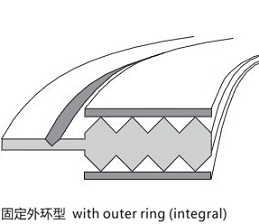 Cross-section: serrated core with integral centering ring and facing on both sealing surfaces.
Integral Outer Ring vs Loose Outer Ring vs Basic Style — Selection Table
Kammprofile gaskets are supplied in three configurations. The integral ring is the standard recommendation for raised-face and flat-face flanges where self-contained centering is preferred; the loose ring is specified where radial thermal movement is a design consideration; the basic style is reserved for tongue-and-groove and male-female flanges where the flange geometry itself centers the gasket. The table below compares the three against the selection criteria most often raised in procurement enquiries.
| Selection Criterion | Integral Ring (KXT-1130) | Loose Ring | Basic Style |
|---|---|---|---|
| Centering function | Machined into core; fixed alignment | Independent ring floats on core | None; flange geometry centers gasket |
| Handling during installation | Single piece; no separate ring to stock or lose | Two pieces; ring can be dismounted | Single piece; requires grooved flange |
| Thermal expansion accommodation | Adequate for ASME B16.5 standard service | Preferred for large-diameter and severe cycling | Dependent on flange groove fit |
| Compatible flange type | Raised face (RF), flat face (FF) | Raised face (RF), flat face (FF) | Tongue-and-groove, male-female only |
| Typical application | Heat exchangers, HP piping, vessel connections | Large-diameter flanges, severe thermal cycling | Grooved flanges where centering is built-in |
If the duty is better served by a loose-ring configuration, the Kammprofile gasket with loose outer ring is the correct specification. For an overview of how the Kammprofile family compares with other semi-metallic and sheet gasket types, the industrial gasket range provides a comparative starting point.
Heat Exchanger, High-Pressure Piping and Vessel Applications
The integral-ring Kammprofile gasket is specified across the high-pressure and high-temperature segments of process plants. The dominant application is heat exchanger flange joints — shell cover, channel box, floating head and tubesheet-to-channel connections — where limited bolt load, thermal cycling and the need for a reliable hydrotest-to-operation seal make the grooved semi-metallic construction a practical alternative to jacketed or spiral wound gaskets. On high-pressure piping flanges in ASME B16.5 classes, the gasket provides blowout resistance and bolt-load tolerance that sheet gaskets cannot match, while the facing protects the flange surface from the serrated core.
Additional service areas include vessel manways and handholes, valve bonnet and cap joints, pump and compressor casing splits, and large-diameter pipeline flanges where a centering ring simplifies installation. In refinery and petrochemical units, graphite-faced Kammprofile gaskets are common on hydrocarbon, hydrogen and steam services; PTFE-faced variants appear on chemical and pharmaceutical duty where graphite contamination is unacceptable. For low-pressure utility and water-line flanges, the compression-fiber and spiral wound gasket ranges are typically more cost-appropriate; KXT-1130 is positioned for the higher-integrity end of the flange sealing spectrum.
Seating Stress, Reusability and Flange Surface Requirements
The serrated core concentrates stress at the groove crests, so a reliable seal develops at bolt loads significantly lower than those demanded by solid metal gaskets, while the same design tolerates high bolt loads without crushing. This matters on heat exchanger flanges, large vessel connections and lighter-weight flanges where bolt load is limited or flange rotation is a concern.
The metal core is reusable after service: the gasket is disassembled, the core cleaned and inspected (including profile tracing where specified), and new facing material bonded before reinstallation. On expensive alloy cores — Monel, Inconel, Hastelloy or titanium — this can materially reduce lifecycle cost compared with single-use constructions. Reusability does not apply where the core shows mechanical damage, corrosion pitting or groove wear; the decision to reuse rests with the inspecting engineer against the applicable procedure.
Flange surface finish matters. Kammprofile gaskets with sealing layers are typically recommended for a surface finish of 3.2–6.3 μm Ra, with flange faces flat and free from deep radial scratches or dents. A stock finish is generally acceptable, but heavily damaged or warped surfaces should be corrected before installation.
Factory Supply, Custom Materials and Quote Requirements
KXT-1130 is manufactured at Kaxite’s Ningbo facility and supplied factory-direct for OEM, MRO and project procurement. Standard thicknesses are 3.5 mm, 4.0 mm, 4.5 mm and 5.0 mm; non-standard thicknesses, diameters and bolt patterns are made to drawing. Core alloy and facing material are selected against the duty conditions, and the centering ring is sized to the flange standard and class. For buyers consolidating a gasket package, KXT-1130 can be combined with compression sheet lines in a single shipment.
To quote accurately, include: flange standard and class (e.g. ASME B16.5 Class 300, DN 200), gasket OD / ID / bolt circle / thickness, operating pressure and temperature, process media, core material preference (or allow Kaxite to recommend), facing preference (graphite or PTFE), and annual or project quantity. The technical sales desk returns pricing, lead time and material certification scope within 24 business hours. Send your specification →
If the application falls outside the Kammprofile envelope entirely — for example, very low bolt load with a highly irregular flange surface — a non-asbestos sheet gasket may be the more practical specification.
Related Category
Send Inquiry
Contact Info
-
Address
No. 432 Zhenhai Middle Road, Luotuo Street, Zhenhai District, Ningbo City, Zhejiang China
-
-
Email
Request a Quote or Technical Consultation
Share your sealing requirement and our technical sales team will respond within 24 business hours. For fastest service, include your flange specification, operating pressure, temperature, and process media in the message below.


News Recommendations