What Are the Key Properties of 25% Carbon Fiber-Filled PTFE Tubing?
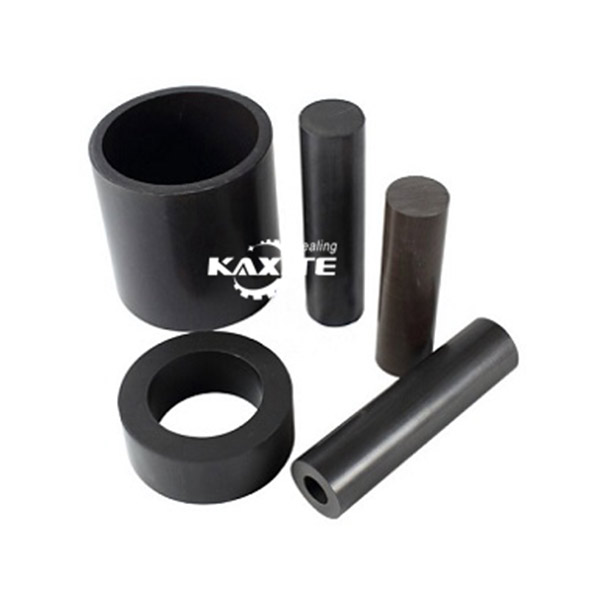
What Are the Key Properties of 25% Carbon Fiber-Filled PTFE Tubing? A plant engineer notices a slow drip under a pump flange after only six weeks of service. The replacement tube looked correct, fit the housing, and passed a quick dimensional check. Yet the seal crept under load, heat built up at the interface, and the tube lost compression. Procurement teams face this scene often: two suppliers offer “carbon-filled PTFE,” but one tube holds tolerance and the other turns a routine repair into a line stop. The key properties of 25% carbon fiber-filled PTFE tubing are not a single number; they are a balance of compressive strength, creep resistance, thermal conductivity, dimensional stability, wear resistance, low friction, and chemical resistance. Carbon fiber at 25% by weight stiffens the PTFE matrix, improves load-bearing behavior, and helps heat move away from the sealing surface. The result can be longer seal life, fewer retorques, and more predictable assembly. Those gains depend on fiber dispersion, resin grade, processing method, wall tolerance, and surface finish. A purchase order that lists only “25% carbon fiber PTFE” leaves too much open. Buyers need property ranges, test methods, and application limits. Ningbo Kaxite Sealing Materials Co., Ltd. builds tubing and sealing components around those variables, so buyers can match material data to the actual duty instead of guessing from a datasheet headline.
On this page
- Key properties that matter in sealing work
- Procurement pain points and practical fixes
- Performance data and specification table
- Application fit and handling notes
- Quality checks and supplier verification
- Procurement FAQs
- Company profile and contact
- Research references
Key Properties of 25% Carbon Fiber-Filled PTFE Tubing in Real Sealing Work
A maintenance team replaces a PTFE tube in a valve stem seal, then finds the gland needs retorquing within days. Virgin PTFE is chemically strong and low friction, but under sustained load it can cold flow. The scene is frustrating because the part looks intact while the seal loses preload. Carbon fiber changes that behavior. At 25% loading, the fiber network raises compressive strength and limits creep, so the tube keeps more of its installed shape under bolt load. Improved thermal conductivity also helps move frictional heat away from the contact zone, which matters in dry-running or high-cycle duties.
The practical solution is to treat the tube as an engineered sealing component, not a commodity sleeve. Ask for property ranges tied to test methods, then match those values to pressure, temperature, media, shaft finish, and assembly force. The table below gives a useful starting point for buyer conversations; final values should always come from the supplier’s lot-specific data and application review.
| Property | Typical range for 25% carbon fiber-filled PTFE tubing | Procurement benefit |
|---|---|---|
| Compressive strength | 20–35 MPa | Resists seating stress and bolt load |
| Deformation under load | Lower than virgin PTFE; verify at application temperature | Less creep and fewer retorques |
| Thermal conductivity | Approx. 0.6–1.0 W/m·K | Moves frictional heat away from the seal lip |
| Coefficient of friction | Approx. 0.10–0.20, dry vs. steel | Lower startup torque and stick-slip risk |
| Chemical resistance | Broad, but media-specific | Fits many process fluids; always verify |
Procurement Pain Points and Practical Fixes
A buyer receives three quotes for the same tube size. One quote is much lower, the delivery is faster, and the drawing looks identical. Six weeks later, the low-cost lot shows ovality, uneven fiber distribution, and a surface that scores the shaft. The pain point is not price alone; it is hidden variation. Carbon fiber content, dispersion, resin grade, processing, and stress relief all influence how the tube performs. When those details are left out of the purchase order, the buyer carries the risk.
A workable solution is to convert vague material names into a controlled specification. Require fiber content by weight, dispersion method, resin grade, processing route, dimensional tolerances, surface finish, and lot traceability. Ask for a certificate of analysis with each batch. Ningbo Kaxite Sealing Materials Co., Ltd. supports this specification review, helping procurement teams turn application data into measurable acceptance criteria before mass production begins.
| Procurement check item | Risk if vague | Specify this |
|---|---|---|
| Fiber content and dispersion | Uneven wear and weak spots | 25% by weight, dispersion method, incoming COA |
| Resin grade | Porosity and inconsistent chemical resistance | Virgin PTFE grade and lot traceability |
| Processing | Residual stress and ovality | Compression molded or extruded, stress relief |
| Tolerances | Leaks and excessive assembly force | ID, OD, wall, concentricity, cut length |
| Surface finish | Shaft wear and seal leakage | Ra target and inspection method |
Performance Data and Specification Table
Data sheets often list a wear rate without stating load, speed, counterface, or lubrication. That creates a false comparison. A tube that performs well in a low-speed, lubricated bushing may fail in a dry-running seal where interface temperature climbs. The useful question is not “What is the wear number?” but “Under what condition was it measured?” Procurement teams that request test conditions avoid approving a material for the wrong duty.
The solution is to compare performance data on a common basis. Ask for wear rate, PV limit, compression set, thermal expansion, and hardness under the expected operating window. For 25% carbon fiber-filled PTFE tubing, the fiber network improves load capacity and heat dissipation, but higher hardness can increase counterface wear if the shaft finish is too rough. Balance matters. Kaxite can review the application window and recommend a tube specification that protects both the seal and the mating surface.
| Test | Condition to request | Why it matters |
|---|---|---|
| Wear rate | Load, speed, counterface, dry or lubricated | Predicts seal life |
| PV limit | Pressure × velocity and temperature | Avoids runaway wear |
| Compression set | Time, temperature, compression percentage | Shows creep resistance |
| Thermal expansion | Expected temperature range | Controls clearance at operating heat |
| Hardness | Shore D | Indicates shaft compatibility |
Application Fit and Handling Notes
A seal that works in a chemical transfer line may fail in a high-speed dry-running application. The pain point is misapplication: the buyer selects a material by name, but the duty asks for a different balance of friction, hardness, and heat removal. Carbon fiber-filled PTFE is versatile, yet it is not a universal answer. Media compatibility, permeation, shaft hardness, surface finish, and installation damage all affect results.
The practical solution is to match the tube to the application before price negotiation. Use a short application checklist: media, concentration, temperature, pressure, speed, shaft material, shaft finish, lubrication, and assembly method. For sealing duties with moderate load and heat, 25% carbon fiber-filled PTFE tubing can be a strong fit. For food, pharmaceutical, or high-purity processes, compliance documents must be confirmed. Ningbo Kaxite Sealing Materials Co., Ltd. helps buyers screen these conditions so the selected tube supports the whole sealing system.
| Application | Fit for 25% carbon fiber-filled PTFE tubing | Watch point |
|---|---|---|
| Hydraulic and pneumatic seals | Good where load and heat are moderate | Confirm media compatibility |
| Pump and valve bushings | Good for wear and creep resistance | Shaft hardness and finish matter |
| Chemical transfer lines | Often suitable | Check permeation and media |
| High-speed dry running | Use care | Heat generation and counterface wear |
| Food and pharmaceutical | Not automatic | Need compliance documents |
Quality Checks and Supplier Verification
The most expensive tube is the one that fails after assembly. A purchasing team may approve a sample, then receive production lots with different density, dimensions, or surface quality. The pain point is lot-to-lot drift. It shows up as inconsistent insertion force, leaks after cycling, or shaft scoring that did not appear in the trial. Without incoming checks, the cause is hard to isolate.
The solution is a simple verification plan tied to the drawing and application. Check fiber content, density, mechanical properties, dimensions, surface condition, and traceability. Keep a retained sample from each lot. For critical seals, request application-specific testing before full release. Ningbo Kaxite Sealing Materials Co., Ltd. supports batch traceability and specification review so procurement teams can compare lots with confidence and resolve issues with data rather than guesswork.
| Check | Method | Acceptance idea |
|---|---|---|
| Fiber content | TGA or supplier COA | Meets agreed 25% target |
| Density | ASTM D792 | Lot-to-lot consistency |
| Mechanical properties | ASTM D638 / D695 | Agreed minimum values |
| Dimensions | Optical or contact measurement | ID, OD, and wall within print |
| Surface | Profilometer or visual inspection | No scores, voids, or contamination |
| Traceability | Lot code and COA | Full batch link |
Procurement FAQs
Q: Does 25% carbon fiber-filled PTFE tubing resist aggressive chemicals?
A: It keeps much of PTFE’s chemical inertness, but carbon fiber and any additives can change performance. Check the exact media, concentration, temperature, and exposure time with the supplier before release. A material that works with one process fluid may swell, permeate, or lose strength in another. Ningbo Kaxite Sealing Materials Co., Ltd. reviews media data against the proposed tube specification so buyers do not rely on a generic “chemical resistant” claim.
Q: Is higher carbon fiber content always better for seal life?
A: No. Higher fill can raise stiffness and hardness, reduce elongation, and increase counterface wear. A 25% Carbon Fiber-Filled PTFE Tube is a practical balance for many sealing duties, but load, speed, shaft finish, and temperature decide the final fit. Buyers should compare compression set, wear rate, and hardness under the real operating window, then verify with a sample test before locking in a production order.
Company Profile and Contact
For buyers who need a practical path from data sheet to reliable seal, Ningbo Kaxite Sealing Materials Co., Ltd. supports material selection, sample evaluation, tolerance review, and batch traceability for 25% carbon fiber-filled PTFE tubing and related sealing components. Share your media, pressure, temperature, shaft finish, and annual volume with the team, and Kaxite will help narrow the specification before a purchase order locks in. Visit https://www.seal-china.com or email kaxite@seal-china.com to start a technical review.
Research References
Bahadur, S., & Tabor, D. (1985). The wear of filled polytetrafluoroethylene. Wear, 104(1), 23–38.
Tanaka, K., Uchiyama, Y., & Toyooka, S. (1973). The mechanism of wear of polytetrafluoroethylene. Wear, 23(2), 153–172.
Lancaster, J. K. (1972). Polymer-based bearing materials: the role of fillers and fibre reinforcement. Tribology, 5(6), 249–255.
Briscoe, B. J., & Sinha, S. K. (2002). Wear of polymers. Proceedings of the Institution of Mechanical Engineers, Part J: Journal of Engineering Tribology, 216(6), 401–413.
Friedrich, K., Zhang, Z., & Schlarb, A. K. (2005). Effects of various fillers on the sliding wear of polymer composites. Composites Science and Technology, 65(15–16), 2329–2343.
Khedkar, J., Negulescu, I., & Meletis, E. I. (2002). Sliding wear behavior of PTFE composites. Wear, 252(5–6), 361–369.
Sawyer, W. G., Freudenberg, K. D., Bhimaraj, P., & Schadler, L. S. (2003). A study on the friction and wear behavior of PTFE filled with alumina nanoparticles. Wear, 254(5–6), 573–580.
Unal, H., Mimaroglu, A., Kadıoglu, U., & Ekiz, H. (2004). Sliding friction and wear behaviour of polytetrafluoroethylene and its composites under dry conditions. Materials & Design, 25(3), 239–245.
Tevrüz, T. (1995). Tribological behaviours of carbon filled polytetrafluoroethylene (PTFE) dry journal bearings. Wear, 221(1), 61–68.
Zhang, Z., Breidt, C., Chang, L., Haupert, F., & Friedrich, K. (2004). Enhancement of the wear resistance of epoxy: short carbon fibre, graphite, PTFE and nano-TiO2. Composites Part A: Applied Science and Manufacturing, 35(12), 1385–1392.
Next:
-
Related News
- What Is Orange-Colored Teflon FEP Tubing Used For?
- How Should You Specify the Polyimide Content in a Filled PTFE Teflon Tube?
- How do Bronze-Filled PTFE Guide Strips compare with bronze-filled PTFE wear rings?
- How should I install a green-colored PTFE guide strip?
- How Do You Choose the Right PTFE Microporous Gas Membrane for Your Application?
- What is a PTFE microporous membrane?
Leave me a message


News Recommendations