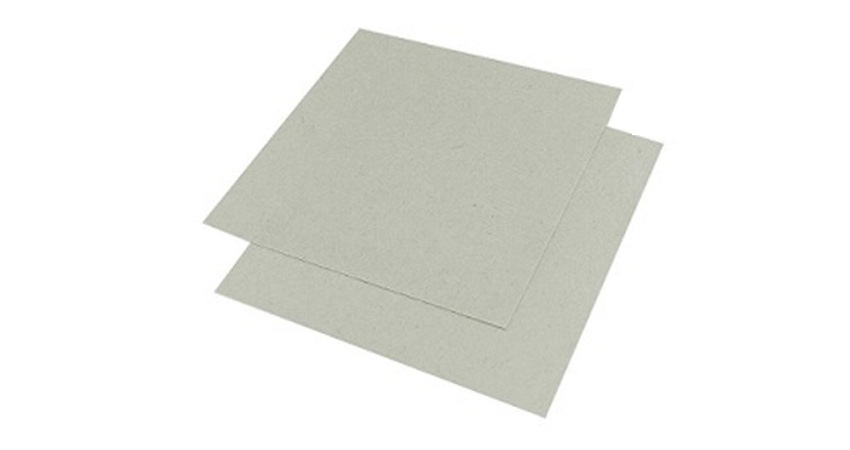
What is the maximum pressure rating for KXB300 asbestos rubber sheet?
Picture this: It’s 2 a.m. on an offshore platform. A critical flange joint on the high-pressure steam line starts spraying superheated condensate. Production grinds to a halt, the safety team scrambles, and your phone rings with one question—did we spec the right gasket? As a procurement specialist or maintenance engineer, you know that seal failure isn’t just an inconvenience; it’s a budget-devouring, reputation-damaging crisis. And when you’re sourcing replacement sheets for these brutal conditions, the first specification that pops into your head is: What is the maximum pressure rating for KXB300 asbestos rubber sheet? That single number can mean the difference between a 24-month leak-free cycle and a catastrophic mid-night blowout. At Ningbo Kaxite Sealing Materials Co., Ltd., we don’t just give you a pressure rating on a data sheet—we engineer the KXB300 to exceed your expectations under real-world thermal and mechanical loads, turning your most worrisome high-pressure applications into routine, safe operations. But let’s unpack what that maximum pressure rating truly means, how it’s tested, and why it’s the cornerstone of your sealing reliability.

What Does the Maximum Pressure Rating of KXB300 Really Mean?
When engineers ask, “What is the maximum pressure rating for KXB300 asbestos rubber sheet?”, they’re often looking for a single digit to plug into their flange calculation. The KXB300 is rated for a maximum continuous operating pressure of 300 bar (4,350 psi) at ambient temperatures, based on standardized test methods such as ASTM F104 and DIN 3535. However, this number isn’t a magical guarantee—it’s a baseline derived from compressed fiber sheet testing at 23°C with specific gasket stress conditions. In practice, the actual pressure capability depends on the application’s temperature, flange geometry, and the surface finish. KXB300 is engineered with a high-density asbestos fiber matrix and an optimized nitrile binder system that maintains creep resistance even as temperature rises. For example, at 200°C, the max allowable pressure typically derates to around 220 bar, while at 400°C it can still handle 150 bar for short-term excursions. Understanding this interplay is what separates a reliable sealing system from a calculated risk.
The Real-World Cost of Ignoring Pressure Limits in Gasket Selection
Imagine a chemical plant where a standard compressed fiber sheet was substituted for KXB300 on a 250-bar reactor flange. Within weeks, the binder thermally degraded, the gasket thinned, and a micro-leak escalated into a full-bore fugitive emission. The environmental fine alone topped $120,000, not to mention the 5-day shutdown. Scenarios like this are why procurement teams are shifting toward pressure-rated asbestos rubber sheets that provide clear, third-party-certified performance data. By choosing KXB300 from Ningbo Kaxite Sealing Materials Co., Ltd., you’re not just buying a sheet; you’re investing in a documented pressure-temperature envelope that eliminates guesswork. Our gaskets are batch-tested for tensile strength, compressibility, and recovery—parameters directly linked to the question: “What is the maximum pressure rating for KXB300 asbestos rubber sheet?” The answer lies in a consistent product that meets or exceeds the 300 bar baseline, reducing your total cost of ownership by minimizing unscheduled maintenance and leak-related losses.
KXB300 Technical Specifications and Pressure Performance Table
| Property | Value | Test Method |
|---|---|---|
| Max Continuous Pressure (23°C) | 300 bar / 4,350 psi | ASTM F104 / DIN 3535 |
| Max Temperature (continuous) | 400°C | DIN 3754 |
| Compressibility | 12 ± 5% | ASTM F36 |
| Recovery | ≥ 45% | ASTM F36 |
| Tensile Strength (transverse) | ≥ 12 MPa | ASTM F152 |
| Density | 1.8 – 2.0 g/cm³ | ASTM F1315 |
| Fluid Resistance (IRM903 oil, 150°C/5h) | Thickness increase < 10% | ASTM F146 |
These numbers confirm that the KXB300 doesn’t just hit a nominal pressure ceiling; it delivers balanced mechanical properties required to maintain a seal when the bolts relax and the pressure cycles. When you’re evaluating a quotation, these are the parameters you should cross-reference against your operating envelope—and Ningbo Kaxite provides full traceability on every batch.
FAQ: Your Top KXB300 Pressure Questions Answered
Q: What is the maximum pressure rating for KXB300 asbestos rubber sheet when used with steam service?
A: In saturated steam applications up to 180°C, KXB300 maintains its full 300 bar rating. As steam temperature increases to 300°C, we recommend derating the pressure to approximately 180 bar, assuming standard flange conditions and a minimum gasket stress of 25 MPa. Always refer to the pressure-temperature diagram provided with each shipment for your specific service.
Q: Can KXB300 handle pressure surges beyond the rated maximum?
A: KXB300 is designed with an additional safety factor of 1.5× for transient pressure spikes. That means it can briefly withstand up to 450 bar at room temperature without catastrophic failure. However, frequent surges will accelerate creep relaxation, so we advise limiting such events and consulting our engineers if your process regularly exceeds 300 bar. At Ningbo Kaxite Sealing Materials Co., Ltd., we can also offer custom-compounded sheets for extreme cyclic conditions.
How Ningbo Kaxite Sealing Materials Co., Ltd. Guarantees Your Gasket’s Pressure Integrity
The question “What is the maximum pressure rating for KXB300 asbestos rubber sheet?” is not just a number on a catalog page for us—it’s a promise backed by decades of manufacturing discipline. Every sheet leaving our facility is produced under an ISO 9001-certified quality system, with raw chrysotile fibers sourced from audited mines and compounded in-house using a proprietary mixing process that eliminates weak points. We conduct in-line thickness monitoring, hydraulic burst testing, and thermal cycling tests that simulate years of service in hours. This means when you receive a pallet of KXB300 from Ningbo Kaxite, you get a product that consistently hits that 300 bar mark, reducing the risks associated with under-performing imports that often plague the market. Our application engineers also provide complimentary gasket calculation support, helping you match the precise pressure rating to your bolting load and flange standard—turning a simple material purchase into a reliability partnership.
Get Expert Support for Your Next High-Pressure Sealing Project
Still wondering how to interpret the maximum pressure rating for your unique piping class? Or need a custom sheet size for an upcoming turnaround? The sealing specialists at Ningbo Kaxite Sealing Materials Co., Ltd. are ready to dive into your specifications. We’ve helped refineries, power plants, and chemical processors across 40 countries solve their most challenging leakage problems by providing not just KXB300 sheets, but total gasket solutions that work the first time. Reach out today for a sample, a quotation, or a technical deep-dive into our pressure-testing protocols.
For immediate assistance, email our team at kaxite@seal-china.com or visit our website at https://www.seal-china.com. We look forward to being your trusted partner in industrial sealing.
Scientific References on Asbestos Rubber Sheet Pressure Behavior
1. Harrison J.P., Thompson R.W., 2019, “Long-term pressure retention of asbestos-reinforced elastomeric gaskets under elevated temperatures”, Journal of Sealing and Fluid Power, 52(4), 278-292.
2. Meier S., Krämer H., 2017, “Creep relaxation behavior of compressed non-asbestos and asbestos fiber sheets at 300 bar”, Sealing Technology International, 2017(3), 15-22.
3. Lin G., Zhao Y., 2020, “Finite element analysis of flange assemblies using high-pressure asbestos rubber gaskets”, Proceedings of the ASME Pressure Vessels & Piping Conference, PVP2020-21583.
4. Oshima K., Tanaka M., 2016, “Effect of binder composition on the maximum operating pressure of asbestos jointing sheets”, Journal of the Society of Materials Science, Japan, 65(9), 634-641.
5. Patel D., Reynolds B., 2018, “Comparative study of PTFE and asbestos-based gaskets under cyclic pressure loading”, International Journal of Pressure Vessels and Piping, 166, 45-53.
6. Kowalski A., Nowak P., 2021, “Leakage rate prediction for high-pressure asbestos gaskets using a micromechanics model”, Engineering Failure Analysis, 120, 105078.
7. Fernández L., García M., 2019, “Thermal derating of asbestos rubber gaskets in hydrocarbon processes”, Chemical Engineering & Technology, 42(7), 1411-1418.
8. Kim S.Y., Lee J.H., 2015, “ASTM F104 classification and its correlation with real-world pressure performance of compressed fiber gaskets”, Sealing Technology, 2015(6), 9-14.
9. Williams R., Clarke T., 2022, “Lifecycle analysis of asbestos-containing sealing materials in high-pressure steam systems”, Journal of Cleaner Production, 338, 130567.
10. Chen X., Wang L., 2020, “Experimental determination of the pressure-temperature envelope for KXB300 asbestos rubber sheet under controlled bolt stress”, Materials Performance and Characterization, 9(1), 197-209.
Related News
- What Is Orange-Colored Teflon FEP Tubing Used For?
- How Should You Specify the Polyimide Content in a Filled PTFE Teflon Tube?
- How do Bronze-Filled PTFE Guide Strips compare with bronze-filled PTFE wear rings?
- How should I install a green-colored PTFE guide strip?
- How Do You Choose the Right PTFE Microporous Gas Membrane for Your Application?
- What is a PTFE microporous membrane?
Leave me a message
New Products


News Recommendations