
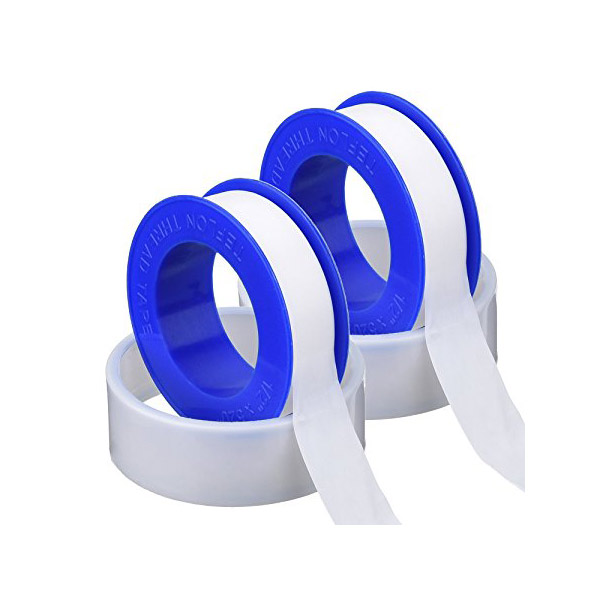
PTFE Thread Seal Tape
Model:PTFE Thread Seal Tape
Unsintered PTFE thread seal tape for water, gas and chemical lines: 12.5, 19 and 25 mm widths on 12 m rolls, 0.075-0.2 mm thick, non-curing and rated to +260 °C. White and high-density gas grades.
PTFE Tape · Thread Sealing
PTFE Thread Seal Tape — 12.5, 19 and 25 mm Rolls, White and Gas Grades
PTFE thread seal tape is an unsintered PTFE film wound on a spool. It lubricates the thread and fills the spiral gap between male and female threads, so a joint seals with less torque and comes apart without cleaning. It does not cure, does not harden in service, and stays chemically inert to almost every line fluid. Kaxite supplies it in 12.5, 19 and 25 mm widths on 12 m rolls, in a standard density for water and a high-density grade for gas.
12.5 / 19 / 25 mm12 m rolls0.075–0.2 mmup to +260 °COEM spools
Tape at a glance
| Width | 12.5 / 19 / 25 mm, ±0.3 mm |
|---|---|
| Roll length | 12 m |
| Thickness | 0.075 – 0.2 mm, ±0.1 mm |
| Density | 0.2 – 1.5 g/cm³ by grade |
| Temperature | up to +260 °C |
| Colour | White as standard |
Definition
What the tape actually does inside a threaded joint
PTFE thread seal tape — still called Teflon tape by most fitters — does two jobs at once. It lubricates the thread so the fitting turns further before it seats, and it deforms into the spiral gap between the crests and roots so the fluid cannot follow the thread out. Because the film does not cure, the joint can be opened, inspected and re-made without wire-brushing the threads, and a roll has no shelf life to manage.
Two expectations are worth setting before you buy. Tape is a thread sealant, not a pressure-containing part: the fitting and the pipe wall carry the pressure, and no tape turns a damaged thread into a sound joint. Tape is also not a gap filler — a joint that needs tape to take up clearance will leak again as soon as the film compresses.
Grade
Low density, high density and the colour code
The roll in a plumber's box and the roll specified for a gas main look identical and are not. Density is the difference. Standard tape is soft and bulky and compresses easily, which suits water, air and general service. High-density tape is thinner and harder, holds its film thickness under torque, and is the grade used for gas, LPG and oxygen-clean lines.
| Grade | Typical density | Typical service |
|---|---|---|
| Standard, low density | 0.2 – 0.5 g/cm³ | Water, air, steam, general chemical lines |
| High density | 1.0 – 1.5 g/cm³ | Natural gas, LPG, oxygen-clean lines |
| Coloured, market coded | As specified | Gas and water where local convention requires a colour |
Colour is the least reliable way to specify a tape: a yellow roll means "gas" in some markets and nothing at all in others. Specify density, width and standard, and let the colour follow the market. The base film is the same unsintered PTFE film used across our tape range — the difference is how the roll is processed, densified and wound.
Size
Widths, thickness and roll length
| Property | Standard range | Tolerance |
|---|---|---|
| Width | 12.5 / 19 / 25 mm | ±0.3 mm |
| Roll length | 12 m | As wound |
| Thickness | 0.075 – 0.2 mm | ±0.1 mm |
| Density | 0.2 – 1.5 g/cm³ | By grade |
| Service temperature | up to +260 °C | — |
- 12.5 mm — instrument lines and small-bore fittings up to about 1/2 in.
- 19 mm — the general-purpose width for 1/2 to 1 1/4 in pipework.
- 25 mm — 1 1/2 in and larger fittings, tank bosses and large plugs.
Thickness follows the thread rather than the pipe. A 0.075 mm film is the general-purpose choice for clean, well-cut threads; 0.1 to 0.2 mm puts more PTFE into the gap on coarse threads, large fittings and rough site work. If the fitting is unusual, send a sample — it is faster than a description. The full range sits in our PTFE tape category.
Wrapping
How to wrap a joint that will not leak
- Clean and dry both threads. Tape does not bond through oil, and grit cuts the film before the joint is even hand-tight.
- Start at the second thread. Leave the first crest bare so the cut end cannot travel into the line.
- Wrap with the thread, not against it. Clockwise onto a right-hand thread, seen from the end that enters the fitting.
- Three to five turns, pulled tight. More is not better: excess film holds the thread off its seat and can split a plastic fitting.
- Bed the cut end down. Press the loose end flat and run a thumbnail around the wrap so it cannot unwind.
- Hand-thread first, then torque to spec. Tape lubricates, so the same torque turns the fitting further than it would dry. Stop at the fitting maker's figure.
Do not use tape on flare, compression or O-ring face-seal fittings. Those joints seal on a machined face or a captured O-ring, and tape between the faces simply holds the parts apart.
Failure
Why taped joints still leak
- Over-wrapping. Too many turns hold the thread off its seat; the fitting cracks, or the joint weeps from the back of the socket.
- Wrong direction. The tape unwinds as the fitting is turned in, leaving a dry thread and a loose end inside the pipe.
- Tape on the first thread. The loose end reaches orifices, valves and instrument tappings.
- Gap filling. Tape hides a damaged thread for one assembly and fails on the next.
- Oil on an oxygen line. PTFE is compatible with oxygen; the hydrocarbon contamination that comes with a dirty roll is not.
- Re-used tape. Once compressed and unseated, the film has no memory left.
None of these are tape defects, and none are cured by buying a denser tape.
Alternatives
Tape, anaerobic sealant, pipe dope or hemp
| Method | Works best on | Watch out for |
|---|---|---|
| PTFE tape | Water, air, gas and most chemicals; joints that will be re-made | Not for flare or compression fittings; over-wrapping risk |
| Anaerobic sealant | Hydraulic and pneumatic lines, fine threads, high pressure | Cures in place; needs oil-free threads; hard to re-make |
| Pipe dope / paste | Rough or worn threads, large fittings | Messy; some grades unsuitable for oxygen or oxidisers |
| Hemp and paste | Steam, large iron pipework, older plant | Skill-dependent; unsuitable for small or plastic fittings |
For the fittings this tape is bought for, it wins on cost and on re-makeability. Where the joint is permanent, high pressure, or has to hold a vacuum, an anaerobic sealant is usually the better call.
Buying
Ordering, OEM and documentation
Rolls are supplied on 12 m spools in the three standard widths, with the cut edge held to ±0.3 mm on width and ±0.1 mm on thickness. Boxed, shrink-wrapped and blister-packed formats are all available, and printed spools and cartons can carry your brand.
- MOQ is set by width, density and pack format rather than by one figure — ask against your specification and we will quote a realistic first run.
- Private label: printed spool, printed blister card, barcode and market-specific warning text.
- Documentation: dimensional and density checks per batch; material and food-contact paperwork on request.
- Packing and export: carton and pallet details are on our packaging and shipping page.
- Production: slitting, densifying and winding run in our own Ningbo workshop.
If you are buying for a distributor rather than for a plant, tell us the market and the standard it expects. Gas tape accepted in one country is not always accepted in the next, and the difference is density and documentation, not the label. Send the spec through our inquiry form and technical sales will come back within 2 business hours.
FAQ
Questions buyers ask before the first order
Is PTFE thread seal tape the same as Teflon tape?
In everyday use, yes. Teflon tape is the trade name most fitters use for unsintered PTFE thread seal tape. Teflon is a Chemours trademark, so the generic description on a purchase order should be PTFE thread seal tape, PTFE tape or thread seal tape.
What width of PTFE tape should I buy?
12.5 mm suits instrument and small-bore fittings up to about 1/2 in, 19 mm is the general width for 1/2 to 1 1/4 in pipework, and 25 mm covers 1 1/2 in and larger fittings. These are starting points: the thread form and the fitting size decide the final choice.
How many turns of PTFE tape are enough?
Three to five turns, pulled tight, starting at the second thread. More tape does not seal better: excess film holds the thread off its seat, cracks plastic fittings and can back a fitting out of its socket.
Can PTFE tape be used on gas and oxygen?
Only with the high-density grade, and on oxygen only with a clean, oil-free roll. Standard low-density tape is intended for water and general service. Tell us the gas and the standard your market requires and we will confirm the grade we can document.
Is the tape suitable for drinking water and food lines?
PTFE itself is inert and widely accepted in potable water service; what varies is the documentation each market requires. Ask for the food-contact or potable-water documentation with the quotation rather than after delivery.
Do you supply private label and small orders?
Yes. Printed spools, printed blister cards and cartons are available. Minimum order quantity depends on width, density and pack format, so send the specification and we will quote the smallest run that makes sense for your market.
Send your tape spec — width, thickness, density and pack format
Quote within 2 business hours. Samples of each width available on request.
Send Inquiry
Contact Info
-
Address
No. 432 Zhenhai Middle Road, Luotuo Street, Zhenhai District, Ningbo City, Zhejiang China
-
-
Email
Request a Quote or Technical Consultation
Share your sealing requirement and our technical sales team will respond within 24 business hours. For fastest service, include your flange specification, operating pressure, temperature, and process media in the message below.
Related Products

News Recommendations