
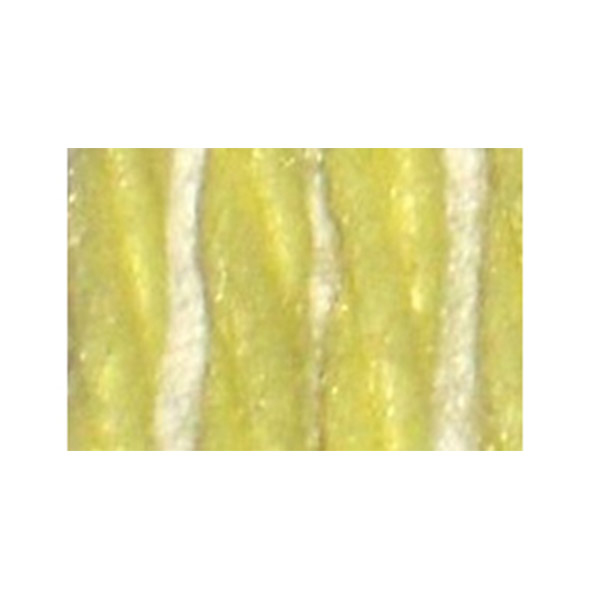
Spun Kevlar Yarn
Model:PR112
>Spun Kevlar Yarn > PTFE and Silicone oil impregnated is also available
Kaxite PR112 Spun Kevlar Yarn is a high-performance para-aramid (Kevlar®-type) staple yarn engineered for braiding heavy-duty mechanical packings, gaskets, seals and protective textiles. Unlike filament aramid yarn, this spun (staple) construction provides a softer hand, higher bulk and better impregnation behaviour — making it the material of choice for aramid fiber packing, gland rings and high-strength industrial textiles. Standard construction is reinforced with a glass fiber core, and PTFE or silicone oil impregnation is available on request for low-friction, high-temperature service.
Spun Kevlar Yarn at a Glance
| Product Name | Spun Kevlar Yarn / Para-Aramid Staple Yarn |
| Kaxite Model | PR112 |
| Fiber Type | Para-aramid (Kevlar®-type) staple fiber |
| Construction | Spun (staple) yarn, normally reinforced with a glass fiber core |
| Optional Impregnation | PTFE dispersion, silicone oil, or other lubricants on request |
| Color | Natural yellow (typical of aramid) |
| Temperature Range | Up to +300 °C continuous (higher short-term peaks possible) |
| Primary Use | Braiding aramid fiber packings, gland rings and high-strength industrial textiles |
| Origin | Made in China — manufactured in Kaxite's own factory in Ningbo, Zhejiang |
What Is Spun Kevlar Yarn?
Spun Kevlar Yarn (also written as spun aramid yarn or staple aramid yarn) is a yarn made by spinning short lengths of para-aramid fiber into a continuous strand. Para-aramid is the same family of fiber sold under the brand name Kevlar® by DuPont and Twaron® by Teijin — famous for its extremely high tensile strength, high modulus and exceptional heat resistance.
There are two main routes for turning aramid fiber into yarn:
- Filament yarn — continuous aramid filaments are twisted directly into a yarn. This gives maximum strength and a very smooth surface.
- Spun (staple) yarn — short aramid fibers are carded, drafted and spun into a yarn, much like cotton spinning. This gives the yarn a softer, bulkier hand, better coverage and superior absorption of impregnants such as PTFE dispersion or silicone oil.
Kaxite PR112 is the spun (staple) type. For most braided packing applications the spun construction is preferred because:
- The bulkier yarn produces a denser, better-sealing braid.
- PTFE or silicone impregnants penetrate more evenly and are retained longer.
- The softer hand reduces shaft wear compared to filament yarn braids.
The standard PR112 yarn is reinforced with a glass fiber core. This core provides dimensional stability, prevents stretch under tension and improves the mechanical strength of the finished braid.
Key Features and Performance Benefits
Exceptional Tensile Strength
Para-aramid has one of the highest strength-to-weight ratios of any commercial fiber — stronger than steel on an equal-weight basis.
High Temperature Resistance
Retains useful properties up to +300 °C continuous, far beyond nylon, polyester or cotton yarns.
Excellent Abrasion Resistance
Highly resistant to wear against rotating shafts — a key requirement for long-life braided packings.
Glass Fiber Core Reinforcement
Prevents stretching and improves dimensional stability of the braid under gland load.
Optional PTFE Impregnation
Reduces friction, improves chemical resistance and lowers shaft wear in high-speed service.
Optional Silicone Oil Impregnation
Further reduces friction and makes the yarn easier to braid — ideal for soft, flexible packings.
Low Thermal Conductivity
Reduces heat build-up at the shaft interface, extending both packing and shaft life.
Self-Extinguishing
Does not support combustion — an important safety property for industrial use.
Technical Data of Spun Kevlar Yarn
The table below shows typical properties for Kaxite PR112 Spun Kevlar Yarn. Yarn count, twist and finish can be customised to match your braiding machine and end-product requirements.
| Property | Typical Value |
|---|---|
| Fiber type | Para-aramid (Kevlar®-type) staple fiber |
| Yarn construction | Spun (staple) yarn, glass fiber core reinforced |
| Color | Natural yellow |
| Temperature range | Up to +300 °C continuous |
| Density of aramid fiber | 1.44 g/cm³ |
| Tensile strength of fiber | ~2,900 MPa (approximately) |
| Elongation at break | ~3–4% |
| Moisture regain | ~7% at 65% RH |
| Chemical resistance | Good against most solvents, oils, fuels; limited against strong acids and alkalis |
| Standard impregnation | None (optional PTFE or silicone oil available) |
Note: Yarn count, ply, twist direction and finish are all customisable to match your downstream process. If you already braid your own aramid packings and need a specific yarn count or finish, send us your specification and we will match it.
Available Variations of PR112
Spun Kevlar Yarn is supplied in several standard variants to suit different braiding processes and end-use conditions:
| Variant | Core | Impregnation | Typical Use |
|---|---|---|---|
| PR112 Standard | Glass fiber core | None | General-purpose aramid fiber packing braiding |
| PR112-PTFE | Glass fiber core | PTFE dispersion | Low-friction, chemically resistant packings |
| PR112-Silicone | Glass fiber core | Silicone oil | Soft flexible packings, easy braiding |
| PR112-PTFE/Silicone | Glass fiber core | PTFE + silicone oil | Combined low friction and chemical resistance |
| Custom variants | Glass core or none | Customer-specified | To match your specific braiding or textile requirement |
Typical Applications
- Aramid fiber packing — the most common use; braided into gland packings for pumps and valves.
- Gland rings — high-strength rings for stuffing boxes in demanding service.
- Heavy-duty gaskets — braided or woven aramid gaskets for high-temperature flanges.
- Sealing textiles — woven cloth and tape for expansion joints, compensators and insulation.
- Protective textiles — cut-resistant gloves, aprons and sleeves (industrial safety).
- Composites reinforcement — as a preform yarn for aramid-reinforced polymer composites.
- Cables and ropes — high-strength, heat-resistant cordage for special applications.
- Friction materials — aramid yarn in brake linings and clutch facings.
Related products from Kaxite: Aramid Fiber Packing, Pure PTFE Yarn, Pure PTFE Yarn with Oil, Graphite PTFE Yarn, Expanded Graphite Yarn.
How to Choose the Right Spun Kevlar Yarn
Selecting the correct yarn depends on the braiding machine, the required yarn count, the operating conditions and the target performance of the finished packing. Use the guidance below, or send us your specification.
1. Yarn Count
- Match the yarn count to your braiding machine's carrier capacity and the target packing cross-section.
- Standard counts and custom counts are both available.
2. Core Type
- Glass fiber core — standard, prevents stretch and improves dimensional stability.
- No core — available where a softer, more conformable braid is required.
3. Impregnation
- None — for general-purpose packings.
- PTFE — for low friction and chemical resistance.
- Silicone oil — for soft, flexible braids.
4. Twist Direction
- S-twist / Z-twist — choose according to your braiding machine setup.
- Both directions are available on request.
Rule of thumb: if you are braiding packings for high-temperature, high-wear service (e.g. pumps handling slurries, hot oils or steam), the PTFE-impregnated variant gives the best combination of life and sealing performance. For softer, easy-to-braid packings in less aggressive service, the silicone-impregnated variant is often the better choice.
Quality Assurance
Every batch of Kaxite Spun Kevlar Yarn is produced and released under a documented quality control procedure:
- Incoming fiber inspection — aramid staple fiber is verified for grade, length and purity before spinning.
- In-process control — yarn count, twist, core position and impregnation level are monitored throughout production.
- Finished goods testing — tensile strength, elongation, yarn count and visual appearance are checked against specification.
- Batch traceability — each bobbin, cone or carton carries a batch number traceable back to the raw material lot.
- Third-party testing — SGS, TÜV or other nominated laboratories can be arranged at the buyer's request.
Inspection certificates and material test reports are issued with every shipment. If your project requires a specific standard or an approved-vendor audit, please contact us before ordering so that we can prepare the documentation in advance.
Packing, Delivery and Ordering Information
| Packaging | Supplied on cones, bobbins or in cartons as agreed with the customer. Each unit sealed and labelled with product name, model, yarn count, batch number and net weight. |
| Standard pack sizes | Cone weights and carton sizes to customer specification — please state your preferred pack format when ordering. |
| Marking | Product name, model, yarn count, twist direction, impregnation type, batch number and quantity on each package. |
| Production lead time | Typically 7–15 working days for standard specifications after order confirmation; shorter for stock items. |
| Shipping terms | FOB Ningbo / Shanghai, CIF, CFR, DDP and express delivery are all available. |
| Customisation | Custom yarn counts, twist directions, core types, impregnation levels and private-label packing. |
Please include the following information in your inquiry so that we can quote accurately the first time: yarn count, twist direction (S/Z), core type, impregnation requirement, quantity and intended application. If you already have a specification or a sample, simply attach it.
Why Buy Spun Kevlar Yarn from Kaxite
- We are the manufacturer, not a trader. Our spinning, core-reinforcement and impregnation all take place in our own facility in Ningbo, Zhejiang, China — so you get factory pricing and direct technical support.
- Full yarn range under one roof. Beyond spun Kevlar yarn we manufacture PTFE yarns, graphite PTFE yarns, expanded graphite yarns and finished braided packings, so you can consolidate your sealing material sourcing with one qualified supplier.
- Technical sales, not order-taking. Our team answers application questions — yarn count selection, twist direction, core and impregnation choices — and will tell you honestly when a different yarn would serve you better.
- Fast response. Inquiries are normally answered within 2 business hours during working days.
- Consistent export experience. Products are shipped worldwide with complete export documentation and packing suitable for long sea transport.
- Flexible order sizes. Both trial quantities and repeat container loads are welcome.
Frequently Asked Questions
What is Spun Kevlar Yarn used for?
It is primarily used to braid aramid fiber packings — the mechanical seals that go into pump and valve stuffing boxes. It is also used for heavy-duty gaskets, sealing textiles, protective clothing, composites reinforcement and specialty cordage. Anywhere you need high strength, high temperature resistance and good abrasion resistance in a textile form, spun aramid yarn is a strong candidate.
What is the difference between spun Kevlar yarn and filament Kevlar yarn?
Filament yarn is made from continuous aramid filaments twisted directly into yarn — it is very strong and smooth, but has a slicker surface and lower bulk. Spun (staple) yarn is made by spinning short aramid fibers together, giving a softer, bulkier yarn that absorbs impregnants (PTFE, silicone) better and produces a denser, better-sealing braid. For most braided packing applications, spun yarn is preferred.
Is Spun Kevlar Yarn the same as Kevlar®?
“Kevlar” is a brand name owned by DuPont for its para-aramid fiber. “Spun Kevlar Yarn” is commonly used in the trade to describe any spun yarn made from para-aramid fiber of Kevlar®-type properties. Kaxite PR112 uses high-quality para-aramid staple fiber that matches the performance of Kevlar® for all normal braided packing duties.
What is the temperature range of Spun Kevlar Yarn?
The yarn is rated for continuous service up to approximately +300 °C. Short-term excursions above this are tolerable but should be limited to avoid permanent loss of properties. Below −40 °C the yarn remains usable but becomes less flexible.
Why is a glass fiber core used?
The glass fiber core prevents the yarn from stretching under tension during braiding and in service. This gives the finished braid better dimensional stability, more consistent cross-section and longer service life in the stuffing box.
Can you supply PTFE or silicone impregnated yarn?
Yes. PTFE dispersion impregnation is available for low-friction and chemically resistant packings. Silicone oil impregnation is available for soft, easy-to-braid yarns. A combined PTFE + silicone finish is also available on request.
What yarn counts and twist directions do you offer?
We offer a wide range of yarn counts and both S-twist and Z-twist directions. Custom counts and twist directions can be produced to match your braiding machine and end-product specification. Please send us your requirements when inquiring.
What is the minimum order quantity and lead time?
We accept both trial orders and full container loads. Lead time is typically 7–15 working days for standard specifications after order confirmation. Please send your requirement and we will confirm the exact MOQ and delivery schedule for your specification.
Are you a manufacturer or a trading company?
Kaxite is a manufacturer. Ningbo Kaxite Sealing Materials Co., Ltd. operates its own production facility at No. 432 Zhenhai Middle Road, Luotuo Street, Zhenhai District, Ningbo City, Zhejiang, China, where the spun Kevlar yarn is spun, core-reinforced, impregnated and packed.
Ready to specify your Spun Kevlar Yarn?
Send us your yarn count, twist direction, core and impregnation requirements, and intended application — our technical sales team will reply within 2 business hours with a quotation and a recommended specification.
Related Category
Send Inquiry
Contact Info
-
Address
No. 432 Zhenhai Middle Road, Luotuo Street, Zhenhai District, Ningbo City, Zhejiang China
-
-
Email
Request a Quote or Technical Consultation
Share your sealing requirement and our technical sales team will respond within 24 business hours. For fastest service, include your flange specification, operating pressure, temperature, and process media in the message below.


News Recommendations