

RX Ring Joint Gasket
Model:KXT 820
RX ring joint gasket, API 6A / ASME B16.20, up to 15,000 PSI. Self-energizing metal seal for API 6B wellhead, tree and manifold flanges. Sizes RX20–RX215; materials include soft iron, A182 F5/F11/F22, SS304/316L, duplex 2205/2507, Monel 400, Inconel 718/825, Hastelloy C276. EN 10204 3.1 certificate. Factory-direct price and 7–15 day lead time on stock sizes.
RX Ring Joint Gasket — Self-Energizing Metal Seal for API 6B Flanges up to 15,000 PSI
RX Ring Joint Gasket — machined to API 6A / ASME B16.20, pressure-energized for high-pressure wellhead and process service.
The RX ring joint gasket is a pressure-energized, metal-to-metal sealing ring developed from the standard octagonal R gasket. Its 23° outer bevel and pressure-responsive cross-section let line pressure increase the sealing contact force, which is why RX rings are specified for high-pressure wellhead, Christmas tree and manifold connections in API 6B flanges.
- Pressure rating: up to 15,000 PSI (approx. 700 bar) working pressure
- Standards: API 6A, ASME B16.20, API 17D (SRX / SBX subsea variants)
- Size range: RX20 – RX215, with RX20 – RX54 normally held in stock
- Materials: soft iron, A182 F5 / F11 / F22, SS304 / 316 / 316L, duplex 2205, super duplex 2507, Monel 400, Inconel 718 / 825, Hastelloy C276
- Documentation: EN 10204 3.1 material certificate and dimensional inspection report supplied with every batch
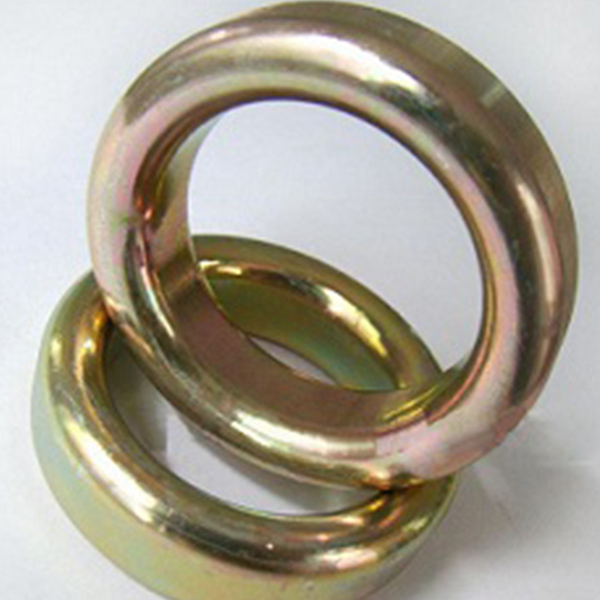
What Is an RX Ring Joint Gasket?
An RX ring joint gasket is a solid machined metal ring with a modified octagonal cross-section, manufactured to API 6A and ASME B16.20. It seals by metal-to-metal contact between the ring and the machined grooves of the mating flange faces. Unlike a sheet gasket, it carries no compressible filler — sealing starts as an initial line contact and develops into a controlled wedging action as the bolts are tightened.
The defining feature of the RX design is that it is pressure energized in the radial direction. The geometry of the ring guides the contained fluid pressure onto the sealing faces, so that as system pressure rises, the ring is pressed harder against the groove walls. This self-energizing effect is why RX gaskets hold tightness well beyond the range where a plain octagonal ring would begin to leak, and why they are specified for wellhead and process duties up to 15,000 PSI.
Because the seal is entirely metallic, RX gaskets suit the full temperature envelope of the selected alloy — from cryogenic service around −200 °C up to approximately +650 °C for high-alloy grades — and resist aggressive media including sour gas (H2S), CO2, condensate and produced water.
RX vs. R (Oval / Octagonal) vs. BX vs. SRX / SBX — Which Ring Do You Need?
All ring joint gaskets seal on the same principle, but the cross-sections are not interchangeable between flange types. Confirm the correct series before ordering:
| Feature | R (Oval / Octagonal) | RX | BX | SRX / SBX (Subsea) |
|---|---|---|---|---|
| Cross-section | Oval or octagonal with 23° bevel | Modified octagonal with pressure-responsive geometry | Square section with tapered corners | Same profile as RX / BX with cross-drilled vent holes |
| Pressure range | Up to 10,000 PSI | Up to 15,000 PSI | Up to 15,000 PSI | Up to 15,000 PSI |
| Flange compatibility | API 6B and ASME B16.5 ring grooves | API 6B flanges | API 6BX flanges only | API 6BX / API 17D subsea equipment |
| Sealing action | Initial line contact, dependent on bolt load | Self-energizing — line pressure raises sealing force | Axial wedging, high bolt load required | Self-energizing with pressure equalisation |
| Interchangeability | Oval fits both round-bottom and flat-bottom grooves | Interchangeable with standard octagonal rings in API 6B flanges | Not interchangeable with RX or R | Fits the same connectors as the equivalent RX / BX number |
| Typical use | Refinery, pipeline and general process flanges | Wellheads, trees, manifolds, high-pressure process piping | API 6BX wellhead and tree connections | Subsea wellhead and tree equipment |
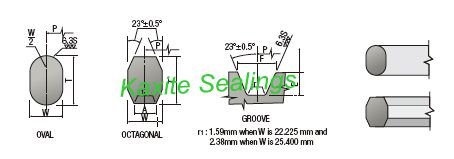
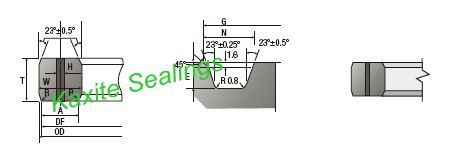
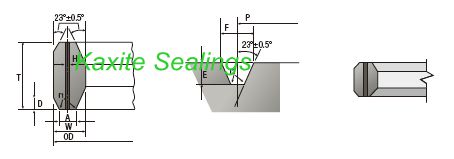
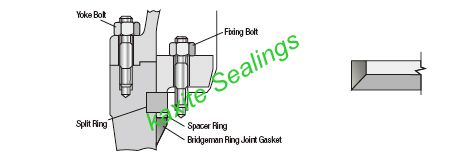
Groove sealing surfaces must be finished to 63 µin (1.6 µm) Ra or smoother and be free of ridges, tool marks and chatter. Ring hardness must always be lower than flange hardness to protect the groove from deformation.
Material & Hardness Selection
Material choice is driven by the process medium, operating temperature and the hardness of the mating flange. Our technical team will confirm the correct grade against your service conditions before production.
| Material | Common Grade | Typical Service | Temperature Guide |
|---|---|---|---|
| Soft iron / low carbon steel | ASME B16.20 soft iron | General oilfield and refinery duties, standard wellhead service | Up to approx. 400 °C |
| Carbon & alloy steel | A182 F5, F11, F22 | High-temperature and high-pressure process flanges | Up to approx. 600 °C |
| Stainless steel | SS304, 304L, 316, 316L | Corrosive media, produced water, mild sour service | −200 °C to approx. 600 °C |
| Duplex / super duplex | UNS S31803 (2205), S32750 (2507) | Seawater, chloride-rich and subsea service | −50 °C to approx. 300 °C |
| Nickel alloys | Monel 400, Inconel 718, Inconel 825, Hastelloy C276 | Sour gas (H2S), CO2, acid and extreme corrosion duties | Up to approx. 650 °C |
| Non-ferrous | Copper, aluminium brass | Low-pressure and special process connections | Per application |
Every ring is marked with size, material grade, heat number and standard, and is supplied with an EN 10204 3.1 material certificate so that your QA department can trace the heat back to the mill.
Typical Applications
- Oil and gas wellheads, Christmas trees and production manifolds (API 6B)
- High-pressure gathering lines, flowlines and test lines
- Refinery and petrochemical process piping with ring joint flanges
- Valve bonnets and bodies with API 6B ring grooves
- Offshore platforms and subsea wellhead / tree equipment (SRX, SBX)
- High-pressure gas storage, hydrogen and CO2 handling systems
- Power plant and high-temperature steam service with alloy rings
Installation & Bolting Guidance
Ring joint gaskets are a one-time-use sealing element. Correct groove condition and controlled bolt-up are what deliver a leak-free joint:
- Inspect the groove before assembly — it must be clean, dry and free of scratches, burrs, corrosion or old gasket residue.
- Verify the ring number, material and hardness; ring hardness must be lower than flange hardness.
- Apply a thin film of the specified rust-preventive oil or lubricant. Do not pack the groove with grease.
- Seat the ring squarely in the groove by hand — never hammer on the sealing face.
- Tighten bolts in a cross / star pattern in three to four incremental passes to the specified torque.
- Do not re-use a gasket that has already been compressed. Replace it on every break-out.
Need the torque sequence for your flange size and pressure class? Send us the flange specification and we will return the recommended bolt-up procedure.
Why Buy RX Ring Joint Gaskets from Kaxite Sealing
We are the manufacturer, not a trading company
Ningbo Kaxite Sealing Materials Co., Ltd. operates its own machining, heat treatment and inspection facility in Ningbo, China. RX rings are turned, marked and measured in-house, which means we control lead time, tolerances and material traceability directly — and we can quote a genuine factory price.
Quality control on every batch
- Incoming raw material verified by spectrometer analysis before production
- In-process dimensional checks on groove angle, ring height and diameter
- 100% final inspection with recorded measurements before packing
- Hardness tested against API 6A / ASME B16.20 requirements
- EN 10204 3.1 material certificate issued with each shipment
- Third-party inspection (SGS, BV, TUV) arranged on request
Engineering support, not just order taking
We supply ring joint gaskets to oil and gas, petrochemical, power and marine customers worldwide, including OEM and ODM programmes. Our technical sales engineers will confirm the correct RX number, material and hardness for your flange, medium and temperature before you commit to a purchase order.
Terms that suit project procurement
- No minimum order quantity on stock sizes — sample and trial orders welcome
- Stock sizes ship in 7–15 days; custom materials and non-standard sizes in 15–25 days
- Export packing with rust-preventive protection, carton plus plywood case or pallet
- 24 hours × 7 days after-sales response
What to Send for an Accurate RX Gasket Quotation
| Information | Example | Why We Need It |
|---|---|---|
| Flange standard & size | API 6B, 2-1/16 in, 5,000 PSI | Determines the exact RX ring number |
| Ring number (if known) | RX24, RX35, RX54 | Speeds up quotation and cross-checking |
| Material / hardness | A182 F5, max HB 120 | Must be softer than the flange groove |
| Process medium | Sour natural gas with H2S | Drives alloy selection for corrosion resistance |
| Operating temperature | −29 °C to +121 °C | Confirms material and surface treatment |
| Quantity & required date | 50 pcs, within 30 days | Sets pricing tier and production scheduling |
Get Your RX Ring Joint Gasket Quotation
Send your flange specification, pressure rating, medium and temperature. Our technical sales team will reply within 2 business hours with a factory price and the recommended RX ring number.
Frequently Asked Questions
What is the difference between an RX and a BX ring joint gasket?
RX gaskets fit API 6B flanges and are rated to 15,000 PSI. They are self-energizing — internal line pressure increases the sealing force on the groove flanks. BX gaskets have a square cross-section with tapered corners, fit API 6BX flanges only, and seal by axial wedging under high bolt load. The two series are not interchangeable.
Can an RX ring gasket be re-used?
No. A ring joint gasket deforms plastically during make-up to match the groove geometry. Re-using a compressed ring risks leakage at the joint. We recommend fitting a new gasket at every break-out.
Which material should I choose for an RX gasket?
Soft iron or low carbon steel covers standard wellhead and refinery service. Choose SS304 / 316L for corrosive media, A182 F5 / F11 / F22 for high temperature, duplex or super duplex for seawater and chloride service, and Monel 400, Inconel 718 / 825 or Hastelloy C276 for sour gas (H2S) and highly corrosive duties. In all cases the ring hardness must be lower than the flange hardness to avoid damaging the groove.
What is the maximum working temperature of an RX ring joint gasket?
It depends on the alloy: soft iron to approximately 400 °C, stainless steel to approximately 600 °C, and nickel alloys such as Inconel 718 or 825 to approximately 650 °C. Cryogenic service down to about −200 °C is achievable with austenitic stainless grades. Confirm the exact limit against your process conditions with our technical team.
How do I confirm the correct RX ring number?
The RX number is fixed by the flange standard, nominal size and pressure class — for example an API 6B 2-1/16 in 5,000 PSI connection uses RX24. Send us your flange specification and we will confirm the ring number, or cross-check the number you already have against API 6A.
What are your MOQ, lead time and payment terms?
There is no minimum order quantity on stock sizes — trial and sample orders are welcome. Standard stock sizes ship in 7–15 days; custom materials and non-standard dimensions take 15–25 days. Standard payment terms are 30% T/T deposit with the balance against copy of B/L, or L/C at sight for larger orders.
Can you supply material certificates and third-party inspection?
Yes. Every batch is supplied with an EN 10204 3.1 material certificate and a dimensional inspection report. Third-party inspection by SGS, BV or TUV can be arranged before shipment on request.
Hot Tags: api 6a ring joint gasket RX
Related Category
Send Inquiry
Contact Info
-
Address
No. 432 Zhenhai Middle Road, Luotuo Street, Zhenhai District, Ningbo City, Zhejiang China
-
-
Email
Request a Quote or Technical Consultation
Share your sealing requirement and our technical sales team will respond within 24 business hours. For fastest service, include your flange specification, operating pressure, temperature, and process media in the message below.