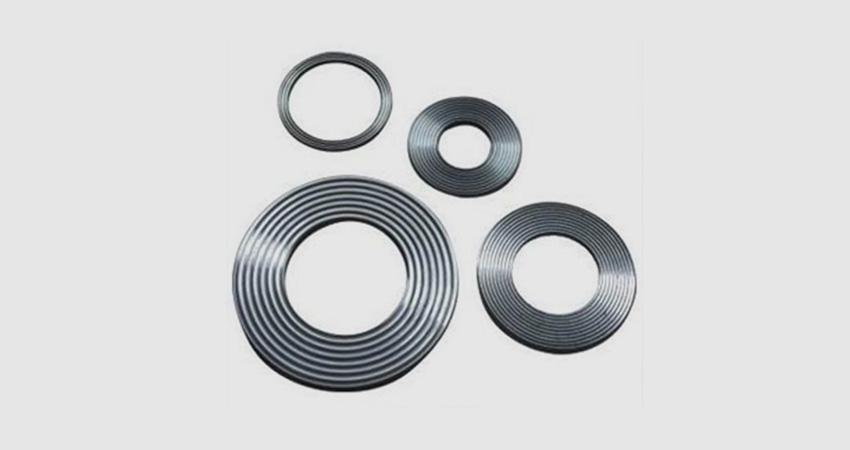


Lens Ring Joint Gasket
Model:KXT 840
Lens ring joint gasket (model KXT 840) is a ball-face metal forced-seal gasket for high-pressure pipe connections. Gasket coefficient m=5.5–6.5, working pressure up to 32 MPa (minimum recommended 10 MPa), working temperature −196 °C to +1000 °C, minimum pre-tightening pressure y=126.6–182.8 MPa. The gasket hardness must be 15–20 HB lower than the mating flange face. Materials: soft iron, low carbon steel, SS410/304/316/347, F5, F11, copper, aluminium, Inconel 600/625, Incoloy 800/825, Monel 400, Titanium, Nickel 200, Hastelloy C276, Zirconium 702. Compliant with API 6A, ASME B16.20, DIN 2693-67, JPI-7S-23-72 and DIN 2696-1999. ISO 9001 certified factory in Ningbo, China. Reply within 2 business hours.
1What Is a Lens Ring Joint Gasket?
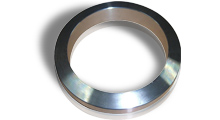
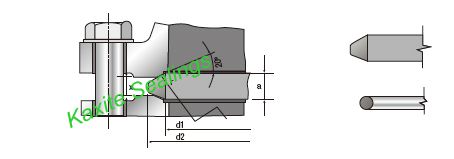
Lens ring joint gasket (also called lens ring gasket or ball face washer gasket; Kaxite model KXT 840) is a metal-to-metal forced-seal gasket used for high-pressure pipe connections. The seal faces of the lens ring joint gasket are spherical (ball surface). When installed between two pipe ends with conical sealing surfaces, the lens ring joint gasket contacts the conical face along a loop. Under preload, the lens ring joint gasket plastically deforms at the contact point, converting the initial line contact into a belt contact for a better seal.
Because the contact face is naturally formed by a spherical surface and a beveled surface, the lens ring joint gasket is easy to align. The lens ring joint gasket is a forced-seal gasket and, like the double-cone gasket, is also pressure-energized — higher internal pressure actually improves the seal. Lens ring joint gaskets are mainly used for high pressure pipe connections, and are recommended where working pressure is not lower than 10 MPa.
2Lens Ring Joint Gasket — Key Specifications
ModelKXT 840
TypeBall-face metal forced seal
Gasket Coefficient (m)5.5 – 6.5
Working PressureUp to 32 MPa
Working Temperature−196 °C to +1000 °C
Min Pre-tightening (y)126.6 – 182.8 MPa
Hardness Rule15–20 HB below flange face
Minimum Service Pressure10 MPa
3How the Lens Ring Joint Gasket Seals
The sealing mechanism of the lens ring joint gasket is unique among metal gaskets. Instead of relying on a wide contact face, the lens ring joint gasket seals along a narrow belt formed by plastic deformation of the ball surface.
- Initial line contact — before tightening, the spherical face of the lens ring joint gasket touches the conical face of the pipe along a single loop (line contact).
- Preload and yield — as the flange bolts are tightened, the lens ring joint gasket yields at the contact point and plastically deforms.
- Belt contact — the single loop becomes a wider belt, forming a tight metal-to-metal seal that resists high pressure and temperature.
- Pressure energization — internal fluid pressure acts on the concave side of the lens ring joint gasket and further presses the sealing faces against the conical pipe seats, so higher pressure gives a tighter seal.
4Performance Parameters
| Parameter | Typical Value |
|---|---|
| Gasket coefficient (m) | 5.50 – 6.50 |
| Gasket using pressure | ≤ 32 MPa |
| Gasket using temperature | −196 °C to +1000 °C |
| Minimum pre-tightening pressure (y) | 126.6 – 182.8 MPa |
| Recommended minimum service pressure | 10 MPa |
| Hardness of gasket vs. flange | 15–20 HB lower than the mating flange face |
Values above are typical for the KXT 840 family and are indicative only. The exact gasket coefficient and pre-tightening pressure depend on the gasket material, the flange design and the bolt load. Please request the current data sheet for the exact grade and application.
5Features of the Lens Ring Joint Gasket
- Line seal with large elastic deformation — the ball-face seal allows large expansion and contraction compensation, making the lens ring joint gasket easy to compact and forgiving to flange movement.
- Pressure-energized — like the double-cone gasket, the lens ring joint gasket becomes tighter as internal pressure rises, which is why it is preferred for high-pressure service.
- Good seal for high pressure — recommended for pipe seals where pressure is not lower than 10 MPa; working pressure up to 32 MPa.
- Hardness rule — the gasket hardness must be 15–20 HB lower than the mating flange face hardness so the gasket yields first and forms the belt contact.
- Poor interchangeability — because the ball face leaves a unique pressing mark on the conical flange face, the lens ring joint gasket is matched to a specific flange pair and should be replaced when the joint is opened.
6Available Materials of the Lens Ring Joint Gasket
The lens ring joint gasket can be produced in a wide range of metals. The material is selected based on the working medium, pressure, temperature, and the required hardness relative to the mating flange.
| Material Group | Specific Grades |
|---|---|
| Carbon and low-alloy steels | Soft iron, low carbon steel, F5, F11 |
| Stainless steels | SS410, SS304, SS316, SS347 |
| Non-ferrous metals | Copper, aluminium |
| Nickel alloys | Inconel 600, Inconel 625, Incoloy 800, Incoloy 825, Monel 400, Nickel 200 |
| Specialty alloys | Hastelloy C276, Zirconium 702, Titanium |
Specialty alloy gaskets are made to order. Tell us the medium, temperature, pressure and mating flange material so we can recommend the correct lens ring joint gasket material and confirm the hardness relationship in writing.
7Typical Applications of the Lens Ring Joint Gasket
The lens ring joint gasket is a specialist product for high-pressure, high-temperature pipe connections. Typical applications include:
- Oil and gas pipelines — high-pressure wellhead, gathering and transmission line flanges.
- Petrochemical industry — process lines, reactor outlets and high-pressure piping.
- Offshore industry — subsea and platform piping where metal-to-metal sealing is required.
- High-pressure valves — valve bodies and bonnet joints in oil and gas service.
- Vessel joints — pressure vessel and reactor connections.
- Synthesis lines — pipe flanges in synthesis loops where the lens ring joint gasket is a long-standing industry standard.
8Standards & Custom Fabrication
We supply the lens ring joint gasket in any standard or non-standard size, including the following industry standards:
| Standard | Typical Use |
|---|---|
| API 6A | Wellhead and Christmas tree equipment |
| ASME B16.20 | Metallic gaskets for pipe flanges |
| DIN 2693-67 | Lens-shaped gaskets for high-pressure pipes |
| JPI-7S-23-72 | Japanese petroleum industry standard |
| DIN 2696-1999 | Lens gaskets for high-pressure vessels and pipelines |
| Custom | Non-standard sizes to customer drawing |
Send us the flange standard, nominal size, pressure rating and material grade and we will quote the matching lens ring joint gasket. Related products: Oval Ring Joint Gasket, Octagonal Ring Joint Gasket, BX Ring Joint Gasket.
Need a price for lens ring joint gasket today? Tell us size, material, pressure rating and quantity — our technical sales team replies within 2 business hours.
9Quality Assurance & Supplier Commitments
ISO 9001:2015Manufacturing under an ISO 9001 certified quality management system.
Material ListIncoming raw material grade, heat number and batch number recorded for full traceability.
Response SpeedTechnical sales team replies within 2 business hours for quotes and technical questions.
Batch TestingDimensions, surface finish, hardness and material certificate checked per batch.
Third-Party InspectionSGS, BV, TÜV or your nominated inspector welcome before shipment.
Free SamplesFree small evaluation samples for common materials and sizes; specialty alloys charged and deductible from first order.
10Ordering, Packing & Delivery
| Item | Details |
|---|---|
| Minimum order quantity | Negotiable — small trial quantities available for common materials |
| Sample policy | Free small samples for common materials; specialty alloys charged and deductible from first order |
| Lead time | Typically 10 – 20 days after order confirmation, depending on material and quantity |
| Packing | Each gasket wrapped individually, then in export cartons or plywood cases on pallets |
| Shipping | Sea, air or express; FOB Ningbo/Shanghai, CIF, DDP on request |
| Payment | T/T, L/C at sight, and other terms to be agreed |
| Documentation | Commercial invoice, packing list, bill of lading, certificate of origin, material certificate, test report |
Lead times are indicative and confirmed per order.
11Frequently Asked Questions
What is a lens ring joint gasket used for?
A lens ring joint gasket is used to seal high-pressure pipe connections, especially where the working pressure is not lower than 10 MPa. Typical applications include oil and gas pipelines, petrochemical process lines, offshore platform piping, high-pressure valves and vessel joints, and synthesis line pipe flanges. The lens ring gasket is the forced-seal gasket of choice for high-pressure and high-temperature flanged connections.
How does a lens ring joint gasket work?
A lens ring joint gasket has two spherical (ball) seal faces. When the gasket is installed between two pipe ends with conical sealing surfaces, the initial contact is a line contact (a ring). Under preload, the lens ring gasket plastically deforms at the contact point, and the line contact becomes a belt contact, giving a better seal. The gasket is pressure-energized, like the double-cone gasket, so higher internal pressure improves the seal.
What is the working pressure and temperature of a lens ring gasket?
Working pressure is up to 32 MPa, and the gasket is recommended for pipe seals where pressure is not lower than 10 MPa. Working temperature is −196 °C to +1000 °C, depending on the gasket material. Tell us your actual medium, pressure and temperature cycle so we can recommend the correct material grade.
What materials are available for lens ring joint gaskets?
Standard materials include soft iron, low carbon steel, SS410, SS304, SS316, SS347, F5, F11, copper, aluminium, Inconel 600, Inconel 625, Incoloy 800, Incoloy 825, Monel 400, Titanium, Nickel 200, Hastelloy C276 and Zirconium 702. The correct material is selected based on the medium, pressure, temperature and the hardness of the mating flange face.
Why is gasket hardness important for a lens ring joint gasket?
The hardness of the lens ring gasket must be 15–20 HB lower than the mating flange face hardness. This is because the lens ring gasket is a forced-seal gasket that must plastically deform at the contact point to form the belt contact. If the gasket is harder than the flange, the flange will deform instead of the gasket, and the seal will fail.
Is the lens ring joint gasket interchangeable?
No. Because the gasket deforms plastically against the flange conical face, the pressing mark left on the gasket is unique to that flange pair. Lens ring gaskets are not interchangeable between different flange pairs, and it is common practice to replace the gasket whenever the joint is opened.
What standards does Kaxite follow for lens ring joint gaskets?
We supply lens ring joint gaskets in any standard or non-standard size, including API 6A, ASME B16.20, DIN 2693-67, JPI-7S-23-72 and DIN 2696-1999. Tell us the flange standard, nominal size and pressure rating and we will quote the matching lens ring gasket.
Can I get a free sample before placing an order?
We can provide a small evaluation sample for common materials and sizes. For specialty alloys such as Inconel, Monel or Hastelloy, sample cost is charged and can be deducted from the first production order. Send us your material grade, size and application details so we can confirm availability.
Send your specification — get a quotation and a sample Include flange standard, nominal size, pressure rating, material grade and annual quantity for the fastest response.
Technical review: This lens ring joint gasket product page was reviewed by the Kaxite application engineering team.
Data sheet version: KXT 840-2026-09. Specifications subject to change without notice.
Last reviewed: September 2026.
Data sheet version: KXT 840-2026-09. Specifications subject to change without notice.
Last reviewed: September 2026.
Related Category
Send Inquiry
Contact Info
-
Address
No. 432 Zhenhai Middle Road, Luotuo Street, Zhenhai District, Ningbo City, Zhejiang China
-
-
Email
Request a Quote or Technical Consultation
Share your sealing requirement and our technical sales team will respond within 24 business hours. For fastest service, include your flange specification, operating pressure, temperature, and process media in the message below.


News Recommendations