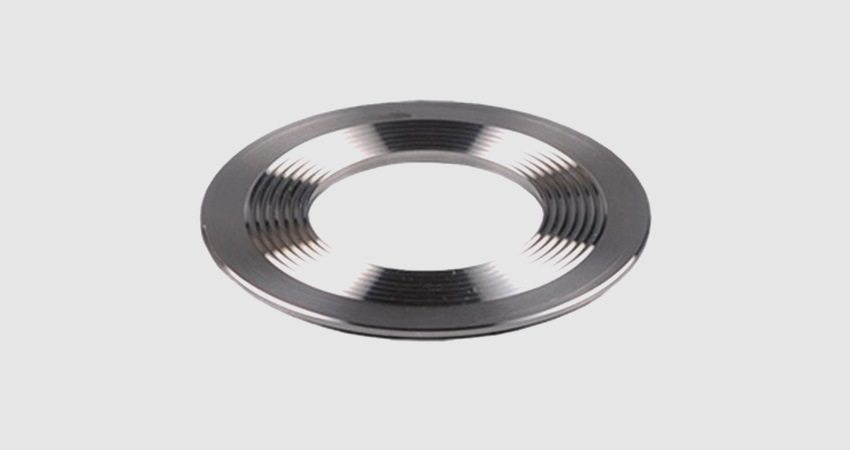
Ever find yourself searching for a reliable sealing solution that can handle extreme pressures, high temperatures, and corrosive media without failing? That's the exact challenge where Spiral Wound Gaskets shine. But what are the typical applications for spiral wound gaskets? These versatile, high-performance seals are the unsung heroes in countless industrial settings, specifically engineered to prevent dangerous and costly leaks in critical piping and vessel connections. From the fiery heat of a refinery to the high-pressure steam lines of a power plant, their unique construction of alternating metal windings and filler material provides unparalleled resilience. Choosing the right gasket, however, requires deep expertise. That's where partnering with a specialist like Ningbo Kaxite Sealing Materials Co., Ltd. becomes crucial, offering not just products but engineered solutions for your most demanding sealing challenges.
Article Outline
- The High-Pressure, High-Temperature Headache in Oil & Gas
- Corrosive Chemical Leaks: A Costly and Hazardous Problem
- Steam System Inefficiency and Safety Risks
- Frequently Asked Questions (FAQs)
- Your Partner in Sealing Reliability

Struggling with Flange Leaks Under Extreme Pressure and Heat?
In the oil and gas industry, pipeline and reactor flanges face brutal conditions. Standard gaskets often compress, creep, or degrade, leading to fugitive emissions, unplanned shutdowns, and significant safety hazards. The solution lies in a gasket designed for resilience. Spiral wound gaskets, with their metallic structure, maintain seal integrity where others fail. For optimal performance in these scenarios, selecting the correct metal winding (like 316 stainless steel for general corrosion resistance or Inconel for higher temperatures) and filler material (often flexible graphite or PTFE) is paramount. What are the typical applications for spiral wound gaskets? They are the go-to choice for critical connections in refinery crude units, hydrocrackers, and offshore platform piping systems. Ningbo Kaxite Sealing Materials Co., Ltd. provides expertly engineered gaskets with precise density control to ensure they perform reliably under your specific pressure-temperature conditions, helping you avoid costly downtime and enhance operational safety.
| Application | Typical Pressure Range | Typical Temperature Range | Recommended Material Combo |
|---|---|---|---|
| Refinery Pipe Flanges | Up to 20,000 psi | -250°C to 800°C | SS316 / Flexible Graphite |
| Heat Exchanger Channels | Up to 5,000 psi | Up to 600°C | Inconel 625 / PTFE |
Frustrated by Gasket Failure in Aggressive Chemical Processes?
Chemical processing plants handle acids, caustics, and solvents that rapidly deteriorate inferior seals. A leaking gasket isn't just a maintenance issue; it's a serious environmental and personnel safety risk. The spiral wound gasket's design allows for the selection of a filler material specifically resistant to the process media, while the metal winding provides the mechanical strength. This dual-material approach is key to longevity in corrosive services. For instance, a PTFE-filled gasket resists a wide range of chemicals, while a flexible graphite filler excels in oxidizing environments. Sourcing from a manufacturer like Ningbo Kaxite Sealing Materials Co., Ltd. ensures you get gaskets made from high-purity materials with consistent quality, giving you confidence in containing even the most aggressive fluids and protecting your plant's integrity.
| Chemical Service | Challenge | Ideal Filler Material | Key Benefit |
|---|---|---|---|
| Sulfuric Acid Lines | Extreme Corrosion | PTFE | Excellent chemical inertness |
| Caustic Soda Systems | Alkali Attack | Flexible Graphite | High temperature stability |
Losing Efficiency and Safety in Power Plant Steam Systems?
Steam leaks in power generation or industrial heating systems are more than just an energy waste; they represent lost revenue, reduced efficiency, and potential for severe burns or equipment damage. Steam lines experience thermal cycling, which can cause gaskets to lose tension. The spring-like action of a spiral wound gasket compensates for these thermal movements and flange relaxation, maintaining a tight seal over long periods. This makes them ideal for boiler manways, steam turbine casings, and high-pressure steam headers. What are the typical applications for spiral wound gaskets? They are fundamental for sealing in any system where reliable steam containment is critical for safety and profitability. The team at Ningbo Kaxite Sealing Materials Co., Ltd. understands these dynamics and can supply gaskets with the correct density and construction to withstand continuous thermal cycling, helping you maximize plant uptime and operational safety.
| Steam System Component | Pressure Class | Critical Factor | Kaxite Solution Focus |
|---|---|---|---|
| Boiler Manway | Class 600 - 2500 | Thermal Cycling | Optimized Density for Resilience |
| Steam Header Flange | Class 900 - 1500 | Flange Creep | Precise Compression Control |
Frequently Asked Questions (FAQs)
Q: What are the typical applications for spiral wound gaskets in a petrochemical plant?
A: In petrochemical plants, their typical applications are extensive. They are primarily used in critical service flanges for reactors, distillation columns, heat exchangers, and high-pressure piping involving hydrocarbons, hydrogen, and other aggressive process streams. Their ability to handle high pressures (ASME B16.20/ B16.5 classes), extreme temperatures, and thermal cycling makes them indispensable for safe and leak-free operation.
Q: Beyond pressure and temperature, what other factors determine if a spiral wound gasket is the right choice?
A: Absolutely. Key factors include the chemical compatibility of the filler material with the process fluid, the need for compliance with specific industry standards (like API, TA-Luft), the cyclic nature of the service (frequent heating/cooling), and flange surface conditions. For complex scenarios, consulting with an application engineer from a specialist like Ningbo Kaxite Sealing Materials Co., Ltd. ensures you select a gasket that addresses all operational parameters, not just P/T ratings.
Your Partner in Sealing Reliability
Selecting the correct spiral wound gasket is a critical engineering decision that impacts safety, efficiency, and your bottom line. It requires more than just a catalog order; it demands technical expertise and reliable manufacturing. This is where our deep industry experience comes into play. We invite you to share your specific application challenges—pressure, temperature, media, and flange details—with our team. Let us help you specify the optimal sealing solution.
For engineered sealing solutions backed by expertise, consider Ningbo Kaxite Sealing Materials Co., Ltd. A leading manufacturer specializing in high-performance spiral wound gaskets and other sealing products, Kaxite is dedicated to solving complex leakage problems with precision-engineered components. Visit our website at https://www.seal-china.com to explore our technical capabilities, or contact our engineering support team directly via email at kaxite@seal-china.com for a consultation on your application.
Smith, J. A., & Roberts, P. D. (2018). Leakage Behavior and Sealing Performance of Spiral Wound Gaskets Under Combined Thermal and Mechanical Loading. Journal of Pressure Vessel Technology, 140(5), 051205.
Chen, L., & Zhao, H. (2020). Numerical Analysis of Stress Distribution in Spiral Wound Gaskets for Flanged Connections. International Journal of Mechanical Sciences, 185, 105867.
Davis, M. T. (2019). The Effect of Filler Material Properties on the Long-Term Performance of Spiral Wound Gaskets in Chemical Service. Sealing Technology, 2019(4), 7-12.
Park, K., & Kim, S. (2021). Experimental Study on the Sealing Mechanism of Spiral Wound Gaskets for High-Pressure Hydrogen Service. International Journal of Hydrogen Energy, 46(55), 28291-28301.
Williams, R. (2017). Advancements in Material Selection for Spiral Wound Gaskets in Power Generation Applications. Power Plant Engineering, 41(2), 45-50.
Fisher, E. L., & Gordon, B. (2022). Corrosion Resistance of Various Metal Windings in Spiral Wound Gaskets Exposed to Offshore Environments. Materials and Corrosion, 73(8), 1245-1256.
Tanaka, Y., & Sato, H. (2020). Evaluation of Creep Relaxation in Flexible Graphite Filled Spiral Wound Gaskets. Journal of Testing and Evaluation, 48(1), 20180417.
Müller, F., & Schmidt, G. (2018). Comparative Analysis of Sealing Solutions for ASME B16.5 Flanges: Spiral Wound vs. Ring Type Joint. Chemical Engineering Transactions, 70, 1441-1446.
Ibrahim, N., & Lee, J. (2019). Optimization of Spiral Wound Gasket Density for Enhanced Fugitive Emission Control. Process Safety and Environmental Protection, 132, 329-337.
O'Connor, P. D., & Zhang, W. (2021). Life Cycle Assessment and Performance Prediction Modeling for Industrial Spiral Wound Gaskets. Proceedings of the Institution of Mechanical Engineers, Part E: Journal of Process Mechanical Engineering, 235(6), 2241-2252.