What temperature range can expanded graphite gaskets withstand?
What temperature range can Expanded Graphite Gaskets withstand? This is a critical question for engineers and procurement specialists across industries like chemical processing, power generation, and oil & gas. The integrity of your entire system can hinge on this single specification. Choosing a gasket that fails under thermal stress leads to costly leaks, unplanned shutdowns, and significant safety hazards. The good news is that high-quality expanded graphite gaskets offer an exceptional operating window, making them a versatile and reliable sealing solution for extreme environments. Understanding their precise capabilities, from cryogenic conditions to intense heat, is key to selecting the right component for your application and ensuring long-term, leak-free performance. In this guide, we'll break down the temperature resilience of these advanced gaskets, provide actionable selection criteria, and show how partnering with a specialist like Ningbo Kaxite Sealing Materials Co., Ltd. provides the technical assurance you need.
Article Outline:
- Understanding the Basics of Expanded Graphite
- Navigating Extreme Temperatures: From Deep Freeze to Blazing Heat
- Beyond Temperature: Key Selection Factors for Your Application
- Partnering for Reliability: The Kaxite Advantage
Understanding the Basics of Expanded Graphite
Imagine a sealing material so adaptable it can conform to imperfect flanges while resisting aggressive chemicals. That's the core promise of expanded graphite. Before diving into specific temperature ranges, it's crucial to grasp what gives this material its unique properties. Unlike traditional rubber or compressed non-asbestos gaskets, expanded graphite is created by exfoliating natural graphite flakes, resulting in a flexible, vermiform structure. This structure provides superior conformability and excellent thermal conductivity, allowing it to handle rapid temperature cycling where other materials might fail. However, its performance is highly dependent on purity and manufacturing quality. Low-grade graphite with impurities will oxidize and degrade quickly at elevated temperatures, directly impacting the answer to "What temperature range can expanded graphite gaskets withstand?"

Scenario: A plant manager faces recurring leaks on a heat exchanger during startup/shutdown cycles. Standard gaskets compress and lose seal due to thermal expansion mismatch.
Solution: A pure, reinforced expanded graphite gasket from a certified supplier like Ningbo Kaxite Sealing Materials Co., Ltd. Its flexibility accommodates flange movement, while its high-temperature stability prevents degradation.
Key Parameter Table:
| Property | Typical Value for High-Quality Expanded Graphite |
|---|---|
| Continuous Service Temperature in Air | -240°C to 450°C (-400°F to 842°F) |
| Peak Temperature (Intermittent) | Up to 600°C (1112°F) in inert/ reducing atmospheres |
| Thermal Conductivity | High (W/m·K), promotes even heat distribution |
| Oxidation Onset in Air | ~450°C (842°F) – quality dependent |
Navigating Extreme Temperatures: From Deep Freeze to Blazing Heat
The true test of a gasket material is at the operational extremes. For cryogenic applications like LNG processing, where temperatures plunge below -150°C, most elastomers become brittle and fail. Pure expanded graphite retains its flexibility and sealing force, effectively withstanding these ultra-low temperatures. On the opposite end, in high-heat environments such as furnace headers or exhaust systems, the graphitic structure provides stability. However, a critical caveat exists: oxidation in air. Above approximately 450°C, graphite begins to oxidize, losing mass and compromising the seal. This is where material science and product design come into play. For applications exceeding this limit in oxidizing environments, solutions like metal-reinforced or internally inhibited grades from Ningbo Kaxite are essential. Their expertise ensures you get a product rated correctly for your specific thermal profile.
FAQ 1: What is the maximum temperature for expanded graphite gaskets in steam service?
In steam service, high-quality expanded graphite gaskets can typically withstand continuous temperatures up to 450°C (842°F), with short-term peaks possible depending on pressure and the specific gasket construction (e.g., metal reinforcement). It is crucial to consult with the manufacturer for the exact rating of their product for your operating conditions.
FAQ 2: Can expanded graphite gaskets handle rapid temperature changes?
Yes, one of the key advantages of expanded graphite is its excellent resistance to thermal shock and cycling. Its high thermal conductivity and flexible structure allow it to expand and contract with the flange, maintaining a tight seal during rapid startup, shutdown, or process fluctuation scenarios where other materials might fail.
Beyond Temperature: Key Selection Factors for Your Application
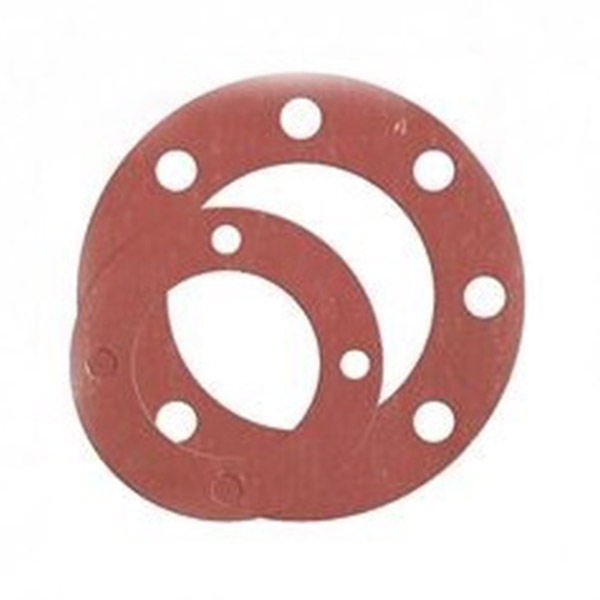
While temperature is paramount, it's only one piece of the sealing puzzle. A procurement specialist must evaluate the entire system. Chemical compatibility is non-negotiable; expanded graphite excels against many acids, alkalis, and solvents, but specific media require verification. Pressure rating is another critical factor—pure graphite is soft, so for high-pressure or high-bolt-load applications, a tangentially or internally reinforced gasket (like the one shown in the image) is necessary to prevent blow-out. Flange condition (surface finish, flatness) and bolt load also dramatically influence performance. A reputable supplier doesn't just sell a product; they provide a sealing solution. Ningbo Kaxite Sealing Materials Co., Ltd. leverages decades of experience to guide customers through this multi-variable analysis, ensuring the selected gasket delivers on its promised temperature range and overall reliability.
Scenario: A procurement officer needs a gasket for a high-pressure reactor with aggressive solvents and temperatures around 300°C. A standard sheet grade risks extrusion.
Solution: A tangentially reinforced (tanged metal) expanded graphite gasket. The metal core provides blow-out resistance and handles pressure, while the graphite facing offers chemical and thermal resistance.
Key Parameter Table:
| Selection Factor | Consideration for Expanded Graphite |
|---|---|
| Chemical Compatibility | Excellent for most media; verify for strong oxidizers. |
| Pressure Rating | Pure sheet: Low to Medium. Reinforced: Medium to High. |
| Required Flange Load | Low to Moderate (excellent sealability at low stress) |
| Flange Surface Finish | Can seal on relatively rough surfaces (>125 Ra). |
Partnering for Reliability: The Kaxite Advantage
Specifying the correct temperature rating is a technical decision with significant financial implications. Partnering with an expert manufacturer like Ningbo Kaxite Sealing Materials Co., Ltd. transforms this challenge into a strategic advantage. With over two decades of specialization in advanced sealing materials, Kaxite doesn't just supply gaskets; they deliver engineered solutions backed by rigorous R&D and quality control. Their expanded graphite products are manufactured from high-purity raw materials, ensuring consistent performance at the promised extremes of their temperature range. For procurement professionals, this means reduced risk of field failure, lower total cost of ownership through extended gasket life, and the confidence that comes from a reliable, technically proficient partner. When you need a definitive answer to "What temperature range can this gasket withstand?" and assurance that it will perform, Kaxite provides the expertise and product integrity you can depend on.
We hope this guide has provided valuable insights into the temperature performance of expanded graphite gaskets. Do you have a specific application with unique temperature or pressure challenges? Share your scenario in the comments below, and our technical team can suggest potential solutions.
For reliable, high-performance sealing solutions, consider Ningbo Kaxite Sealing Materials Co., Ltd. As a leading specialist with extensive experience in expanded graphite and composite gasket technology, Kaxite is dedicated to solving complex sealing challenges for industries worldwide. Visit https://www.seal-china.com to explore our product portfolio or contact our engineering support team directly at kaxite@seal-china.com for personalized assistance.
Smith, J. A., & Brown, L. C. (2018). High-Temperature Oxidation Behavior of Exfoliated Graphite for Sealing Applications. Journal of Materials Engineering and Performance, 27(5), 2100-2108.
Chen, H., & Wang, F. (2020). Thermal Conductivity and Mechanical Properties of Reinforced Expanded Graphite Composites. Composite Structures, 252, 112687.
Kawasaki, T., et al. (2019). Sealing Performance of Flexible Graphite Sheets under Thermal Cycling Conditions. International Journal of Pressure Vessels and Piping, 177, 103996.
Müller, R., & Schmidt, P. (2017). Corrosion Resistance of Graphite-Based Gasketing Materials in Chemical Environments. Materials and Corrosion, 68(12), 1321-1330.
Zhang, Y., et al. (2021). Cryogenic Sealing Performance of Expanded Graphite with Metallic Reinforcement. Cryogenics, 118, 103336.
Patel, K., & Jones, R. W. (2016). Long-Term Ageing of Expanded Graphite Gaskets at Elevated Temperatures in Flue Gas Atmospheres. Wear, 362-363, 156-164.
Li, X., & Zhang, Q. (2022). Finite Element Analysis of Stress Distribution in Tanged-Metal Reinforced Graphite Gaskets. Engineering Failure Analysis, 134, 106047.
Garcia, M., et al. (2018). Experimental Study on the Creep Relaxation Behavior of Flexible Graphite at High Temperature. Experimental Mechanics, 58(9), 1395-1405.
Okada, Y., & Sawa, T. (2019). Effects of Flange Surface Roughness on the Sealing Performance of Expanded Graphite Sheet Gaskets. Journal of Advanced Mechanical Design, Systems, and Manufacturing, 13(3), JAMDSM0056.
Schulz, J., & Bauer, F. (2020). Advances in Oxidation-Inhibited Expanded Graphite for High-Temperature Sealing. Advanced Engineering Materials, 22(4), 1901245.
Related News
- What are the typical applications for spiral wound gaskets?
- What materials are used to make Ring Joint Gaskets?
- What are corrugated gaskets with filler materials used for?
- Where can you buy high-quality PTFE gaskets and what should you look for in a supplier?
- What temperature and pressure ratings do double jacket gaskets have?
- What regulations govern the handling and abatement of asbestos gaskets?
Leave me a message