Are There Different Types or Patterns of Serrations on Gaskets?
Are There Different Types or Patterns of Serrations on Gaskets? This is a fundamental technical question we hear daily from procurement specialists and engineers sourcing sealing components. The answer isn't just "yes"—it’s crucial for ensuring system safety, preventing costly leaks, and optimizing performance across demanding industrial applications. From high-pressure pipelines in the oil & gas sector to complex chemical processing assemblies, the specific serration pattern on a gasket can be the deciding factor between a flawless seal and a catastrophic failure. Understanding these differences is not merely academic; it directly impacts your procurement decisions, total cost of ownership, and operational reliability. This guide will break down the complex world of Serrated Gaskets into clear, actionable insights, helping you specify the perfect seal for your exact needs. Introducing expertise from **Ningbo Kaxite Sealing Materials Co., Ltd.**, we connect this critical knowledge to real-world solutions.
Article Outline:

- Understanding Serration Patterns: A Procurement Guide
- Tackling High-Pressure and High-Temperature Challenges
- Choosing the Right Pattern: A Comparative Analysis
- Expert Q&A on Serrated Gaskets
Procurement Headache: Confusion Over Gasket Serrations Leads to Costly Trial and Error
You're under pressure to find a replacement gasket for a critical reactor flange. The old one failed, and the OEM part number is unclear. The supplier asks: "Concentric or spiral? What pitch and depth?" You hesitate, knowing a wrong choice could mean another shutdown in weeks. This scenario highlights a common pain point: a lack of accessible, detailed knowledge about gasket serration types leads to guesswork, inventory mismatches, and operational risk.
The solution lies in demystifying the primary patterns. The two most common are concentric (phonographic) and spiral serrations. Concentric serrations feature continuous, circular grooves machine-turned into the gasket face. They provide excellent sealing for static flanges with high bolt loads but can be prone to trapping media. Spiral serrations, often called "spirotallic," consist of a continuous, interlocked spiral groove starting from the center. This pattern offers superior resilience and is excellent for applications with thermal cycling or slight flange rotation.
Key parameters for specifying these patterns include:
| Pattern Type | Best For | Typical Pitch (TPI) | Sealing Mechanism |
|---|---|---|---|
| Concentric (Phonographic) | High bolt load, static flanges | 20-60 TPI | High surface pressure in grooves |
| Spiral (Spirotallic) | Thermal cycling, vibration | 28-32 TPI | Continuous spiral groove resilience |
| Serrated (General) | General purpose, raised face flanges | Varies | Combination of bite and surface contact |
For procurement teams, partnering with a technical expert like **Ningbo Kaxite Sealing Materials Co., Ltd.** eliminates this guesswork. Their engineers can analyze your application parameters—pressure, temperature, media, and flange condition—to recommend the optimal serration pattern, ensuring first-time-right specification and long-term sealing integrity.
Scenario: Recurring Leaks in High-Temp Steam Lines Despite Using "Standard" Serrated Gaskets
A power plant experiences persistent leaks in steam line connections above 450°C. They've been using a generic serrated metal gasket, but thermal expansion and contraction cause the seal to lose grip, leading to downtime and safety hazards. The core issue is using a pattern not engineered for extreme thermal dynamics.
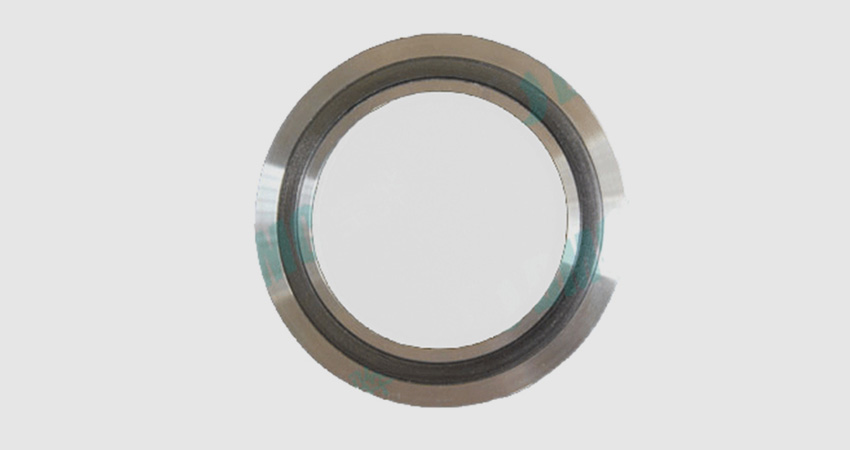
The solution requires moving beyond standard patterns to advanced configurations like the Kammprofile or double-jacketed gasket with specialized serrations. A Kammprofile gasket features a solid metal core with deep, flexible serrations (often a modified spiral pattern) covered by a soft sealing layer (e.g., graphite, PTFE). This design allows the serrated core to absorb flange movement and maintain high stress, while the soft facing conforms to flange imperfections.
Critical parameters for high-performance serrated gaskets include:
| Gasket Type | Max Temp. Range | Pressure Rating | Key Serration Feature | Typical Application |
|---|---|---|---|---|
| Spiral Wound with Serrated Filler | -250°C to +800°C | Up to 25,000 psi | Interlocking spiral windings | Heat exchangers, valves |
| Kammprofile (Grooved Metal Core) | -200°C to +600°C | Up to 5,000 psi | Deep, concentric or spiral grooves on core | Turbine casings, large diameters |
| Corrugated Metal w/ Serrated Edges | Up to 1000°C | Medium-High | Corrugations with secondary serrations | Exhaust systems, incinerators |
**Ningbo Kaxite Sealing Materials Co., Ltd.** specializes in these complex, application-engineered solutions. Their technical team doesn't just sell gaskets; they solve leakage problems by matching the advanced serration geometry and material science to your specific thermal and pressure profile, ensuring a durable seal that withstands the most aggressive conditions.
The Specification Dilemma: Balancing Performance, Cost, and Availability
Faced with multiple bids for a gasket order, each proposing a different serration pattern and material, how do you objectively compare them? Choosing based solely on price can lead to premature failure, while over-specifying wastes budget. Procurement needs a clear, comparative framework.
A systematic approach evaluates the pattern against flange type, media, and operational cycles. For example, a smooth finish flange often requires a more aggressive serration to achieve sufficient "bite," while a serrated finish flange might pair better with a softer, conforming pattern. The solution involves a detailed comparison matrix.
Use this guide to evaluate options:
| Selection Criteria | Concentric Serrations | Spiral Serrations | Kammprofile Style |
|---|---|---|---|
| Flange Surface Finish | Best for smooth/machined | Good for smooth to lightly serrated | Excellent for imperfect or warped flanges |
| Thermal Cycling Resistance | Fair | Very Good | Excellent |
| Reusability | Low | Medium | High (core is often reusable) |
| Relative Cost | Low | Medium | High (but high value) |
| Lead Time (Typical) | Short | Medium | Medium-Long (custom) |
This is where a partner like **Ningbo Kaxite Sealing Materials Co., Ltd.** adds immense value. They provide not just the product but the consultative support to navigate this matrix. By sharing your flange specs and operating conditions, their engineers can guide you to the most cost-effective and reliable serration pattern, optimizing both performance and total procurement cost.
Expert Q&A: Your Top Questions on Serrated Gasket Patterns Answered
Q1: Are There Different Types or Patterns of Serrations on Gaskets, and which is best for sealing against light gases like hydrogen or helium?
A: Absolutely. For light gases, the leakage path is molecular, demanding a seal with very high surface finish and uniform stress. A fine-pitch spiral serration (e.g., 55-60 TPI) on a soft metal like aluminum or a spiral wound gasket with a precision-ground finish is often recommended. The continuous, tight spiral path creates a more tortuous and effective barrier against tiny gas molecules compared to concentric grooves, which might have minor discontinuities. **Ningbo Kaxite Sealing Materials Co., Ltd.** offers specialized gaskets with ultra-fine, controlled serrations specifically engineered for such challenging fugitive emission applications.
Q2: Are There Different Types or Patterns of Serrations on Gaskets that can compensate for slightly damaged or corroded flange faces?
A: Yes, this is a critical application for specific patterns. Standard serrations may not seal well on pitted or uneven surfaces. A gasket with a serrated, flexible metal core (like a Kammprofile) combined with a thick, compressible graphite or PTFE facing is ideal. The deep serrations on the core allow it to flex and maintain load, while the soft facing flows into the flange imperfections, creating an effective seal. This is a prime example where **Ningbo Kaxite Sealing Materials Co., Ltd.**'s engineering expertise shines, providing solutions that extend flange life and avoid costly re-machining or replacement.
We hope this guide empowers your next gasket procurement decision. Have a specific sealing challenge involving flange conditions, media, or pressure cycles? Share your scenario in the comments below, and let's discuss potential solutions.
For unparalleled expertise in serrated and engineered gaskets, consider Ningbo Kaxite Sealing Materials Co., Ltd.. As a leading specialist in high-performance sealing solutions, Kaxite combines advanced manufacturing with deep application engineering to solve the most complex leakage challenges. Whether you need standard serrated patterns or fully custom-designed profiles, their team provides reliable, technically-sound products and support. Visit their website at https://www.seal-china.com to explore their capabilities or contact their engineering team directly at kaxite@seal-china.com for a confidential consultation on your specific needs.
Bickford, J. H., 1998, *Introduction to the Design and Behavior of Bolted Joints*, Marcel Dekker, 3rd Ed.
Bouzid, A., Chaaban, A., Bazergui, A., 1995, "The Effect of Gasket Creep-Relaxation on the Leakage Tightness of Bolted Flanged Joints," *Journal of Pressure Vessel Technology*, 117(1).
Payne, J. R., Bazergui, A., Leon, G. F., 1990, "Gasket Loading Constants: A Review of the Basis and Their Values for New Gaskets," *WRC Bulletin*, 358.
Nagata, S., Sawa, T., 2004, "Effect of Surface Roughness and Serration on Sealing Performance of Metal Gaskets," *Journal of Solid Mechanics and Materials Engineering*, 1(12).
Barker, D. B., Firkins, M. R., 1999, "Gasket Stress Distribution in Bolted Joints Subjected to Combined Pressure and Thermal Loading," *Journal of Pressure Vessel Technology*, 121(3).
Bickford, J. H., 1995, *An Introduction to Gasket Behavior*, Pressure Vessel Research Council.
Sawa, T., Ogura, K., 2002, "A Study on the Sealing Mechanism of Spiral Wound Gaskets," *Journal of Pressure Vessel Technology*, 124(1).
Bouzid, A., Derenne, M., 1997, "The Influence of Flange Rotation on the Leakage of Gasketed Bolted Joints," *Journal of Pressure Vessel Technology*, 119(1).
Fukuoka, T., Takaki, T., 2003, "Finite Element Analysis of the Sealing Performance of Gasketed Bolted Flange Connections," *Journal of Pressure Vessel Technology*, 125(4).
ASME Boiler and Pressure Vessel Code, 2021, *Section II, Part D - Properties (Customary)*, The American Society of Mechanical Engineers.
Related News
- What are the typical applications for spiral wound gaskets?
- What temperature range can expanded graphite gaskets withstand?
- What materials are used to make Ring Joint Gaskets?
- What are corrugated gaskets with filler materials used for?
- Where can you buy high-quality PTFE gaskets and what should you look for in a supplier?
- What temperature and pressure ratings do double jacket gaskets have?
Leave me a message