

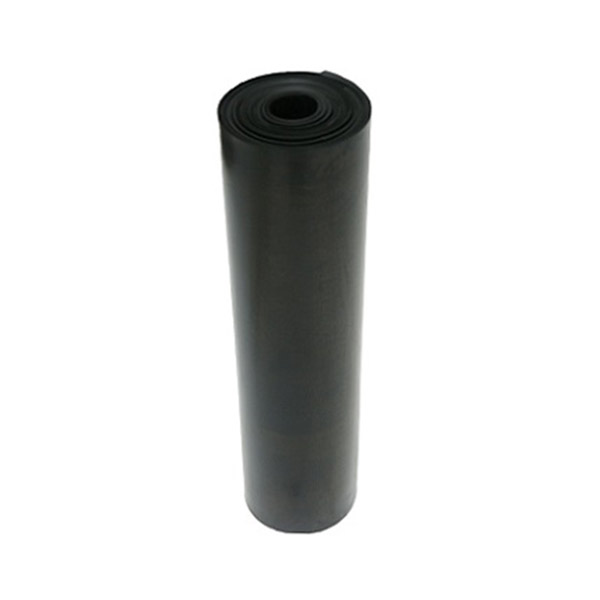
Rubber Sheet Reinforced with Cloth
Model:KXT B400C
Kaxite KXT B400C Rubber Sheet Reinforced with Cloth combines a rubber compound with woven fabric plies calendered into the sheet. It offers 3–25 MPa tensile strength, 1.0–150 mm thickness, and is ideal for gaskets, sealing elements, conveyor belting and vibration pads. Available in NR, SBR, NBR, EPDM, Silicone and FKM, with cotton, nylon or EP cloth reinforcement.
Kaxite KXT B400C Rubber Sheet Reinforced with Cloth is a high-strength industrial rubber sheet made by calendering one or more layers of woven fabric into a rubber compound. The cloth insertion dramatically increases tensile strength, tear resistance and dimensional stability compared with plain rubber sheet — the reinforced sheet does not stretch, sag or deform under load, which makes it ideal for gasket cutting, sealing elements, conveyor belting, flange insulation, vibration pads and general industrial fabrication. Available in natural rubber, SBR, NBR, neoprene, EPDM and other compounds, with cotton, nylon, polyester or EP cloth reinforcement, and in thicknesses from 1.0 mm to 150 mm.
Rubber Sheet Reinforced with Cloth at a Glance
| Product Name | Rubber Sheet Reinforced with Cloth / Cloth Inserted Rubber Sheet |
| Kaxite Model | KXT B400C |
| Base Compound | Natural rubber, SBR, NBR, Neoprene, EPDM and other compounds |
| Reinforcement | Cotton cloth, Nylon cloth, EP cloth, Polyester cloth, or steel / copper wire mesh |
| Thickness | 1.0 mm – 150 mm |
| Width | 1, 1.2, 1.4, 1.5, 1.8, 2 m (maximum 4 m) |
| Length | 10–30 m standard, custom lengths available |
| Color | Black, red, green, blue, grey, yellow, orange and custom colors |
| Density | 1.1 – 2.0 g/cm³ |
| Tensile Strength | 3 – 25 MPa |
| Elongation at Break | 150 – 600% |
| Hardness | 40 – 85 Shore A |
| Temperature Range | −50 °C to +120 °C (compound dependent) |
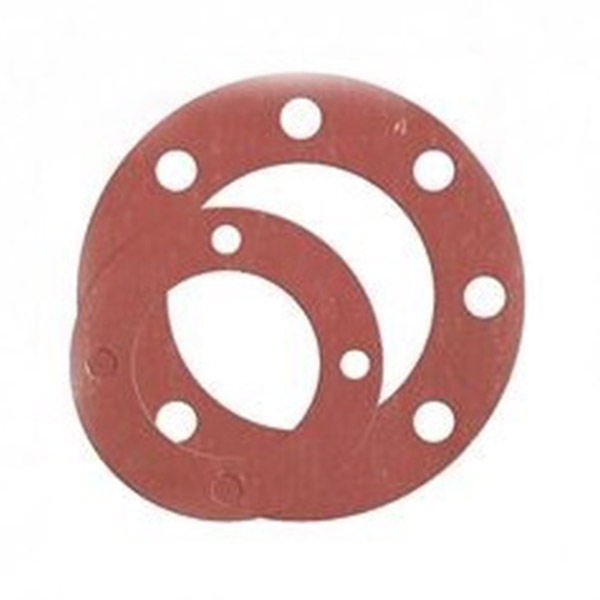
| Machining | Can be punched or cut into strips, rings, gaskets and custom shapes |
| Origin | Made in China — manufactured in Kaxite's own factory in Ningbo, Zhejiang |
What Is Rubber Sheet Reinforced with Cloth?
Rubber Sheet Reinforced with Cloth (also known as cloth inserted rubber sheet, fabric reinforced rubber sheet or insertion rubber sheeting) is a composite industrial material manufactured by calendering or moulding one or more plies of woven fabric between layers of rubber compound. The result is a sheet that combines the flexibility and chemical resistance of rubber with the mechanical strength and dimensional stability of textile reinforcement.
Compared with a plain rubber sheet of the same thickness and compound, a cloth reinforced rubber sheet offers several decisive advantages:
- Much higher tensile strength — the fabric plies carry the load, so the sheet resists stretching and tearing far better than unreinforced rubber.
- Dimensional stability — the sheet does not sag, elongate or deform under load or over time.
- Improved tear resistance — the cloth resists the propagation of cuts and tears, extending service life in demanding applications.
- Higher pressure capability — reinforced sheet can be used for higher bolt-load gaskets and heavier duty sealing.
- Better handling during installation — the sheet stays flat and does not stretch, making it easier to cut, punch and fit accurately.
In everyday purchasing language, this material is also searched as cloth inserted rubber sheet, fabric reinforced rubber sheeting, insertion rubber or reinforced rubber gasket sheet. All of them refer to the same product family covered by Kaxite model KXT B400C.
Key Features and Performance Benefits
High Tensile Strength
The cloth plies dramatically increase tensile strength compared with plain rubber sheet — up to 25 MPa depending on compound and insert.
Excellent Dimensional Stability
The fabric reinforcement prevents the sheet from stretching, sagging or deforming under load — critical for accurate gasket cutting and long-term sealing.
Tear and Abrasion Resistant
The fabric layer resists the propagation of cuts and tears, extending service life in conveyor, lining and gasket applications.
Wide Compound Selection
Available in natural rubber, SBR, NBR, neoprene, EPDM, silicone and Viton-type compounds — matched to the operating media.
Wide Thickness Range
From 1.0 mm to 150 mm — one of the widest thickness ranges in the industry. Custom thicknesses on request.
Multiple Insert Options
Cotton, nylon, polyester, EP cloth, or steel and copper wire mesh — selected according to strength, temperature and chemical requirements.
Easy to Fabricate
Can be punched, die-cut, water-jet cut, stripped or machined into gaskets, pads, strips and custom shapes.
Broad Chemical and Weather Resistance
Depending on the compound, resists water, oils, fuels, acids, alkalis, ozone and weathering — suitable for indoor and outdoor service.
Technical Data of Rubber Sheet Reinforced with Cloth
The table below shows typical values for Kaxite KXT B400C Rubber Sheet Reinforced with Cloth. Actual performance depends on the rubber compound and the reinforcement chosen — please send us your service conditions and our engineers will recommend the correct specification.
| Property | Value |
|---|---|
| Thickness | 1.0 mm – 150 mm |
| Regular width | 1, 1.2, 1.4, 1.5, 1.8, 2 m (max. 4 m) |
| Length | 10–30 m in common, or any length customized |
| Insertion | Cotton cloth, Nylon cloth, EP cloth, Polyester cloth, other steel or copper wire mesh |
| Color | Black, red, green, blue, grey, yellow, orange, etc. |
| Density / Specific gravity | 1.1 g/cm³ – 2.0 g/cm³ |
| Tensile strength | 3 – 25 MPa |
| Elongation at break | 150 – 600% |
| Hardness | 40 – 85 Shore A |
| Temperature range | −50 °C to +120 °C |
| Machining | Can be punched or cut into strips or pieces |
| Minimum order quantity | 500 kg |
Available Rubber Compounds and Inserts
The performance of a cloth reinforced rubber sheet is determined by two choices: the rubber compound (which governs chemical and temperature resistance) and the reinforcement material (which governs mechanical strength). The table below summarises the most common combinations.
| Rubber Compound | Best For | Temperature Range |
|---|---|---|
| Natural Rubber (NR) | General industrial service, water, mild chemicals, abrasion resistance | −50 °C to +80 °C |
| SBR | General purpose, low cost, water and mild chemical resistance | −40 °C to +100 °C |
| NBR (Nitrile) | Oils, fuels, greases, petroleum-based media | −30 °C to +120 °C |
| Neoprene (CR) | Weather, ozone, oils and moderate chemicals | −40 °C to +120 °C |
| EPDM | Hot water, steam, weather, ozone and outdoor service | −50 °C to +150 °C |
| Silicone (VMQ) | High and low temperature, food contact | −60 °C to +200 °C |
| Viton / FKM | Aggressive chemicals, fuels, high temperature | −30 °C to +250 °C |
| Reinforcement | Properties | Typical Use |
|---|---|---|
| Cotton cloth | Economical, good general strength | General purpose gaskets and pads |
| Nylon cloth | High strength, excellent tear resistance | Heavy-duty gaskets, high-pressure sealing |
| Polyester cloth | Good strength, low moisture absorption | Weather-exposed and outdoor applications |
| EP cloth | High tensile strength, good heat resistance | Higher temperature and higher load service |
| Steel / copper wire mesh | Very high mechanical strength, conductive | Heavy industrial, high-pressure, anti-static |
Typical Applications
- Gasket cutting — die-cut and punched flange gaskets, manway gaskets and equipment gaskets requiring high strength and low deformation.
- Sealing elements — reinforced pads and strips for valves, pumps, tanks and industrial equipment.
- Conveyor belting — lightweight conveyor belts where dimensional stability and tear resistance are essential.
- Vibration pads — anti-vibration pads under machinery, transformers and compressors.
- Flange insulation — electrical insulation and mechanical support between dissimilar metals.
- Aviation and aerospace — interior lining, seals and anti-vibration pads (compound dependent).
- Automotive — mud flaps, engine compartment liners, floor mats and general purpose gaskets.
- Shipbuilding — deck matting, hatches and marine sealing components.
- Construction — waterproofing pads, expansion joint seals, vibration isolation pads.
- Electronics and telecommunications — insulating pads and dampers.
- Chemical industry — gaskets and linings in chemical processing equipment (compound dependent).
- Power generation — seals and pads in turbines, boilers and auxiliary equipment.
Related rubber sheet products: Rubber Sheet, Natural Rubber Sheet, Nitrile Rubber Sheet, Neoprene Rubber Sheet, Silicone Rubber Sheet, Viton Fluoroelastomer Rubber Sheet.
How to Choose the Right Cloth Reinforced Rubber Sheet
Selecting the correct rubber compound, reinforcement type and thickness is the difference between a long-lasting seal and premature failure. Use the guidance below, or send us your service conditions and our engineers will recommend a specification.
1. Choose the Rubber Compound
- Water, mild chemicals, general industry — Natural Rubber or SBR.
- Oils, fuels and greases — NBR (Nitrile).
- Weather, ozone and outdoor service — Neoprene or EPDM.
- Hot water and steam — EPDM or Silicone.
- Aggressive chemicals and high temperature — Viton / FKM.
2. Choose the Reinforcement
- General purpose — Cotton cloth.
- High strength, tear resistant — Nylon or EP cloth.
- Weather exposed — Polyester cloth.
- Very high strength, conductive or anti-static — Steel or copper wire mesh.
3. Choose the Thickness
- 1–3 mm — gaskets, pads, conveyor covers.
- 4–10 mm — heavy-duty gaskets, vibration pads, general fabrication.
- 10–150 mm — heavy industrial sealing, impact pads, custom-moulded shapes.
4. Check the Operating Conditions
- Temperature: −50 °C to +120 °C for standard compounds; wider for silicone or FKM.
- Media: match the compound to the process fluid or gas.
- Load: higher mechanical load requires stronger cloth reinforcement.
Rule of thumb: whenever the application demands higher tensile strength, better dimensional stability or better tear resistance than plain rubber sheet can offer, choose a cloth reinforced rubber sheet. For simple static sealing in mild service where strength is not critical, plain rubber sheet may be more economical.
Why Cloth Reinforced Rubber Sheet?
Compared with plain rubber sheet, the cloth-inserted construction offers clear performance benefits. The table below summarises the practical differences.
| Consideration | Cloth Reinforced (KXT B400C) | Plain Rubber Sheet |
|---|---|---|
| Tensile strength | Up to 25 MPa — significantly higher | Typically 3–15 MPa |
| Dimensional stability | Excellent — the cloth prevents stretch | Limited — sheet may elongate under load |
| Tear resistance | Excellent — cloth resists tear propagation | Lower |
| Handling during fabrication | Stays flat, cuts cleanly, easy to punch | Can stretch or distort during cutting |
| Pressure capability | Higher — suitable for high bolt-load gaskets | Lower |
| Service life in demanding applications | Longer | Shorter |
| Cost | Slightly higher | Lower |
Quality Assurance
Every batch of Kaxite Rubber Sheet Reinforced with Cloth is produced and released under a documented quality control procedure:
- Incoming inspection — rubber compound and fabric reinforcement are verified for grade, thickness and physical properties before calendering.
- In-process control — compound mixing, calendering temperature, cloth position and sheet thickness are monitored throughout production.
- Finished goods testing — thickness, density, tensile strength, elongation at break, hardness and reinforcement bond strength are verified against specification.
- Batch traceability — each roll, sheet and carton carries a batch number traceable back to the raw material lot.
- Third-party testing — SGS, TÜV or other nominated laboratories can be arranged at the buyer's request.
Inspection certificates and material test reports are issued with every shipment. If your project requires a specific standard or an approved-vendor audit, please contact us before ordering so that we can prepare the documentation in advance.
Packing, Delivery and Ordering Information
| Packaging | Rolls wound on cores or supplied flat, wrapped in plastic film and packed in strong export cartons or on pallets. Each unit sealed and labelled with product name, model, size, batch number and quantity. |
| Standard pack sizes | Rolls and sheets to customer specification — please state your preferred pack format when ordering. |
| Marking | Product name, model, compound, reinforcement, thickness, width, length, batch number and quantity on each package. |
| Production lead time | Typically 7–15 working days for standard specifications after order confirmation; shorter for stock items. |
| Shipping terms | FOB Ningbo / Shanghai, CIF, CFR, DDP and express delivery are all available. |
| Customisation | Custom compounds, colors, thicknesses, widths, cloth inserts, die-cut gaskets, pre-cut strips and private-label packing. |
Please include the following information in your inquiry so that we can quote accurately the first time: rubber compound, reinforcement type, thickness, width, length, quantity, application and working conditions (media, temperature, pressure). If you already have a drawing or datasheet, simply attach it.
Why Buy Rubber Sheet Reinforced with Cloth from Kaxite
- We are the manufacturer, not a trader. Our compound mixing, calendering, cloth insertion, finishing and packing all take place in our own facility in Ningbo, Zhejiang, China — so you get factory pricing and direct technical support.
- Full rubber sheet range under one roof. Beyond cloth reinforced sheet we manufacture natural rubber, nitrile, neoprene, silicone and Viton/FKM sheets, so you can consolidate your rubber sourcing with one qualified supplier.
- Technical sales, not order-taking. Our team answers application questions — compound selection, reinforcement choice, thickness recommendation — and will tell you honestly when a different material would serve you better or more economically.
- Wide customization capability. Custom compounds, cloth inserts, colors, thicknesses and die-cut shapes are all part of our standard offering.
- Fast response. Inquiries are normally answered within 2 business hours during working days.
- Consistent export experience. Products are shipped worldwide with complete export documentation and packing suitable for long sea transport.
- Flexible order sizes. Both trial quantities and repeat container loads are welcome (minimum order 500 kg).
Frequently Asked Questions
What is Rubber Sheet Reinforced with Cloth used for?
Rubber Sheet Reinforced with Cloth is used for industrial gaskets, sealing elements, lightweight conveyor belts, vibration pads and general industrial fabrication. The cloth insertion gives the sheet much higher tensile strength and dimensional stability than plain rubber sheet — making it the preferred choice wherever the sheet must not stretch, deform or tear under load. Typical industries include aviation, automotive, shipbuilding, construction, electronics, chemical processing, sports equipment, telecommunications and power generation.
What is the difference between cloth reinforced rubber sheet and plain rubber sheet?
Plain rubber sheet is rubber only — flexible but relatively low tensile strength. Cloth reinforced rubber sheet has one or more layers of woven fabric calendered into the rubber — this dramatically increases tensile strength (up to 25 MPa), improves dimensional stability and tear resistance, and allows the sheet to hold its shape during cutting, punching and installation.
What rubber compounds and cloth inserts are available?
We supply cloth reinforced rubber sheet in Natural Rubber, SBR, NBR, Neoprene, EPDM, Silicone and Viton/FKM compounds. Reinforcement options include cotton, nylon, polyester and EP cloth, as well as steel and copper wire mesh for very high strength or anti-static service.
What thicknesses and sizes do you supply?
Thickness ranges from 1.0 mm to 150 mm. Standard widths are 1, 1.2, 1.4, 1.5, 1.8 and 2 m (maximum 4 m). Standard lengths are 10–30 m, and custom lengths are available on request.
Can you die-cut or punch the sheet into gaskets and custom shapes?
Yes. We can punch or cut the cloth reinforced rubber sheet into strips, rings, flange gaskets and custom shapes to your drawing. Simply send us the drawing or dimensions with your inquiry.
What colors are available?
Standard colors include black, red, green, blue, grey, yellow and orange. Custom colors can be produced to match your requirements — please state your color specification when ordering.
What is the minimum order quantity and lead time?
Minimum order quantity is 500 kg. Lead time is typically 7–15 working days for standard specifications after order confirmation, and shorter for stock items. Please send your requirement and we will confirm the exact MOQ and delivery schedule.
Are you a manufacturer or a trading company?
Kaxite is a manufacturer. Ningbo Kaxite Sealing Materials Co., Ltd. operates its own production facility at No. 432 Zhenhai Middle Road, Luotuo Street, Zhenhai District, Ningbo City, Zhejiang, China, where the Rubber Sheet Reinforced with Cloth is compounded, calendered, cloth-inserted, finished and packed.
Ready to specify your Rubber Sheet Reinforced with Cloth?
Send us your rubber compound, reinforcement type, thickness, width, length and quantity — our technical sales team will reply within 2 business hours with a quotation and a recommended specification.
Send Inquiry
Contact Info
-
Address
No. 432 Zhenhai Middle Road, Luotuo Street, Zhenhai District, Ningbo City, Zhejiang China
-
-
Email
Request a Quote or Technical Consultation
Share your sealing requirement and our technical sales team will respond within 24 business hours. For fastest service, include your flange specification, operating pressure, temperature, and process media in the message below.




News Recommendations