

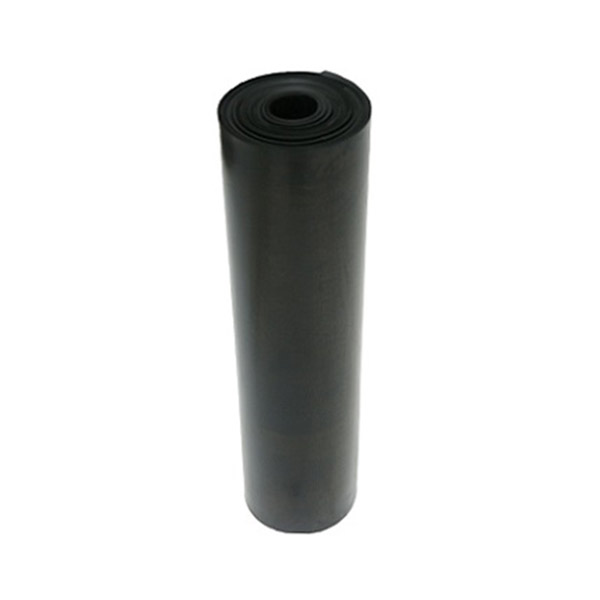
HNBR Hydrogenated Nitrile Butadiene Rubber Sheet
Model:KXT B400HNBR
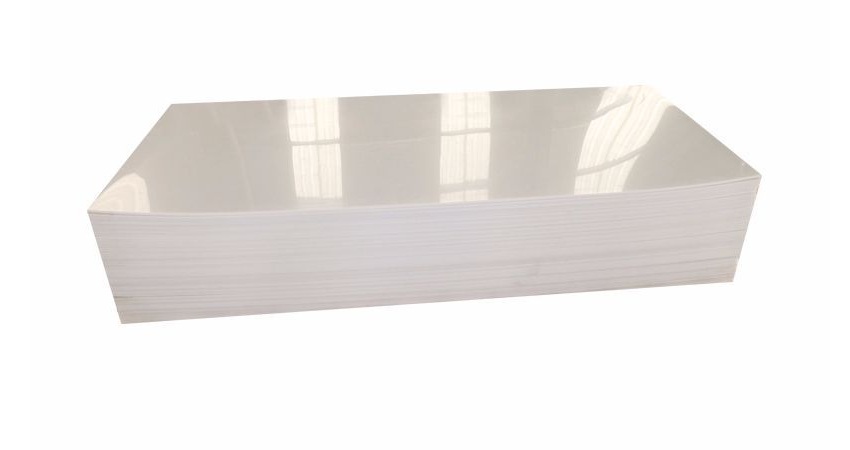
HNBR hydrogenated nitrile butadiene rubber sheet (model KXT B400HNBR) is a specialty elastomer sheet with a hydrogenated NBR backbone, providing roughly +50 °C more continuous service temperature than standard NBR. Colour black, specific gravity 1.3–1.6 g/cm³, hardness 55–85 Shore A, tensile strength ≥18 MPa, elongation ≥300%, compression set 18% max after 22 h at 50 °C, service temperature −35 to +150 °C. Resistant to mineral-oil hydraulic fluids, sour gas, HFA/HFB/HFC fluids, bio-oils and water/steam to 149 °C. ISO 9001 certified factory in Ningbo, China. Reply within 2 business hours.
What Is HNBR Hydrogenated Nitrile Butadiene Rubber Sheet?
HNBR hydrogenated nitrile butadiene rubber sheet (also called HNBR rubber sheet or Highly Saturated Nitrile (HSN) sheet; Kaxite model KXT B400HNBR) is a specialty elastomer sheet produced by hydrogenating the butadiene segment of the NBR polymer backbone. Hydrogenation increases the saturation of the polymer chain, which raises the continuous service temperature and improves resistance to oxidation, ozone and sour gas compared with standard NBR.
HNBR rubber sheet fills the gap between NBR, EPDM and FKM elastomers: where high temperature conditions require high tensile strength while maintaining excellent resistance to motor oils, sour gas, amine/oil mixtures, oxidised fuels and lubricating oils. HNBR rubber sheet is also suitable for high dynamic loads and has good abrasion resistance.
HNBR Rubber Sheet — Quick Specifications
ModelKXT B400HNBR
ColourBlack
Specific Gravity1.3 – 1.6 g/cm³
Hardness55 – 85 Shore A
Tensile Strength≥ 18 MPa
Elongation at Break≥ 300 %
Compression Set18 % max (22 h @ 50 °C)
Service Temperature−35 °C to +150 °C
Low Temp Resistance−30 °C
Water / Steam ServiceUp to 149 °C
Why Choose HNBR Instead of Standard NBR
HNBR rubber sheet is selected when standard NBR does not provide enough heat resistance or long-term durability. Key advantages of HNBR rubber sheet include:
- High tensile strength and good physical properties at high temperatures — HNBR retains mechanical strength at temperatures where standard NBR softens.
- High strength helps reduce extrusion and wear — HNBR rubber sheet resists extrusion under high pressure and dynamic loads.
- Good abrasion resistance and oil resistance — retained from the NBR base polymer.
- Superior heat resistance up to +150 °C — roughly +50 °C higher continuous service temperature than standard NBR (around +100 °C).
- Superior mechanical characteristics — higher tensile strength, better compression set and better elastic recovery than standard NBR.
- Superior environmental resistance — improved resistance to oxidation, ozone and sour gas compared with standard NBR.
- Improved resistance to polar fluids — HNBR rubber sheet performs well in HFA, HFB and HFC hydraulic fluids.
- Good chemical resistance — resistant to dilute acids, bases and salt solutions at moderate temperature.
- Cold flexibility — service temperature down to −35 °C.
- Resistance to new bio-oils — suitable for modern biodegradable and biological oils.
HNBR Rubber Sheet — Technical Data Sheet
| Property | Typical Value | Test Method |
|---|---|---|
| Colour | Black | — |
| Specific gravity | 1.3 – 1.6 g/cm³ | ASTM D297 |
| Hardness | 55 – 85 Shore A | ASTM D2240 |
| Tensile strength | ≥ 18 MPa | ASTM D412 |
| Elongation at break | ≥ 300 % | ASTM D412 |
| Compression set (22 h at 50 °C) | Permanent set ≤ 18 % | ASTM D395B |
| Low temperature resistance | −30 °C | ASTM D1329 |
| Service temperature range | −35 °C to +150 °C | ASTM D2000 |
| Material | Hydrogenated nitrile butadiene rubber (HNBR / HSN) | — |
Values above are typical for the KXT B400HNBR family. Please request the current data sheet for the exact grade and thickness you require.
HNBR Rubber Sheet — Chemical Compatibility Overview
HNBR rubber sheet is resistant to a wide range of industrial fluids but is not suitable for every medium. The two columns below summarise typical compatibility based on ASTM and industry immersion data.
Recommended for (Good to Excellent)
- Aliphatic hydrocarbons (mineral oils, diesel, kerosene)
- Automatic transmission fluid
- Automotive refrigerants (HFC-134a and similar)
- Brake fluids, non-petroleum
- Dilute acids, bases and salt solutions at moderate temperature
- HFA, HFB and HFC hydraulic fluids
- Silicon oils and greases
- Vegetable and animal fats / oils
- Water and steam up to 149 °C
- New bio-oils (biodegradable hydraulic fluids)
Not Recommended (Poor to Avoid)
- Chlorinated hydrocarbons
- Ethers and esters
- Ketones (polar solvents)
- Strong oxidising acids (concentrated nitric, sulphuric)
- Aromatic hydrocarbons (benzene, toluene) at high concentration
- Concentrated phosphate ester hydraulic fluids
- High-temperature steam above 149 °C without special grade
Compatibility ratings are indicative and based on published ASTM and industry immersion data. For aggressive, mixed or high-temperature media, please describe the medium, concentration and temperature so we can confirm the correct grade in writing.
HNBR vs NBR vs FKM Rubber Sheet
Buyers often compare HNBR with standard NBR and fluoroelastomer (FKM / Viton) rubber sheet. The table below summarises the main differences.
| Property | HNBR | NBR | FKM (Viton) |
|---|---|---|---|
| Continuous service temperature | −35 to +150 °C | −30 to +100 °C | −20 to +200 °C |
| Oil and fuel resistance | Very good | Very good | Excellent |
| Ozone and oxidation resistance | Excellent | Fair | Excellent |
| Sour gas resistance | Very good | Poor | Good |
| Mechanical strength at high temperature | Very good | Low | Very good |
| Abrasion resistance | Very good | Good | Good |
| Cold flexibility | −35 °C | −30 °C | −20 °C |
| Relative cost | Medium | Low | High |
| Typical use | Gearbox actuator seals, HFA/HFB/HFC fluids, bio-oil seals | General-purpose oil and fuel seals | Aggressive chemicals and high-temperature fuels |
For general-purpose oil and fuel sealing below +100 °C, standard NBR rubber sheet is the more economical choice — see Nitrile Rubber Sheet. For continuous service above +150 °C or very aggressive chemical media, choose FKM — see Viton Fluoroelastomer Rubber Sheet. For high dynamic loads, sour gas and bio-oils, HNBR is the middle-ground recommendation.
Typical Applications of HNBR Rubber Sheet
HNBR rubber sheet is specified wherever standard NBR does not provide enough heat resistance or long-term durability. Common applications include:
- Gearbox actuator seals — for gearbox applications requiring high tensile strength and extrusion resistance.
- HFA / HFB / HFC hydraulic fluid seals — where standard NBR is not compatible with water-based or fire-resistant hydraulic fluids.
- Water and steam seals — up to 149 °C, including industrial water and low-pressure steam service.
- Automotive and refrigeration — refrigerant seals, air conditioning system seals and automotive powertrain gaskets.
- Sour gas and oilfield service — where HNBR's resistance to sour gas and amine/oil mixtures is required.
- Bio-oil service — sealing in modern hydraulic systems using biodegradable vegetable-based oils.
- General-purpose gaskets — industrial die-cut gaskets in contact with dilute acids, bases and salt solutions at moderate temperature.
Custom Fabrication & Ordering Options
We supply HNBR rubber sheet in the form that best fits your production line:
| Option | Available Range |
|---|---|
| Form | Full sheet, strip, roll, die-cut gasket, water-jet cut part |
| Thickness | Standard 1–20 mm; thicker build-ups available on request |
| Sheet size | Standard sizes on request; custom sizes available |
| Hardness | 55–85 Shore A (selected by application) |
| Surface | Smooth or embossed |
| Reinforcement | Cloth-reinforced or wire-reinforced versions available on request |
| Branding | Neutral packing or your own label — OEM / ODM welcome |
Send us the medium, temperature, pressure and sheet or gasket dimension and we will quote the most economical HNBR rubber sheet layout. Related rubber sheets: Neoprene Rubber Sheet, Nitrile Rubber Sheet, Silicone Rubber Sheet.
Need a price for HNBR rubber sheet today? Tell us thickness, sheet size, hardness and quantity — our technical sales team replies within 2 business hours.
Quality Assurance & Supplier Commitments
ISO 9001:2015Manufacturing under an ISO 9001 certified quality management system.
Material ListIncoming HNBR polymer grade, compounding ingredients and batch number recorded for full traceability.
Response SpeedTechnical sales team replies within 2 business hours for quotes and technical questions.
Batch TestingSpecific gravity, hardness, tensile strength, elongation and compression set tested per batch.
Third-Party InspectionSGS, BV, TÜV or your nominated inspector welcome before shipment.
Free SamplesFree A4-size samples for evaluation; courier cost deductible from the first order.
Ordering, Packing & Delivery
| Item | Details |
|---|---|
| Minimum order quantity | 500 kg for standard grades (negotiable for trial orders and mixed containers) |
| Sample policy | Free A4-size samples for evaluation; buyer covers courier cost |
| Lead time | Typically 15 – 25 days after order confirmation; stock items ship faster |
| Packing | Sheets flat-packed on pallets, wrapped in film and strapped; rolls available on request |
| Shipping | Sea, air or express; FOB Ningbo/Shanghai, CIF, DDP on request |
| Payment | T/T, L/C at sight, and other terms to be agreed |
| Documentation | Commercial invoice, packing list, bill of lading, certificate of origin, test report |
Lead times are indicative and confirmed per order.
Frequently Asked Questions
What is HNBR rubber sheet used for?
HNBR rubber sheet is used where standard NBR does not provide enough heat resistance or long-term durability. Typical applications include actuator seals for gearbox applications, HFA/HFB/HFC hydraulic fluid seals, water and steam seals up to 149 °C, automotive and refrigeration refrigerant seals, and general-purpose industrial gaskets in contact with motor oils, sour gas, bio-oils and dilute acids.
What is the difference between HNBR and standard NBR rubber sheet?
HNBR (Hydrogenated Nitrile Butadiene Rubber, also called HSN or Highly Saturated Nitrile) is a hydrogenated form of NBR. Hydrogenation saturates the butadiene segment of the polymer backbone, which raises the continuous service temperature from around +100 °C for standard NBR to +150 °C for HNBR, and improves resistance to oxidation, ozone, sour gas and amine/oil mixtures. HNBR also has higher tensile strength and better compression set behaviour at high temperature. The trade-off is a higher material cost than standard NBR.
What is the service temperature range of HNBR rubber sheet?
The typical service temperature range is −35 °C to +150 °C. Low-temperature resistance is rated to −30 °C per ASTM D1329. Compared with standard NBR (around +100 °C maximum), HNBR provides roughly +50 °C of additional continuous service temperature. Tell us your actual temperature cycle and we will confirm the appropriate grade.
What media is HNBR rubber sheet resistant to?
HNBR rubber sheet is resistant to mineral-oil based hydraulic fluids, animal and vegetable fats and oils, diesel fuel, ozone, sour gas, dilute acids and bases, and new bio-oils. It is also suitable for water and steam service up to 149 °C. HNBR is not recommended for exposure to ethers, esters, ketones or chlorinated hydrocarbons.
What sizes and thicknesses of HNBR rubber sheet are available?
Standard sheet sizes and thicknesses are available on request. Please tell us your required sheet size, thickness and quantity so we can quote the closest standard size or produce a custom sheet. Die-cut gaskets, strips and vulcanised shapes are also available.
What is the MOQ and delivery time?
Standard MOQ is 500 kg, negotiable for trial orders and mixed containers. Production lead time is normally 15–25 days after order confirmation, and stock sizes can ship sooner.
Can I get a free sample before placing an order?
Yes. We provide free A4-size samples for evaluation; the buyer covers the courier cost, which can be deducted from the first order. Send us your thickness, application and medium details so we can send the most suitable HNBR sample.
Is HNBR rubber sheet food-contact safe?
HNBR is widely used in automotive, industrial and bio-oil sealing applications, but for direct food-contact or potable-water service we recommend confirming the specific grade and end-use regulation with our engineers before ordering, because food-contact compliance depends on the exact compound formulation.
Send your specification — get a quotation and a free sample Include thickness, sheet size, hardness, medium, temperature, pressure and annual quantity for the fastest response.
Technical review: This HNBR hydrogenated nitrile butadiene rubber sheet product page was reviewed by the Kaxite application engineering team.
Data sheet version: KXT B400HNBR-2026-09. Specifications subject to change without notice.
Last reviewed: September 2026.
Data sheet version: KXT B400HNBR-2026-09. Specifications subject to change without notice.
Last reviewed: September 2026.
Send Inquiry
Contact Info
-
Address
No. 432 Zhenhai Middle Road, Luotuo Street, Zhenhai District, Ningbo City, Zhejiang China
-
-
Email
Request a Quote or Technical Consultation
Share your sealing requirement and our technical sales team will respond within 24 business hours. For fastest service, include your flange specification, operating pressure, temperature, and process media in the message below.




News Recommendations