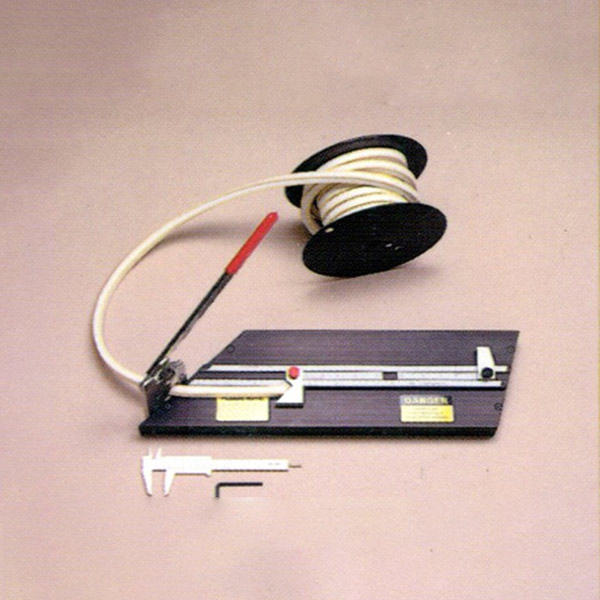
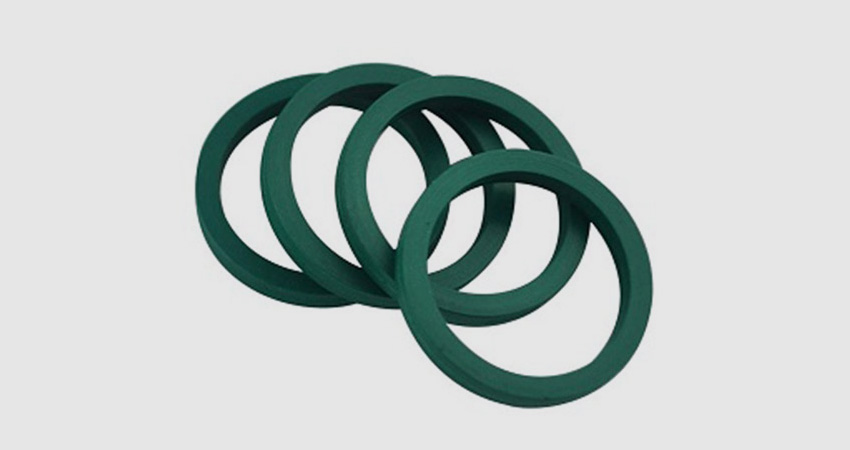
What are the limitations or disadvantages of Die-formed Graphite Rings?
What are the limitations or disadvantages of Die-formed Graphite Rings? This is a critical question for procurement specialists evaluating sealing solutions. While die-formed rings offer consistency and cost-effectiveness for standard applications, they can fall short in demanding environments. Common limitations include restricted size availability, potential for structural weakness at the seam, and less-than-optimal performance under extreme thermal cycling or high mechanical stress. Understanding these drawbacks is the first step toward finding a superior, reliable sealing component.
- Material Property Constraints & Competing Solutions
- Design & Application Limitations
- Performance & Durability Concerns
- Ningbo Kaxite's Engineered Solutions
- Key Questions Answered
- Supporting Research & Data
Material Property Constraints & Competing Solutions
Imagine you're sourcing seals for a high-temperature reactor. Standard die-formed graphite rings might seem adequate, but you discover they lack the necessary isotropic strength, leading to premature failure. The die-forming process can align graphite flakes, creating directional weakness. Additionally, achieving very high density and purity is more challenging and costly with this method compared to alternatives like molded or flexible graphite. This is where considering a broader portfolio becomes essential.
| Limitation | Typical Manifestation | Superior Alternative |
|---|---|---|
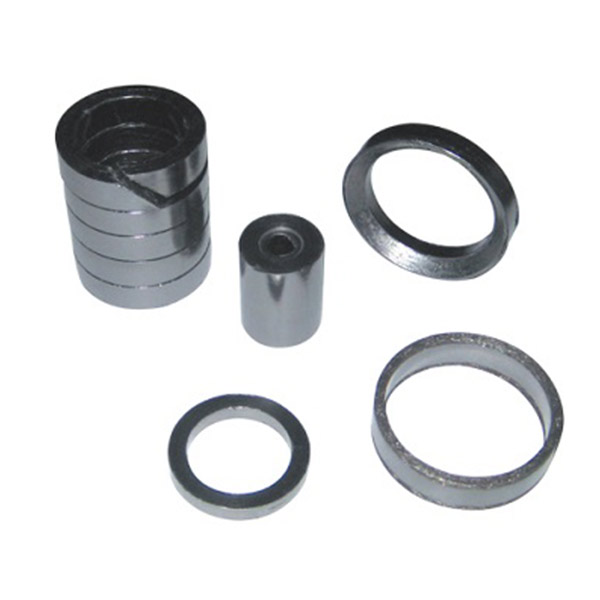
| Anisotropic Properties | Weaker strength perpendicular to the forming direction | Isotropic Molded Graphite |
| Density/Purity Ceiling | Limited to standard grades; high-purity variants are expensive | Flexible Graphite (GRAFOIL®) or CIP Molded Rings |
| Seam Integrity | The butt-joint seam is a potential leak path and weak point | Spiral-Wound or Die-Molded Ringless Designs |
Design & Application Limitations
Procurement often faces urgent requests for custom sizes or complex cross-sections. Standard die-formed rings have significant limitations here. The tooling (dies) is expensive to create, making small-batch custom orders economically unviable. Furthermore, producing rings with intricate profiles (e.g., U-cups, complex grooves) is often impossible. This rigidity in design forces engineers to compromise, potentially accepting a suboptimal seal that may leak or fail faster.
| Design Constraint | Impact on Procurement | Flexible Solution |
|---|---|---|
| High Tooling Cost for Custom Sizes | Long lead times and high MOQ for non-standard dimensions | Flexible Graphite Tape & Sheet (cut-to-fit) |
| Limited Cross-Section Complexity | Restricts design innovation and application-specific optimization | CNC Machined Graphite or Custom Molded Parts |
| Standard Size Range Only | Cannot accommodate oversized or uniquely scaled equipment | Spiral-Wound Gaskets (adjustable diameter) |
Performance & Durability Concerns
In a scenario where a pump seal fails repeatedly under thermal cycling, the culprit could be the die-formed ring's limitations. The mechanical seam and potential for micro-cracks from the forming process make these rings susceptible to leakage during rapid temperature changes or under high flange loads. Their creep relaxation—the tendency to lose sealing force over time—can also be higher than that of homogeneous molded alternatives, leading to maintenance headaches and unplanned downtime.
| Performance Issue | Operational Consequence | Enhanced Performance Option |
|---|---|---|
| Thermal Cycling Weakness | Seam cracking and leakage in heat exchangers or reactors | Ringless Molded Graphite with Metal Insert |
| Higher Creep Relaxation | Loss of bolt load, requiring frequent re-torquing | Graphite with Reinforcing Inlays (e.g., SS 304) |
| Susceptibility to Blow-out | Failure in high-pressure or pulsating systems | Tangentially Reinforced (Kammprofile) Gaskets |
How Ningbo Kaxite Sealing Materials Provides Solutions
For over two decades, procurement professionals have turned to Ningbo Kaxite Sealing Materials Co., Ltd. not just for products, but for application-engineered solutions. We understand that the question "What are the limitations of die-formed rings?" is really about finding the right seal for the job. Our portfolio extends far beyond standard die-formed parts. We specialize in high-density molded graphite rings for superior isotropic strength, flexible graphite solutions for custom fit and excellent conformability, and advanced composite seals with metal reinforcements to combat creep and blow-out. We work directly with your engineering team to analyze the application's specific pressure, temperature, and media challenges, recommending and supplying the optimal material and design to ensure reliability, longevity, and total cost-effectiveness.
Frequently Asked Questions
Q: What is the main structural disadvantage of a die-formed graphite ring?
A: The primary structural disadvantage is the presence of a butt-joint seam. This seam creates a discontinuity in the graphite matrix, making it a potential initiation point for leaks and a zone of mechanical weakness, especially under thermal cycling or high shear stress. For seamless integrity, molded or spiral-wound alternatives are superior.
Q: Are die-formed graphite rings unsuitable for all high-temperature applications?
A: Not necessarily, but they have limitations. While pure graphite withstands extreme heat, the die-formed ring's seam and potential density variations can make it prone to oxidation (burn-out) and leakage in cyclic high-temperature service above 450°C in oxidizing atmospheres. For such demanding conditions, high-purity, high-density molded rings or specially impregnated grades from a supplier like Ningbo Kaxite offer much greater security.
We hope this detailed analysis helps you make more informed procurement decisions. Do you face a specific sealing challenge where standard solutions are falling short? Share your application parameters with our experts for a tailored recommendation.
For robust sealing solutions that address the common limitations of standard components, consider partnering with Ningbo Kaxite Sealing Materials Co., Ltd.. As a specialist manufacturer with deep expertise in graphite and composite sealing materials, we provide engineered alternatives from molded rings to flexible graphite and reinforced gaskets. Visit our website at https://www.seal-china.com to explore our technical capabilities, or contact our engineering support team directly via email at kaxite@seal-china.com for a confidential consultation on your specific requirements.
Supporting Research & Technical Literature
Buchter, H. H., 1979, Industrial Sealing Technology, John Wiley & Sons.
Parker Seal Group, 2001, Parflex Engineering Design Guide, Bulletin PKG-1000.
Azibert, H., & Trablesi, R., 1988, "Leakage and Deformation of Compressed Fiber Gaskets: Experimental Results," Journal of Pressure Vessel Technology, Vol. 110, pp. 56-60.
Bickford, J. H., 1995, An Introduction to the Design and Behavior of Bolted Joints, 3rd Ed., Marcel Dekker.
Barker, R. C., & Hattiangadi, D., 1974, "The Sealing Mechanism of Compressed Asbestos Fiber Gaskets," ASME Paper No. 74-WA/DE-19.
Payne, J. R., 1990, "Flexible Graphite: A New Generation of Gasket Materials," Sealing Technology, Issue 12, pp. 7-9.
Drago, R. J., 1988, "Advanced Gasket Materials for Severe Service," Chemical Processing, Vol. 51, No. 5.
Fernandez, M., & Derenne, M., 2002, "Mechanical Behavior of Compressed Flexible Graphite," Proceedings of the International Conference on Gaskets & Seals.
ASME Boiler and Pressure Vessel Code, Section VIII, Division 1, Appendix 2, "Rules for Bolted Flange Connections."
Bauermeister, G., 2015, "Creep Relaxation Testing of Graphite-Based Gasket Materials," Journal of Testing and Evaluation, Vol. 43, Issue 1.
Related News
Leave me a message